When it comes to air conditioning, getting the right size for your home is crucial. An undersized air conditioner will struggle to keep your home cool, while an oversized unit will waste energy and money. So, how to calculate air conditioner size for a house?
To calculate the air conditioner size for a house, you’ll need to know the square footage of the house. Once you have that number, multiply it by 25 BTUs per square foot to get the minimum BTU rating that your air conditioner should have.
In this blog post, we will explain the factors that determine the appropriate size of air conditioning unit for your home. We’ll look at the square footage of your home, the climate you live in, and the number of windows and doors. We’ll also cover the importance of proper insulation and ventilation in your home.
As you may already know, air conditioning sizing is a complex process that requires a professional’s expertise. But understanding the basics of what’s involved in the sizing process can help you communicate effectively with your HVAC contractor and ensure you’re getting the right size unit.
So, if you’re planning to install a new air conditioning system or replace an old one, keep reading to learn about the factors that affect the sizing process.
Factors to Consider to Calculate Air Conditioner Size for a House
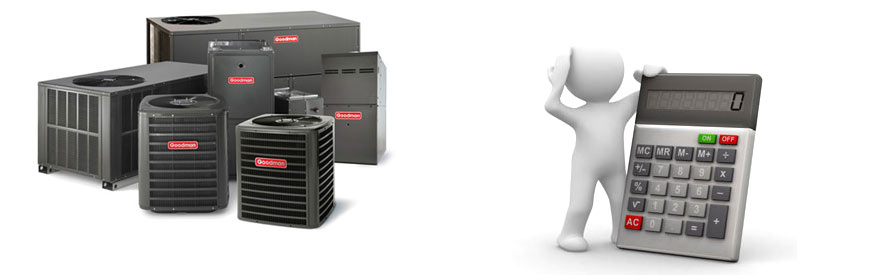
There are several factors that should be considered when calculating the appropriate size of an air conditioner for a house.
These factors include:
- The size of the house: The larger the house, the larger the air conditioner needed to effectively cool it.
- The climate: Hotter climates may require a larger air conditioner to maintain comfortable temperatures.
- Insulation: Well-insulated homes may require a smaller air conditioner, while poorly insulated homes may require a larger one.
- Windows and doors: The number and size of windows and doors in a house can impact the necessary size of an air conditioner.
- Occupancy: The number of people living in the house can impact the cooling needs.
Considering these factors will help ensure that the air conditioner is properly sized and functioning efficiently.
How Many Square Feet Does a 3 Ton AC Unit Cover?
A 3 ton air conditioner will cover approximately 1500-2000 square feet. This is based on the assumption that the unit is placed in an area with proper ventilation and without any major obstructions.
What Size AC Unit Do You Need for a 2000 Sq Ft House?
There are a lot of factors to consider when sizing an AC unit for a 2000 sq ft house. The first is the climate. If you live in an area with hot, humid summers, you’ll need a larger unit than if you live in a cooler climate.
Another factor to consider is the type of insulation in your home. A well-insulated home will need a smaller unit than one that isn’t insulated as well. Finally, the number of people and pets in your home will also affect the size of the AC unit you need.
Assuming you live in a hot, humid climate and have average insulation in your home, here are some rough estimates for what size AC unit you’ll need:
– For one or two people: 1-2 tons (12,000-24,000 BTUs)
– For three or four people: 2-3 tons (24,000-36,000 BTUs)
– For five or more people: 3+ tons (36,000+ BTUs)
Of course, these are just general guidelines – your best bet is to get a professional assessment of your specific situation to ensure you get the perfect sized AC unit for your needs.
How Many Square Feet Does a 5 Ton Ac Unit Cover?
A 5 ton AC unit can cover up to 2,500-3,300 square feet.
How Many Sq Ft Will a 4 Ton Ac Unit Cool?
A 4 ton air conditioner will cool approximately 2000 – 2500 square feet. This is based on the standard assumption that your home has 8-foot ceilings.
So, if your home has higher ceilings, the 4 ton AC unit may not be sufficient to cool the entire space.

What Size Air Conditioner Do I Need for 2,000 Sq Ft House?
If you have a 2,000 square foot house, you will need a central air conditioner that is at least 2.5 tons. This is the minimum size AC unit that you should get for your home.
Anything less than this and your AC unit will struggle to cool down your home, leading to higher energy bills and an uncomfortable living environment.
When choosing an AC unit, always choose one that is slightly larger than what you think you need. This way, your AC unit will be able to run more efficiently and keep your home cooler during those hot summer months.
What Size Air Conditioner for 1,500 Square Feet?
If you have a 1,500 square foot home, you’ll need a central air conditioner that is at least 2.5 tons. A 2.5 ton air conditioner can cover up to 3,000 square feet, so it will be able to cool your home without any problems. You might think that you need a bigger air conditioner for a home that is 1,500 square feet, but this isn’t the case.
The size of your air conditioner should be based on the amount of heat that it needs to remove from your home, not the square footage. A good rule of thumb is that one ton of cooling capacity will remove about 12,000 BTUs of heat from your home.
So, if your home is 1,500 square feet and you live in an area with moderate temperatures, a 2.5 ton air conditioner should be more than enough to keep your home cool and comfortable all summer long!
What Size AC Unit for 5,000 Square Feet?
The size of the AC unit required for a 5,000 square feet area depends on various factors such as the insulation of the building, the number of windows, and the height of ceilings.
However, as a general rule, a 5-ton AC unit would be required to efficiently cool a 5,000 square feet area.
It is recommended to consult an HVAC professional to determine the exact size of the AC unit required for your specific building.
AC Calculation Formula
If you’re a homeowner, then you know that one of the most important aspects of your home is the air conditioner. After all, this is what keeps you cool during those hot summer days! But do you know how your air conditioner works?
More specifically, do you know how the AC calculation formula works? Here’s a quick breakdown: The AC calculation formula takes into account the size of your home, the number of people in your household, and the climate you live in. Based on this information, it determines how much cooling capacity your air conditioner needs to have in order to keep your home comfortable.
Now that you know a little bit more about the AC calculation formula, why not put it to good use? Next time you’re shopping for an air conditioner, be sure to ask the salesperson about the unit’s cooling capacity. This way, you can be sure that you’re getting exactly what you need to keep your home comfortable all summer long!
Ac Tonnage Calculator Per Square Foot
Are you in the air conditioning business? Perhaps you repair or install AC units for a living. In either case, you likely know how important it is to have the right size unit for the job.
That’s where an AC tonnage calculator comes in. This type of calculator helps determine the appropriate sized cooling system for a structure based on its square footage, ceiling height, number of windows and doors, insulation values, and other factors. In order to use an AC tonnage calculator, you’ll need to know the building’s specifications.
Once you have that information, plug it into the calculator and it will do the rest. The output will tell you how many tons of cooling capacity are required to adequately cool the space.
It’s important to note that this is not always an exact science – there may be some trial and error involved in getting the perfect-sized unit.
But using a tonnage calculator is a good place to start when selecting an AC unit for your home or business.
Air Conditioning Room Size Calculator in Meters
If you’re in the market for a new air conditioner, one of the first things you’ll need to do is figure out what size room your unit will need to be able to effectively cool. That’s where an air conditioning room size calculator comes in handy! To use our AC room size calculator, simply input the dimensions of the room you need to cool into the fields provided.
Once you have those numbers entered, our calculator will do the rest and provide you with a recommended AC unit size for your space. Keep in mind that there are a few other factors that can impact the sizing of your air conditioner, such as ceiling height and the number of windows/doors. But as long as you have a general idea of your room’s square footage, our AC sizing calculator should be able to give you a good starting point for finding the right unit for your needs.
Air Conditioner Size Calculator
The summer heat is upon us and that means it’s time to start thinking about cooling our homes. Air conditioners come in a variety of shapes and sizes, so how do you know which one is right for your home? The first step is to use an air conditioner size calculator.
There are a few different factors that go into choosing the right sized air conditioner for your home. The first is the square footage of your home. This will help determine the BTU (British Thermal Unit) output that you’ll need from your air conditioner.
The second factor is the number of people in your household. More people means more body heat, which will require a higher BTU output. Once you have these two pieces of information, you can plug them into an online air conditioner size calculator (there are many available with a quick Google search).
This will give you a good idea of what size unit you need for your home. Of course, there are other factors to consider when choosing an air conditioner, such as energy efficiency and features. But if you’re just starting your search, using an air conditioner size calculator is a great place to start.
Air Conditioner Room Size Calculator
Do you know how to choose the right size air conditioner for your room? It’s an important question to ask because an air conditioner that’s too small won’t cool your space effectively, but one that’s too large will waste energy and money. The most common way to determine the size of the air conditioner you need is by using an Air Conditioner Room Size Calculator.
There are plenty of these tools available online, and they’re easy to use. Just enter the square footage of the room you want to cool, along with some other basic information like the ceiling height and number of windows. The calculator will do the rest, providing you with a recommended BTU (British Thermal Unit) rating for your space.
Once you have a general idea of the size of air conditioner you need, it’s time to start shopping around. Be sure to compare models from different brands, as well as prices. You may also want to read online reviews from customers who have purchased similar units in order to get more insights before making your final decision.
4 ton AC Unit Square Footage
A 4 ton AC unit is typically sufficient to cool a home with a square footage between 2500-4000.
The exact square footage that a 4 ton AC unit can cool depends on various factors such as the climate, insulation, and the number of windows in the home.
It is important to consult with a licensed HVAC professional to determine the appropriate size of an AC unit for your specific home to ensure optimal performance and energy efficiency.
3 ton AC Unit Square Footage
The appropriate square footage for a 3 ton AC unit depends on various factors including the climate, insulation, and ceiling height of the space.
However, as a general guideline, a 3 ton AC unit is usually recommended for spaces between 1,500 and 1,800 square feet.
It is crucial to consult with a professional HVAC technician to determine the exact size and capacity of the unit required for your specific needs, ensuring optimal performance and energy efficiency.
2.5 ton AC Unit Square Footage
A 2.5 ton AC unit is designed to cool a space of approximately 1,200-1,500 square feet. However, it is important to note that the square footage coverage can vary depending on factors such as ceiling height, insulation, and the number of windows in the space.
It is recommended to consult with an HVAC professional to determine the appropriate size AC unit needed for your specific space to ensure optimal cooling efficiency.
12500 BTU Air Conditioner Square Footage
A 12500 BTU air conditioner is capable of cooling a room with a square footage of approximately 550-650 square feet. However, the exact square footage that can be cooled by a 12500 BTU air conditioner may vary depending on the insulation levels, ceiling height, and the number of windows in the room.
It is important to ensure that the air conditioner you choose is appropriately sized for your room to ensure optimal cooling efficiency and energy savings.
How to Find Tonnage on AC Unit?
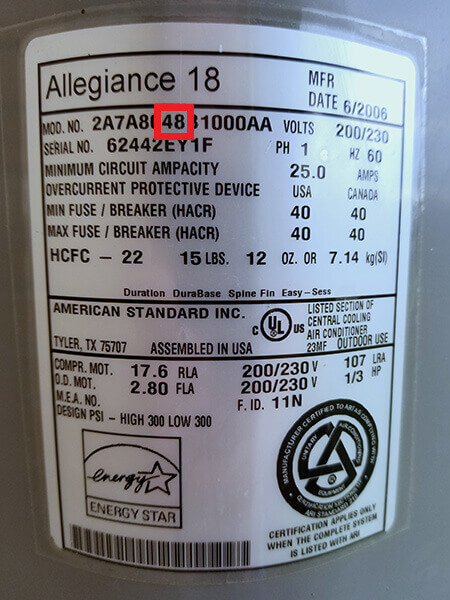
To find the tonnage of your AC unit, you can look at the unit’s nameplate or model number. The tonnage is typically listed as a single-digit number followed by the word “tons” or “T.” For example, a 3-ton unit will have “3T” or “3” listed on the nameplate.
If you’re unable to locate the tonnage on the nameplate, you can also determine it by calculating the BTUs (British Thermal Units) per hour. Divide the total BTUs by 12,000 to determine the tonnage.
What size of Air Conditioner do I need for my home?
Conclusion
After reading this blog post, you should be able to calculate the air conditioner size for a house with ease. By following the simple steps and using the provided formula, you can find the appropriate unit size that will cool your home quickly and efficiently. Be sure to take into account all of the factors mentioned in order to get an accurate estimate.
With a little bit of planning ahead, you can enjoy a comfortable home all summer long!
