It is one of the most commonly asked questions we receive from people wanting to know what is the difference between an air conditioning unit and a heater.
In this blog, we’ll show you what these two products do and how they differ from each other. We hope you enjoy reading it.
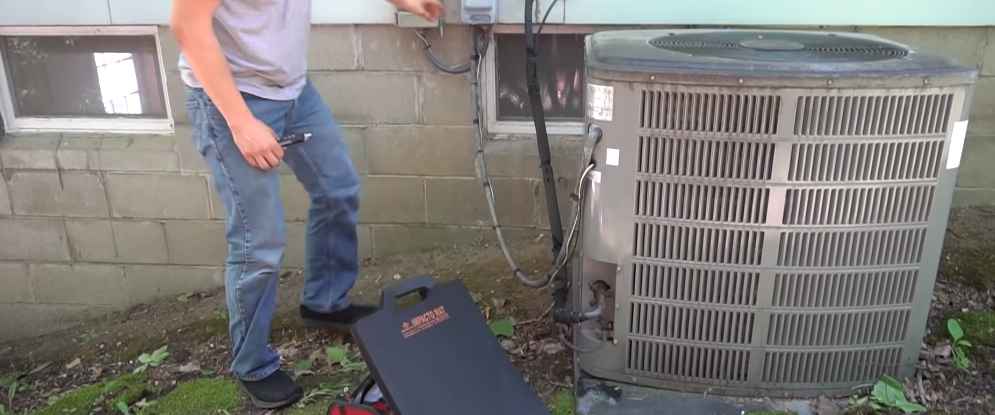

Air Conditioner VS Heater ( Complete Guide)
| Aspect | Air Conditioner | Heater |
|---|---|---|
| Functionality | Cools indoor spaces by removing heat from the air | Warms indoor spaces by generating heat |
| Key Components | Compressor, evaporator coil, condenser coil, refrigerant | Heating elements, heat exchangers, fans (varies by type) |
| Mode of Operation | Uses refrigeration cycle to absorb and dissipate heat | Utilizes various methods such as electric resistance, combustion, or heat pumps |
| Energy Source | Typically runs on electricity, requires external power source | Can use electricity, natural gas, propane, or other fuels |
| Season of Use | Primarily used in hot weather or summer | Primarily used in cold weather or winter |
| Common Types | Window units, split-systems, central air conditioning | Electric heaters, gas furnaces, radiant heaters, heat pumps |
Air conditioners use a process called “evaporative cooling.” It works like this
Should I use my air conditioner or heater?”
The answer to this question depends on a few factors, such as the temperature outside and the temperature you want inside.
In this blog post, we’ll go over when you should use an air conditioner vs a heater so you can make the best decision for your home.
Temperature Outside
One of the main factors in deciding whether to use an air conditioner or heater is the temperature outside.
If it’s hot outside, then you’ll probably want to use your air conditioner to cool down your home.
On the other hand, if it’s cold outside, you’ll probably want to use your heater to warm up your home.
Temperature You Want Inside
Another factor to consider is the temperature you want inside your home.
If you want it to be cool inside, then you’ll want to use your air conditioner.
And if you want it to be warm inside, then you’ll want to use your heater.
Cost
Another thing to consider is the cost of running each appliance.
In general, air conditioners use more energy than heaters.
So, if you’re trying to save money, you may want to use your heater instead of your air conditioner.
Now that you know the main factors to consider when deciding whether to use an air conditioner or heater, let’s go over some specific scenarios.
Scenario 1: It’s hot outside and you want it to be cool inside.
In this scenario, you’ll want to use your air conditioner.
The air conditioner will take the hot air from outside and cool it down so that your home is at a comfortable temperature.
Scenario 2: It’s cold outside and you want it to be warm inside.
In this scenario, you’ll want to use your heater.
The heater will take the cold air from outside and warm it up so that your home is at a comfortable temperature.
Scenario 3: It’s hot outside and you want it to be warm inside.
In this scenario, you can use either your air conditioner or your heater.
If you use your air conditioner, it will take the hot air from outside and cool it down.
Then, you can use your heater to take the cooled air from your air conditioner and warm it up.
This will use more energy than just using your heater, but it may be more effective if your home is very hot.
Scenario 4: It’s cold outside and you want it to be cool inside.
In this scenario, you can use either your air conditioner or your heater.
If you use your heater, it will take the cold air from outside and warm it up.
Then, you can use your air conditioner to take the warmed air from your heater and cool it down.
This will use more energy than just using your air conditioner, but it may be more effective if your home is very cold.
So, when should you use an air conditioner vs a heater?
It depends on the temperature outside and the temperature you want inside.
In general, if it’s hot outside and you want it to be cool inside, use your air conditioner.
And if it’s cold outside and you want it to be warm inside, use your heater.
Electric Heater vs. Air Conditioner
In the summer, when the temperatures outside are soaring, the last thing you want is a hot, stuffy house.
The air conditioner is a lifesaver, pulling warm air out of your home and replacing it with cool, refreshing air.
But when winter rolls around and the temperatures start to drop, the air conditioner is no longer your friend.
Suddenly, you’re looking for a way to heat your home and keep the cold air out.
That’s where the electric heater comes in.
So, which is better? The air conditioner or the electric heater? Let’s take a look at the pros and cons of each to help you decide.
Air Conditioner
Pros:
-Keeps your home cool and comfortable in the summer
-Can help improve air quality by filtering out pollutants and allergens
-Relatively inexpensive to operate
Cons:
-Not effective at heating your home in the winter
-Can be loud and disruptive
-Requires regular maintenance and upkeep
Electric Heater
Pros:
-Can be used to heat your home in the winter
-Can be used to supplement your home’s existing heating system
-Is relatively quiet
Cons:
-More expensive to operate than an air conditioner
-Can be a fire hazard if not used properly
-Some types can be very inefficient
So, which is better? The air conditioner or the electric heater?
It depends on your needs. If you’re looking for a way to keep your home cool in the summer, the air conditioner is the way to go.
But if you need a way to heat your home in the winter, the electric heater is the better option.
Faq’s
Can the air conditioner work as a heater?
Yes, an air conditioner can work as a heater.
Most air conditioners have a “heat” setting that allows them to be used as a heater.
When used as a heater, an air conditioner works by drawing in cool air from the room and then blowing it over a set of coils that are filled with a refrigerant.
The refrigerant absorbs the heat from the air and then releases it inside the room, effectively “heating” the room.
Does air conditioner have heater?
Most air conditioners do not have heaters, but some do.
These are typically called heat pumps and they work by reversing the refrigerant flow in the air conditioner.
This allows the air conditioner to both cool and heat your home, depending on the setting that you choose.
Final Notes
A heater is a great alternative to air conditioners if you’re interested in saving money while keeping your home comfortable.
It’s a smart decision to switch to a heater if your home is located in a hot climate.
How do you feel about the heater? Let us know your thoughts in the comments below!
