As temperatures aviate, many of us turn to the cool embrace of air conditioners to escape the summer heat. While these machines offer respite for us humans, cat owners may find themselves weighing a crucial question: Are air conditioners bad for our feline companions? So here, we will get into the nuances of this query, separating myth from reality and providing practical tips to ensure your cat stays cool, comfortable, and safe.
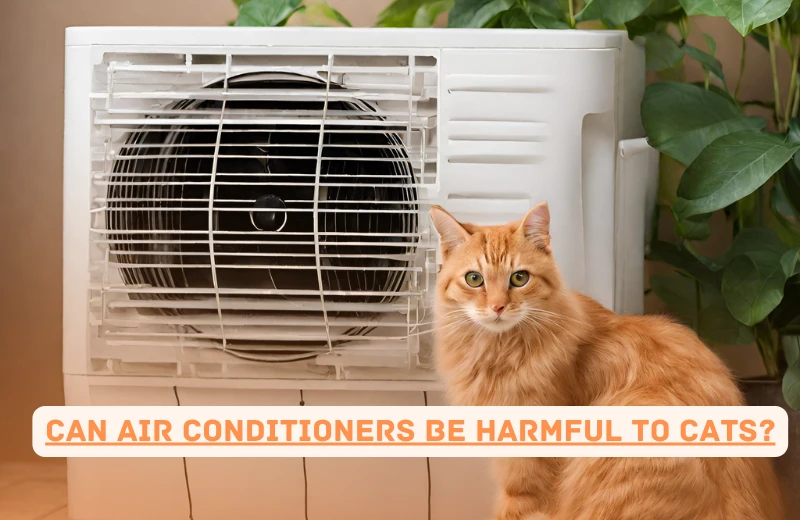
Are Air Conditioners Bad for Cats?
Here, opening the mystery box one by one,
Temperature Consideration
The first aspect to scrutinize is temperature. While felines are renowned for seeking heat, an air conditioner maintained at an overly chilled temperature risks causing them harm. Cold environments may lead to respiratory problems in felines. To properly strike a balance, it is advisable to maintain the temperature at or above seventy degrees Fahrenheit so as to achieve comfort without waste.
Humidity Matters
Beyond temperature, the humidity level plays a crucial role. Excessively dry conditions can result in dehydration for your furry friend. In an effort to address this concern, be certain to always provide your feline friend with clean drinking water and contemplate acquiring a pet-safe water fountain designed to entice greater fluid intake.
Draft Dilemma
A seemingly innocuous factor often overlooked is the presence of drafts. Cats, with their delicate sense of balance, can be disturbed by strong drafts. It is essential to be mindful of your cat’s comfort and adjust the airflow to avoid any unnecessary disruptions.
How Can I Keep My Cat Safe from Air Conditioners?
To keep your cat safe from the air conditioner, you have to follow the following steps.
Elevate and Cover
To prevent your curious cat from meddling with the air conditioner, make sure the unit is out of reach. If it’s installed in a window, ensure it’s positioned high enough to deter exploration. Consider adding a cover to provide an additional barrier and discourage tampering.
Check for Leaks
It is important to routinely check your air conditioner thoroughly for indications of any leakage issues. Cats may be drawn to moisture and attempt to drink from a leaking unit, posing a potential hazard. Promptly address any leaks to maintain a safe environment for your pet.
Fan Placement
While fans can be a source of comfort for cats, exercise caution in their placement. Positioning a fan in such a manner as to direct its airflow straight toward the air conditioner should be carefully avoided, as doing so risks permitting noxious fumes to permeate one’s dwelling.
What are the Signs That an Air Conditioner is Harming My Cat?
The signs that an Air Conditioner is harming your cat are as follows.
Respiratory Distress
Beware that increased sneezing, watery eyes, or difficulty breathing may signal that seasonal allergies are arising once more. These findings could suggest that the air conditioner may unintentionally be compromising your feline’s respiratory health through its normal operation.
Behavioral Changes
Unusual behaviors, like seeking refuge under furniture or in closets, might suggest your cat is trying to escape the effects of the air conditioner. Pay attention to any behavioral shifts and act promptly if concerns arise.
Conclusion
In the eternal debate of air conditioners versus cats, the onus lies on pet owners to strike a balance. While the cool breeze can be a source of comfort, potential risks such as respiratory issues, allergen circulation, and unit maintenance need consideration. Through carefully following temperature guidelines, diligently providing hydration, and conscientiously employing safety measures, one is able to cultivate a setting where their furry companion might delight in summer’s refreshing relaxations devoid of endangerment to its welfare. While seeking a balance that maintains satisfaction for both yourself and your feline friend as temperatures rise, the priority becomes discovering an arrangement where comfort is shared throughout the warmer season. Stay cool, stay informed, and keep those whiskers twitching in comfort.
