
For a 12×15 room (180 square feet), you’ll need an air conditioner with approximately 3,200–3,850 BTUs. This baseline assumes standard 8-foot ceilings, moderate insulation, and average sun exposure. Rooms on upper floors, with large south-west windows, or in hot climates may require 4,000–4,500 BTUs. Shaded rooms or those in mild climates might get by with 2,800–3,200 BTUs. The key is matching cooling capacity to your specific conditions—a unit that’s too small will run constantly and struggle to dehumidify, while one that’s too large will short-cycle and waste energy.
AC Sizing Formula for 12×15 Rooms
The industry standard is 1 ton of cooling capacity per 600 square feet. A 12×15 room is 180 square feet, which equals 0.3 tons, or roughly 3,600 BTUs before adjustments. From this baseline, six factors can push the number up or down:
1. Room Location: Upper Floors vs. Ground Level
Heat rises naturally, so rooms on the second floor or above absorb and trap more heat. Add 10–15% to your BTU estimate if the room is upstairs. Ground-floor rooms, especially basements, stay cooler naturally and may need less cooling capacity.
2. Window Size and Sun Exposure
South-facing and west-facing windows let in more solar heat, especially in afternoon hours. A room with large windows or western exposure should add 10–20% to the base BTU requirement. North-facing rooms with smaller windows can subtract 10%. Shade from trees, overhangs, or exterior blinds also reduces heat gain.
3. Insulation and Air Sealing
Modern homes with foam insulation and dual-pane windows keep cool air inside longer. Older homes or those with single-pane windows and gaps around doors leak cooled air. If your room has poor insulation, add 20–30% to account for faster heat infiltration. Well-insulated rooms can subtract 10%.
4. Local Climate and Humidity
Hot, humid climates (Southeast, Southwest) demand stronger cooling power because air conditioning must both cool and dehumidify. Add 15–25% in hot climates. Temperate zones can stick closer to the baseline.
5. Ceiling Height and Room Volume
Standard ceilings are 8 feet. For every 2 feet above that, add approximately 600 BTUs. A 10-foot ceiling requires roughly 600 additional BTUs; a 12-foot ceiling requires 1,200 more.
6. Occupancy and Heat-Generating Appliances
Each person generates 500–1,000 BTUs of body heat. A room that regularly holds three or four people needs more cooling than one used by a single person. Likewise, rooms with computers, televisions, kitchen appliances, or other heat sources need additional capacity—add 500–1,000 BTUs for each major appliance.
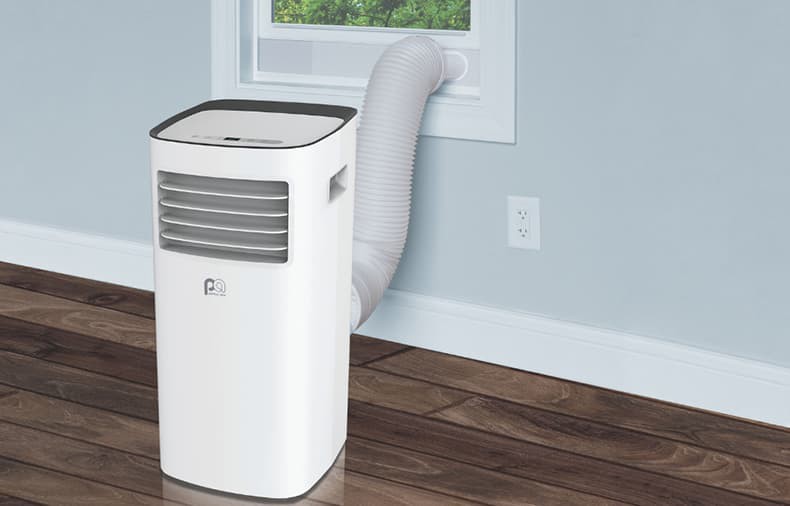
Portable vs. Window vs. Split System AC Units
Three main types of air conditioners work well for single rooms like a 12×15 space:
Window Units
Window AC units are highly efficient because they exhaust all hot air directly to the outside. They’re quieter than portable units and don’t consume floor space. For a 12×15 room, a 3,500–4,000 BTU window unit is ideal. Downside: they require a suitable window, and some leases or HOAs restrict installation. Seasonal removal is also a hassle.
Portable AC Units
Portable units offer flexibility—move between rooms, no installation, perfect for renters. However, they’re less efficient because they expel hot air through a single hose while drawing replacement air from the room, diluting cooling. To match a 3,600 BTU window unit, you’d need a 4,200–4,500 BTU portable unit. They’re also noisier (70–80 dB vs. 50–60 dB for window units).
Ductless Mini-Split Systems
Split systems (one indoor unit, outdoor compressor, thin copper lines) offer the best efficiency (SEER 14–22) and quiet operation. For a 12×15 room, a 12,000 BTU split system works well. Installation is more involved and costly ($1,500–$3,000), but energy savings over 10+ years often justify the expense.
How to Calculate Cooling Load (Manual J Basics)
Professional HVAC contractors use “Manual J” calculations to determine exact cooling loads. This method accounts for:
- Your location’s outdoor design temperature (worst-case hot day for your region)
- Indoor design temperature (your target, typically 75–78°F)
- Window area, orientation, and shading
- Wall and ceiling insulation R-values
- Air leakage rates (infiltration)
- Number of occupants and appliances
- Ductwork efficiency (if using central AC)
A Manual J assessment costs $300–$500 but removes all guesswork. Many HVAC companies offer free phone consultations and can estimate your needs based on your home’s age, location, and visible features.
Energy Efficiency Ratings: SEER and EER
When shopping for a 12×15 room AC unit, compare efficiency ratings:
- SEER (Seasonal Energy Efficiency Ratio): Measures cooling efficiency over an entire season. Higher is better. Window and portable units typically range SEER 8–12; split systems range SEER 14–22.
- EER (Energy Efficiency Ratio): Measures efficiency at a single temperature point. Window units range EER 8–11; split systems EER 11–15.
A unit with SEER 12 costs less upfront but runs 30–50% higher electricity bills than a SEER 16 unit. Over 10 years, the higher-efficiency unit often pays for itself.
Common Room Size Benchmarks
Here’s a quick reference for typical room sizes and baseline BTU recommendations (before adjustment factors like heat gain, ceiling height, or climate):
- 100 sq ft: 2,500–3,500 BTUs
- 150 sq ft: 3,500–5,000 BTUs
- 200 sq ft: 5,000–6,500 BTUs
- 250 sq ft: 6,000–7,500 BTUs
- 300 sq ft: 7,500–9,000 BTUs
- 400 sq ft: 10,000–12,000 BTUs
- 500 sq ft: 12,000–14,000 BTUs
Your 12×15 room at 180 sq ft falls squarely in the 150–200 range, confirming the 3,200–3,850 BTU baseline. If your room runs hotter than typical or has extra occupants or appliances, moving to the next tier (5,000–6,000 BTUs) ensures year-round comfort.
Why Room-Specific Factors Matter for 12×15 Spaces
A 12×15 room isn’t just a number—it’s a real space with real conditions. Two homes with identically sized rooms can need very different cooling capacity:
Scenario 1: Cool 12×15 Room
Ground floor, north-facing, shaded by trees, modern dual-pane windows, well-insulated, 8-foot ceilings, moderate climate (80°F summers). Baseline 3,600 BTU estimate minus 10–15% for shade and insulation = 3,000–3,300 BTUs needed.
Scenario 2: Hot 12×15 Room
Second-floor bedroom, west-facing, large window, single-pane glass, 8-foot ceilings, hot climate (95°F+ summers), regularly occupies 2 people. Baseline 3,600 BTU estimate plus 15% for heat gain, 10% for occupancy, 15% for climate = 4,800+ BTUs needed. A 3,500 BTU unit would struggle; a 5,000 BTU unit ensures comfort.
The difference between these two scenarios is 50%—proof that room-specific conditions matter enormously. When you contact contractors or use online calculators, always provide detailed information about window orientation, insulation, occupancy, and local climate.
Troubleshooting: Common AC Problems in 12×15 Rooms
You’ve purchased and installed an AC unit for your 12×15 room, but something isn’t working right. Here’s how to diagnose and fix common issues:
Unit Runs But Room Won’t Cool
- Clogged air filter: The #1 cause. A dirty filter blocks airflow, reducing cooling capacity by 20–40%. Replace it immediately—filters cost $5–$15 and take 1 minute to swap.
- Undersized unit: You bought a 2,500 BTU unit thinking it would work, but for a 12×15 room, you need at least 3,200–3,500. The unit runs constantly but can’t keep up. Consider a return and exchange.
- Poor window/door sealing: If you installed a window unit, gaps around the frame let hot air in and cool air out. Use weatherstripping, foam sealant, or removable caulk to close gaps.
- Refrigerant leak (split or window units): If the unit cooled fine last year but is weak now, it likely has a refrigerant leak. Contact a licensed HVAC technician—refrigerant handling requires EPA certification and special equipment. DIY refilling is illegal.
- Blocked compressor (split systems): If your unit has an outdoor compressor, ensure it has 2–3 feet of clearance on all sides. Clear leaves, debris, and shrubs. Check that the AC cover isn’t on (some people leave them year-round, which blocks airflow).
Unit Cools But Humidity Stays High
You feel cold, but the air feels damp. This usually means:
- Undersized unit: Large units run longer, removing more moisture. Small units cool the room quickly, shut off, and don’t dehumidify. Oversizing by 500–1,000 BTUs helps in humid climates.
- Unit thermostat set too high: If set to 78°F, the unit shuts off at that temperature and restarts only when the room reaches 80°F or higher. The wide cycling allows humidity to build. Lower the target to 76°F and let it run longer, steady-state.
- Room door left open: Humid air from other parts of the home drifts into your 12×15 room. Keep the door closed during cooling.
- High outdoor humidity: In coastal or tropical climates, outdoor humidity can be 80%+. Your AC works harder to dehumidify. Running a portable dehumidifier alongside the AC helps (costs $200–$400 upfront, $30–$50/month to run).
Energy Bill Unusually High
- Thermostat set too cold: Setting the AC to 72°F instead of 76°F increases energy use by 25–50%. Raise it 2–3°F; if you need more cooling, use a standing fan instead.
- Unit oversized: A 5,000+ BTU unit in a 12×15 room short-cycles (runs briefly, shuts off, restarts constantly), wasting energy. If you must have an oversized unit, offset it by raising the thermostat setpoint.
- Doors or windows left open: An open door or window defeats the entire cooling system. Conditioned air escapes, the unit works 20–30% harder to compensate.
- Poor insulation or air leaks: If your home is older, walls, ceilings, and window frames may leak. A professional energy audit ($300–$500) identifies the worst leaks. Sealing them can reduce AC load by 15–30%.
- Dirty coils or filters: Every 3 months during cooling season, check and clean or replace the filter. Every 2 years, have an HVAC technician clean the condenser coils, which collect dust and pollen.
Maintenance Tips for Long AC Life in 12×15 Rooms
Whether you choose a window, portable, or split-system AC for your 12×15 room, regular maintenance extends lifespan and preserves efficiency:
- Monthly filter check: During cooling season, inspect the filter every month. Replace when visibly dirty (every 1–2 months is typical). A clogged filter forces the unit to work 20–40% harder, wasting energy and straining the compressor.
- Seasonal pre-cooling inspection: Before summer, vacuum the exterior vents of window units or wipe portable unit intake grilles to remove dust and pollen.
- Thermostat settings: Set the thermostat 2–3°F higher than you’d prefer (e.g., 78°F instead of 75°F) to cut energy use by 6–10% without sacrificing comfort.
- Professional coil cleaning: Every 2–3 years, have an HVAC technician clean the evaporator and condenser coils. Dirty coils reduce efficiency by 15–25%.
- Refrigerant leaks: If your split system or window unit runs but doesn’t cool, it may have a refrigerant leak. Have it serviced by a professional—DIY refrigerant handling is illegal and dangerous.
Frequently Asked Questions
What if I size up to 5,000 BTUs for a 12×15 room?
Oversizing by 30–40% ensures maximum comfort and faster cooling, especially if your room has poor insulation or heavy sun exposure. The trade-off is a slightly higher purchase price and slightly higher energy use. Many homeowners intentionally size up one category to guarantee comfort and improve dehumidification.
Can a portable AC unit cool a 12×15 room effectively?
Yes, but you need 15–20% more BTUs than a window unit. For a 12×15 room, a 4,500–5,000 BTU portable unit matches the performance of a 3,800 BTU window unit. Expect higher noise (70–80 dB) and slightly lower efficiency, but greater flexibility.
Is a 1.5-ton mini-split overkill for a 12×15 room?
A 1.5-ton (18,000 BTU) unit is oversized for a baseline 180 sq ft room. A 1-ton (12,000 BTU) split is more appropriate. However, if the room is very hot, poorly insulated, or regularly occupied by multiple people, the 1.5-ton unit ensures comfort and extends compressor life by reducing runtime.
Should I get a unit with a higher SEER rating?
Yes, if you’ll run it frequently or for extended periods. A window unit upgrade from SEER 9 to SEER 12 costs $100–$200 more but saves $200–$400 annually in hot climates. Over 10 years, that’s a clear win. For occasional use, the baseline SEER is acceptable.
Comparing Window vs. Portable vs. Split Units: Cost and Performance
For a 12×15 room, here’s how the three main unit types compare on cost, efficiency, and practicality:
Window Units
Cost: $300–$800 (3,500–4,000 BTU, SEER 8–10). Installation: DIY-friendly, 30 minutes to 1 hour. Requires a suitable window. Efficiency: Highest—all hot air goes directly outside. Noise: 50–60 dB (whisper-quiet). Maintenance: Clean filters monthly, wipe exterior vents seasonally. Best for: Homeowners with permanent room AC who want peak efficiency and quiet operation.
Portable Units
Cost: $400–$1,200 (4,000–5,000 BTU, SEER 8–10). Installation: No tools needed; plug in and vent out a window or wall. Efficiency: Lower—loses 15–20% cooling power because it draws replacement air from inside. Noise: 70–80 dB (like a standing fan). Maintenance: Empty condensate bucket if not self-draining, clean filters monthly. Best for: Renters, people who move frequently, or situations where window installation isn’t possible.
Ductless Mini-Split Systems
Cost: $1,500–$3,500 (12,000 BTU = 1 ton, SEER 14–22). Installation: Professional required; drilling a 3-inch hole in wall, electrical work, refrigerant handling. 4–6 hours typical. Efficiency: Highest—recovers more cooling than window or portable units. Noise: 19–26 dB (quietest option). Maintenance: Minimal; annual professional filter cleaning. Best for: Homeowners who value efficiency, quiet, and long-term savings; justifies high upfront cost over 10+ years.
Real-World Cooling Performance: What to Expect
When you install an AC unit in your 12×15 room, how fast will it cool? Here’s what realistic performance looks like:
Starting conditions: 12×15 room, 8-foot ceiling, 85°F indoor temperature, 95°F outdoor temperature (a hot day). Target: 75°F comfort temperature. Unit size: 3,500 BTU window AC.
Expected timeline: First 10 minutes—temperature drops 3–4°F. First 30 minutes—drops to 80°F. First 60 minutes—approaches 75°F and stabilizes. On extremely hot days (100°F+) or if the room is heavily sun-exposed, cooling takes 15–30% longer. Oversized units cool faster but may overshoot the target and then idle, wasting energy.
Operating costs: A 3,500 BTU SEER 10 window unit running 8 hours daily for 120 cooling days (May–September) costs roughly $80–$120/season at typical US electricity rates ($0.14/kWh). A 4,000 BTU SEER 12 unit costs $85–$130. A portable unit of equivalent cooling draws 15–20% more power, so budget $100–$150 for the same coverage.
Next Steps
With a target BTU range of 3,200–3,850 for your 12×15 room (adjusted upward for heat gain, location, or insulation quality), you’re ready to compare units. Decide on window, portable, or split-system based on your installation constraints and budget. Check SEER ratings, read customer reviews (especially noise complaints on portable models), and verify warranty coverage. Most reputable brands offer 1–3 year manufacturer warranties on parts and labor.
If you’re uncertain about your room’s cooling needs, contact a local HVAC contractor for a free consultation or pay for a Manual J calculation—the $300–$500 investment eliminates costly mistakes and often identifies insulation or sealing upgrades that could reduce cooling costs further. Start your search in early May, before summer demand drives up prices and extends delivery times.

Author: Ralph P. Sita
Ralph P. Sita is a seasoned professional with deep roots in both the HVAC and tech industries. His family’s business, Ralph P. Sita, Inc., is a locally owned and operated HVAC contractor with over 42 years of experience, serving the DC, Maryland, and Virginia areas. The company specializes in residential, commercial, and industrial heating, ventilation, and air conditioning services, offering everything from installation and maintenance to custom ductwork and indoor air quality solutions -www.ralphpsita.com. A former CPA, he spent the last decade as co-founder and co-CEO at Cybrary, a leading platform for cybersecurity and IT training. Cybrary became the largest, most well-known cybersecurity training businesses in the industry under his leadership. Smart AC Solutions is an opportunity to give back to the HVAC community by providing reliable, actionable information on all things heating and cooling.