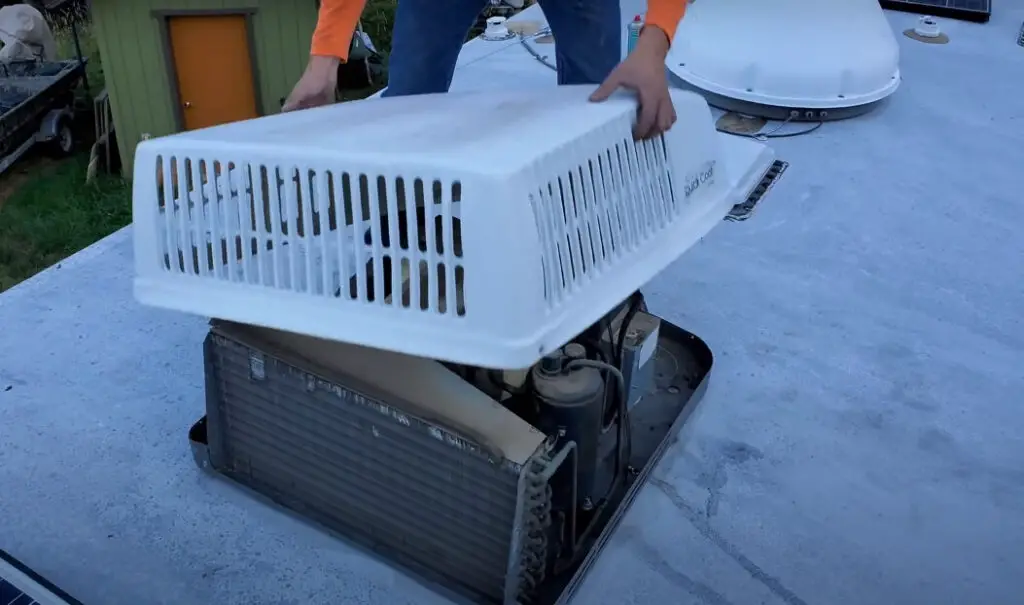
Your RV air conditioner cycles on and off because it’s designed to maintain a preset temperature by running in cycles—this is completely normal operation and not a malfunction. When your RV’s interior temperature rises above your thermostat setting, the AC compressor kicks on to cool the space. Once it reaches the desired temperature, the unit shuts off to conserve fuel and reduce wear on the compressor. This cyclic operation is the expected behavior for RV air conditioning systems, whether they’re Dometic, Coleman, or another brand.
Understanding how your RV AC cycles helps you distinguish between normal operation and actual problems that require service. Most RV owners experience AC cycling throughout the day and night, and in most cases, there’s nothing to worry about. However, knowing when cycling becomes excessive—called short cycling—can help you catch compressor problems early and avoid costly repairs.

Normal RV Air Conditioner Cycling vs. Short Cycling
Normal cycling occurs every 10-20 minutes under typical operating conditions, with each cycle lasting several minutes. Your RV air conditioner reaches the set temperature, shuts off, and the interior temperature gradually rises before the unit cycles back on. This pattern is healthy and extends the lifespan of your compressor by allowing it adequate rest periods.
Short cycling, by contrast, is when your RV AC turns on and off every few minutes or even every few seconds. This rapid cycling puts excessive stress on the compressor, wastes propane or electricity, and can eventually lead to complete system failure. If your unit is cycling more than once every 5 minutes consistently, you likely have a problem that needs attention.
How Do I Stop My RV AC from Short Cycling?
If your RV air conditioner keeps turning on and off rapidly, diagnosing the root cause is essential before it damages your compressor. Short cycling puts tremendous stress on the AC system and significantly reduces its operational lifespan. Understanding the common causes—and how to fix them—will help you restore proper cycling patterns and avoid expensive repairs down the road.
Thermostat Set Too Low
The most common cause of short cycling is a thermostat set significantly below the current interior temperature. When the thermostat is set too low, the compressor runs continuously trying to reach that temperature. Once it drops just slightly below the set point, the compressor cycles on again before the unit has time to properly cool the RV. If your thermostat is set to 65°F and it’s already 67°F inside, the unit will cycle almost continuously. The fix is simple: raise your thermostat to 3-5 degrees above the current interior temperature and let it stabilize. Avoid setting it more than 10 degrees below actual temperature to prevent short cycling.
Dirty Air Filters or Restricted Airflow
Restricted airflow is the second leading cause of short cycling in RV air conditioners. Dirt and dust buildup on the evaporator coils reduces cooling efficiency, causing the system to run harder and cycle more frequently. Additionally, furniture, bedding, or items blocking your AC return air vents or window unit vents prevent proper airflow. When airflow is restricted, the cooling coils can’t effectively transfer heat, so the system short cycles in a futile attempt to cool the space. Check your filter every month during heavy use and clean or replace it as needed. Also ensure that all vents are clear of obstructions and that at least 12 inches of space is clear around your outdoor condenser unit if you have one.
Frozen Evaporator Coils
Ice buildup on the evaporator coils prevents heat transfer and triggers short cycling as the system tries to compensate. Frozen coils develop when humidity is high, filters are very dirty, or airflow is severely restricted. As moisture condenses on the cold coils, it freezes into ice, which creates even more airflow restriction. The system then cycles off when pressure drops, then cycles back on moments later. To fix this, turn off the AC and let it defrost for 2-4 hours with interior fans running. Clean or replace filters, ensure all vents are clear, and try again with the thermostat set appropriately. If the problem persists, you may have a refrigerant leak (see below).
Refrigerant or Freon Leak
A refrigerant leak reduces the cooling capacity of your system, causing frozen coils and short cycling. As refrigerant levels drop, the compressor has to work harder to achieve the set temperature, and the system becomes increasingly unable to remove heat efficiently. Low refrigerant also causes the compressor to overheat and shut down more frequently as a safety measure. Signs of a refrigerant leak include hissing sounds, ice on the outdoor unit or refrigerant lines, and consistently poor cooling even when the filter is clean. This is a serious issue that requires a professional technician to locate the leak, repair it, and recharge the system with the correct amount of refrigerant. Do not attempt to refill refrigerant yourself, as improper amounts can damage the compressor.
Undersized or Oversized AC Unit
If your RV air conditioner was replaced with a unit that doesn’t match your space, sizing problems can cause short cycling. An AC unit that’s too small will run continuously without achieving the desired temperature, while an oversized unit will cool the space quickly and then cycle off, only to cycle back on moments later as the temperature rises. Both scenarios stress the compressor. If you’re experiencing short cycling and all other causes have been ruled out, have a professional assess whether your AC is properly sized for your RV’s square footage and insulation.
Why Does Air Conditioner Keep Turning on And Off?
If your air conditioner keeps turning on and off at shorter intervals than normal, several factors could be responsible. Here are the most common causes and what they mean for your RV:
1. The Thermostat Is Set Too Low
If the thermostat is set lower than the current room temperature, the air conditioner will continuously cycle on and off in a futile attempt to reach that impossible temperature. For example, if your interior is 72°F and you’ve set the thermostat to 65°F, the unit will run almost constantly. The solution is to raise your thermostat setting to within 3-5 degrees of the current temperature. This allows the AC to reach its target, shut off properly, and enjoy a rest period before cycling back on.
2. The Filters Are Dirty
Dirty air filters restrict airflow significantly, forcing your AC compressor to work much harder than it should. This increased workload causes the system to cycle on and off more frequently as it struggles to meet cooling demands. Check your AC filter monthly and clean or replace it if it appears discolored or clogged with dust. In dusty environments or during heavy use, you may need to change filters every month. A clean filter improves cooling efficiency, reduces cycling frequency, and extends compressor life.
3. The Coils Are Frozen
Frozen evaporator coils prevent heat transfer and cause the system to shut down as pressures drop, then cycle back on as it tries again. This usually results from a combination of factors: dirty filters restricting airflow, high humidity inside the RV, or low refrigerant levels. Ice on the coils visible around your AC unit is a telltale sign. To address this issue, turn off the AC and allow 2-4 hours for defrosting. Open windows or use ventilation fans to reduce interior humidity. Check and clean your filter. If coils freeze again, you likely have a refrigerant leak requiring professional service.
4. There’s a Refrigerant Leak
A refrigerant leak is one of the most serious causes of short cycling and frozen coils. Low refrigerant prevents the system from achieving proper cooling, so it cycles endlessly in an attempt to reach the set temperature. You may notice hissing sounds near the outdoor unit, visible oil stains on refrigerant lines, or frost buildup on the compressor. This is not a DIY repair—contact a professional HVAC technician immediately. Continuing to run an AC system with a refrigerant leak will severely damage or destroy the compressor, leading to expensive replacement costs.
Why Does My AC Unit Keep Short Cycling?
Short cycling—when your AC turns on and off every few minutes instead of running in normal 10-20 minute cycles—indicates an underlying problem that demands attention. Understanding the specific cause of your short cycling will help you determine whether it’s a simple fix or a situation requiring professional service.
The thermostat being set too low is the primary culprit in short cycling cases. When the set temperature is unrealistically low compared to your interior temperature, the compressor runs hard but can never quite maintain that temperature. The system cycles off when it gets slightly cooler, but the ambient temperature immediately begins rising again, triggering the compressor to restart. This endless loop continues until you adjust the thermostat to a more reasonable setting—typically 3-5 degrees above your current interior temperature.
Airflow restrictions also cause significant short cycling problems. Debris in the air filter, blocked return air vents, or furniture too close to your AC unit all restrict the cooling airflow needed for efficient operation. When airflow is limited, the evaporator coils can’t transfer heat effectively, so the system cycles repeatedly without achieving proper cooling. Clear all vents of obstructions, replace dirty filters, and ensure at least 12 inches of clearance around your AC unit’s intake and exhaust areas.
Your AC unit’s size relative to your RV can also cause short cycling problems. If your unit is undersized, it will run almost continuously without reaching the set temperature. If it’s oversized, it will cool the space quickly but then shut off prematurely, before it has time to remove sufficient humidity. Both scenarios lead to short cycling patterns. If all other causes have been eliminated and short cycling continues, consult a professional to assess whether your AC is appropriately sized for your RV.
Professional diagnosis becomes necessary when short cycling persists after you’ve adjusted the thermostat, cleaned filters, and cleared all obstructions. A technician can check refrigerant levels, test capacitors and compressor windings, inspect for electrical problems, and identify any refrigerant leaks that may be causing the issue.
RV AC Air Conditioner Compressor Turning On and Off Easy Fix
Many RV owners find that simple adjustments can eliminate most cycling complaints. Before calling a technician, try these troubleshooting steps in order:
Step 1: Adjust Your Thermostat
This resolves the majority of short cycling complaints. Set your thermostat to just 3-5 degrees below your current interior temperature and allow 5-10 minutes for the system to stabilize. Never set it more than 10 degrees below the current temperature. Most people find comfort at 72-78°F depending on outdoor temperature.
Step 2: Check and Clean Your Air Filter
Access your AC filter (usually behind a ceiling vent or in a wall return) and inspect it for dirt, dust, and debris. Even a moderately dirty filter restricts airflow. Clean it with a vacuum or replace it with a new one if it’s damaged. This single step fixes short cycling in 30-40% of cases.
Step 3: Clear All Vents and Obstructions
Make sure nothing is blocking your AC return vents (where air gets pulled into the system) or your outdoor condenser unit vents. Move furniture and bedding away from these areas. Even a pillow leaning against a vent can significantly restrict airflow and trigger short cycling.
Step 4: Check for Frozen Coils
If you notice ice around your AC unit or hear unusual sounds, your coils may be frozen. Turn off the AC immediately and allow 2-4 hours for defrosting. Run interior fans or open windows to help dry the space. This condition indicates restricted airflow or possibly a refrigerant leak, so address the underlying cause once the coils have thawed.
RV Air Conditioner Fan Turns On and Off Repeatedly
If your RV air conditioner fan cycles on and off repeatedly without the compressor running, you’re dealing with a different issue than full AC short cycling. The fan motor may be cycling separately from the compressor, or the fan-only mode may be activating unexpectedly.
A dirty air filter is the most common cause of fan-only cycling. The filter restricts airflow so severely that the system overheats, triggering the fan to run in an attempt to cool the coils. When it succeeds briefly, the fan cycles off, then immediately back on as temperature rises again. Replace your filter and the problem typically resolves.
Your thermostat settings may also trigger unwanted fan cycling. Some RV thermostats have a “fan” mode separate from “cool” mode. If accidentally set to “fan only,” the fan will cycle based on temperature without the compressor running. Check your thermostat controls and ensure it’s in “cool” or “auto” mode, not “fan only.”
External temperature can also cause fan cycling. In very hot or very cold weather outside, the fan may cycle more frequently as it struggles to maintain interior comfort. This is especially true in hot climates where you may need to run your AC continuously just to maintain 80°F inside. If this is normal for your climate and the fan cycles predictably with outdoor temperature changes, it’s not a malfunction—it’s your AC working as designed.
If fan cycling persists after you’ve replaced the filter, adjusted thermostat settings, and verified outdoor temperature conditions, you may have a malfunctioning fan motor or a problem with the thermostat control board. Contact a technician for diagnosis and repair.
Why Does My RV AC Compressor Shut Off After 2-3 Minutes?
If your RV air conditioner compressor shuts off just 2-3 minutes after starting, you’re experiencing one of the most concerning AC problems. This severe short cycling pattern indicates a serious issue that requires immediate attention to prevent compressor damage.
The compressor may be overloading the circuit breaker due to an electrical fault or excessive current draw. When the compressor tries to start, it draws a large surge of current. If your RV’s 30-amp electrical service is also powering other appliances (water heater, microwave, heater, etc.), the combined demand may exceed the circuit capacity. The breaker trips, shutting off power and stopping the compressor. Once power is restored, the compressor tries again only to trip the breaker once more. Check whether other high-power appliances are running and turn them off, then try the AC alone. If the compressor still shuts off, you may have a failing start capacitor or a faulty compressor that’s drawing excessive current.
The compressor itself may be failing mechanically. As compressor bearings wear, internal friction increases, requiring more power to turn the shaft. This higher power draw can trigger thermal overload protection, causing the compressor to shut down automatically after 2-3 minutes to prevent damage. Once it cools slightly, it may restart, only to overheat and shut down again. This cycle repeats endlessly. Continued operation with a failing compressor will eventually destroy it completely, making replacement necessary—a $500-1,500 expense depending on your AC brand and RV model.
A low refrigerant level can also trigger early shutdown. As refrigerant circulates through the compressor, it cools the motor and lubricates internal parts. Low refrigerant means less cooling and lubrication, so the compressor overheats quickly and shuts down via thermal protection. The compressor may restart after cooling, only to overheat again within minutes. This pattern repeats in short cycles.
If your RV air conditioner compressor shuts off after just a few minutes, do not ignore the problem. Have a professional technician diagnose it immediately. The sooner you address the underlying issue, the more likely you can repair or replace only the faulty component rather than losing the entire compressor.
Dometic AC Runs Then Shuts Off
Dometic is the most common RV air conditioner brand, so many RV owners experience Dometic-specific issues. If your Dometic AC runs briefly and then shuts off, the most likely cause is a tripped circuit breaker or an overheating compressor shutting down via thermal protection.
Check your RV’s breaker panel first. If you have a 30-amp service, locate the 15 or 20-amp breaker protecting your Dometic AC. If it’s in the “off” position, switch it back to “on.” If you’re running other high-power appliances simultaneously (microwave, water heater, space heater), turn them off and try the AC alone. If the breaker trips again immediately, you have an electrical short or a compressor drawing excessive current—both require professional service.
If the breaker isn’t tripped, your Dometic compressor may be overheating due to high ambient temperature, low refrigerant, or mechanical wear. Dometic units have a thermal overload protector that automatically shuts down the compressor if it exceeds safe operating temperature. Once the compressor cools (which may take 15-30 minutes), it restarts. If this pattern repeats, the underlying problem—high heat, low refrigerant, or failing compressor—needs professional attention.
Dometic Air Conditioner Shuts Off at Night
Some RV owners notice their Dometic AC shuts off at night while running fine during the day. This pattern has a specific cause related to how Dometic units are designed and how outdoor temperature affects their operation.
Dometic air conditioners are engineered to operate within a specific outdoor temperature range, typically 50°F to 125°F depending on the model. When outdoor temperature drops below 50°F at night, the system may automatically shut down to prevent damage. Cold weather causes refrigerant pressure to drop dangerously low, which can damage the compressor. Dometic units include low-pressure switches that protect against this condition by shutting down the system when outdoor temperatures are too cold.
To verify this is what’s happening, note the outdoor temperature when your AC shuts off. If it consistently occurs at night when temperature drops below 50°F, this automatic protection is working as designed. You cannot and should not disable this protection, as it prevents compressor damage.
If your Dometic AC shuts off at night even when outdoor temperatures are above 50°F, a different problem may be present. Check your thermostat settings—some models have a temperature-dependent automatic shutoff feature. If the interior is already significantly cooler at night (because you’ve closed off areas, or cooler ambient conditions), the thermostat may have already satisfied the cooling demand. In cool nighttime conditions, you may not need continuous AC operation, and the system is functioning correctly.
Dometic AC Stops Cycling
If your Dometic air conditioner stops cycling entirely—meaning it won’t turn on at all, or the compressor won’t run even though the fan spins—several components could be at fault.
Start with basic troubleshooting: Verify the unit is plugged in and receiving power. Check that your RV breaker isn’t tripped. Ensure your thermostat is set to “cool” mode and the set temperature is lower than the current interior temperature. Many no-cooling complaints are simply units set to “off” or “fan only” mode accidentally.
If the fan runs but the compressor doesn’t, the issue is likely the start capacitor or a faulty compressor. The start capacitor provides the electrical surge needed to get the compressor motor spinning. When it fails, the motor won’t start, though the fan may continue running on a separate circuit. A professional technician can test the capacitor and replace it if faulty—a relatively inexpensive repair ($75-150).
If neither the fan nor compressor runs, check the unit’s reset button. Dometic units have a red or black reset button on the back of the unit. Press and hold it for 3 seconds, then release. This resets the internal electronics and can resolve many no-power complaints. If that doesn’t work, you may have a blown fuse, a failed compressor, or an electrical problem in the unit’s wiring. This requires professional diagnosis and repair.
AC Compressor Starts Then Shuts Off
When your air conditioner compressor starts up and runs for just a few seconds or minutes before shutting down, you’re dealing with a protection mechanism or a component failure. Understanding which one requires knowing the specific pattern and symptoms.
If the compressor starts and shuts off within 10-15 seconds, the thermal overload protector is activating. This safety device prevents the compressor from overheating by shutting it down temporarily. It restarts after cooling for 15-30 minutes. Repeated cycling in this short pattern indicates the compressor is running too hot. Causes include low refrigerant, a dirty condenser, restricted airflow, or a mechanically failing compressor with high internal friction.
If the compressor runs for 1-3 minutes then shuts off, the circuit breaker may be tripping, or the compressor may be reaching a high-temperature shutdown point. Verify your breaker isn’t tripped. If you’re running multiple high-power appliances, turn off everything except the AC and try again. If the compressor still shuts down after a few minutes, you likely have low refrigerant, high external temperature conditions, or a failing compressor.
The start capacitor or run capacitor may also be faulty. The start capacitor gives the compressor motor an initial electrical boost to begin spinning. The run capacitor keeps it running. If either fails, the compressor may start but then stall within seconds or minutes. A technician can test these inexpensive components ($30-75 each) and replace them if needed.
Continued operation with a malfunctioning compressor will lead to complete failure and the need for expensive replacement ($500-1,500). Address any start-and-shutdown pattern immediately rather than waiting for the system to fail entirely.
Can RV Air Conditioner Run Continuously?
Yes, your RV air conditioner can run continuously if conditions allow it, but several practical and technical factors limit how long you should operate it non-stop.
If you’re plugged into shore power (110V/120V at an RV park), you can run your AC compressor continuously as long as you want—at least from an electrical standpoint. Your RV’s electrical system can support continuous operation without risk of damaging the compressor. However, if you’re boondocking and relying on a generator, running the AC continuously will drain fuel quickly. A typical RV generator consumes 1-2 gallons of fuel per hour while powering a large AC unit, making continuous operation expensive and impractical.
Operating your compressor continuously in very hot weather (above 95°F outside) can cause it to run hotter than design specifications. Extended operation at elevated temperatures shortens the compressor’s lifespan. Most RV AC manufacturers recommend not running continuously above 95°F, or limiting continuous operation to a few hours in such heat. In extreme heat, allow the compressor to cycle naturally—run it for 30-45 minutes, then turn it off for 10-15 minutes to allow cooling.
Cold weather presents the opposite problem. Running your AC when outdoor temperature drops below 50°F can cause refrigerant pressure issues and potential compressor damage. Many modern RV ACs have automatic shutoff protection below 50°F to prevent this, but older units may not. Never force an AC to run in cold weather.
Continuous AC operation also raises humidity-related concerns. As your AC runs, it dehumidifies the interior, removing moisture from the air. However, if exterior humidity is very high and you’re running continuously, moisture can condense inside your RV’s walls and structure, potentially causing mold or wood rot. Allow the AC to cycle naturally to maintain a healthy balance and give your RV’s structure a chance to breathe.
Servicing Dometic RV Air Conditioner
Regular preventive maintenance keeps your Dometic RV air conditioner running efficiently and extends the life of critical components. You can perform several basic maintenance tasks yourself without special tools or training.
Monthly Maintenance:
Check and clean your air filter monthly, especially during heavy use or in dusty environments. Access your filter by removing the ceiling vent cover (usually two to four screws) or locate the return air filter in your wall unit. A dirty filter looks gray or brown instead of white. Clean it by vacuuming gently or tapping it to dislodge dust. If it tears, is excessively caked with dirt, or has odor issues, replace it with a new one. Filters cost $15-30 and are simple to install.
Quarterly Maintenance:
Inspect the front panel and intake area of your Dometic unit for debris. Use a soft brush or cloth to gently clean the visible fins and surfaces. Do not use excessive pressure, as the delicate aluminum fins damage easily. Check that all vents (return air and condenser outlet) are clear of obstructions. Ensure at least 12 inches of clearance around your outdoor condenser unit if you have a roof-mounted system.
Annual Professional Service:
Once per year, have a professional service your Dometic unit. This includes checking refrigerant charge levels, testing capacitors, inspecting the compressor for wear, checking electrical connections, and cleaning internal coils if needed. Professional service costs $150-300 and can catch developing problems before they become expensive failures. Many RV extended warranties require annual professional service to maintain coverage.
For deeper issues like refrigerant leaks, compressor failure, or electrical problems, contact a qualified HVAC technician with RV experience. Dometic units have specific requirements and procedures that differ from residential air conditioners.
Frequently Asked Questions
Q: Is it normal for my RV AC to cycle on and off every 10-15 minutes?
A: Yes, normal cycling every 10-20 minutes is expected operation. The thermostat reaches its set temperature, the compressor shuts off, interior temperature gradually rises, and the compressor cycles back on. Each cycle may last 5-10 minutes. This pattern is healthy and extends compressor life by allowing rest periods.
Q: My RV AC runs fine for 20 minutes, then shuts off and won’t restart for 30 minutes. Why?
A: Your compressor is likely overheating and triggering the thermal overload protector, a safety feature that shuts down the unit to prevent damage. Once it cools for 15-30 minutes, it restarts. Causes include low refrigerant, high outdoor temperature, dirty filters, or restricted airflow. Have a technician check your refrigerant level and cooling system efficiency.
Q: How often should I replace my RV AC air filter?
A: Check your filter monthly during heavy use. Clean it if moderately dirty, or replace it if heavily caked with dust, torn, or smelly. In dusty environments, you may need a new filter monthly. In light-use situations, filters may last 3-6 months. A clean filter is the single most important maintenance task for AC efficiency.
Q: Can I refill my own refrigerant if my AC isn’t cooling well?
A: No, do not attempt to refill refrigerant yourself. Modern RV AC systems have specific refrigerant requirements and charge amounts that must be precise. Overcharging or undercharging damages the compressor. Additionally, if your system is low on refrigerant, there’s a leak somewhere that must be repaired before recharging. A technician will locate the leak, repair it, and recharge with the correct amount of refrigerant.
Next Steps
If your RV air conditioner cycles on and off, start by checking the simple things: Is your thermostat set to a reasonable temperature? Is your air filter clean? Are your vents clear of obstructions? These three steps resolve most cycling complaints and cost nothing or very little to address.
If your AC continues cycling excessively after you’ve adjusted thermostat settings, cleaned filters, and cleared vents, you likely have a refrigerant leak, a failing compressor, or a mechanical problem requiring professional service. Don’t delay—continued operation with an underlying AC problem accelerates damage and increases repair costs. Contact a qualified HVAC technician experienced with RV air conditioning systems for diagnosis and repair.
With proper maintenance and quick attention to any developing problems, your Dometic or other brand RV air conditioner will provide years of reliable cooling and comfort on the road.