There are a few reasons why your outdoor AC unit’s fan might not be spinning. One possibility is that the fan blades are dirty or obstructed in some way. Another possibility is that the motor that powers the fan is not working properly.
In either case, you will need to clean or repair the unit to get the fan working again. If the fan blades are dirty, you can clean them with a soft cloth or a brush. Be careful not to damage the blades while you are cleaning them.
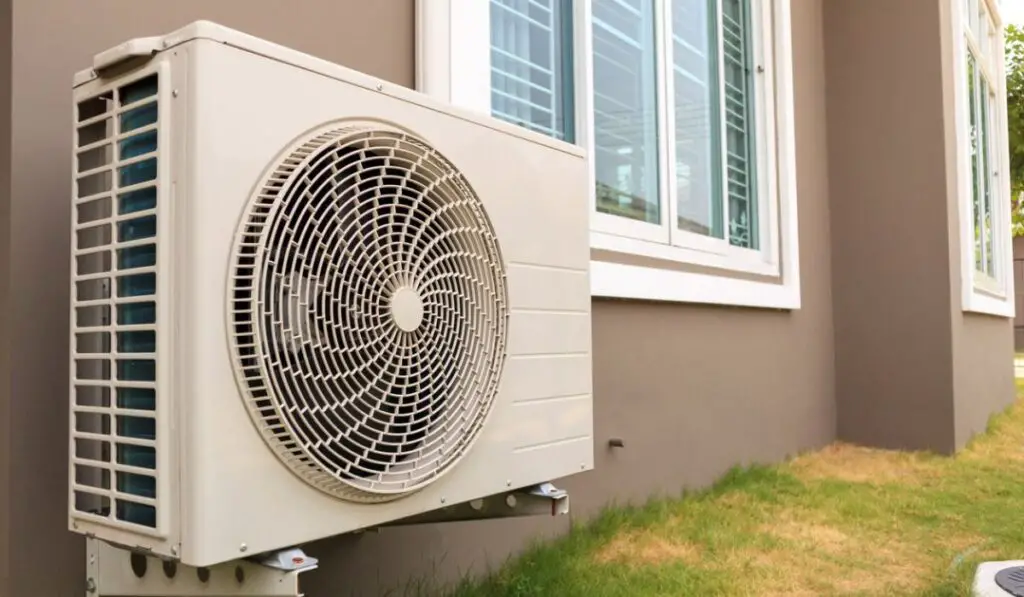
If the blades are obstructed, you will need to remove the obstruction before the fan will be able to spin properly. If the motor is not working, you will need to replace it. This is a more difficult repair and you may need to call a professional to do it for you.
Once you have cleaned or repaired the unit, the fan should start working again. If it does not, there may be another problem that you will need to diagnose and fix.
If your outdoor AC unit’s fan isn’t spinning, there could be a few different reasons why. Maybe something is blocking the fan from spinning, like a leaf or piece of debris. Or, the fan could be frozen due to ice build-up.
Another possibility is that the fan motor itself could be faulty. If you suspect that something is blocking the fan from spinning, the first thing you should do is check for any obstructions. If you find anything, simply remove it and see if that fixes the problem.
When you find the fan is frozen, you’ll need to thaw it out before it will start working again. To do this, turn off the AC unit and let it sit for a few hours. Then, use a hairdryer to thaw out any ice that has built up on the fan.
Once the ice is melted, the fan should start spinning again. If the fan motor is the issue, you’ll need to call a professional to come to take a look. It’s possible that the motor can be repaired, but it’s also possible that you’ll need to replace the entire fan assembly.
Why is the fan on my outside AC unit not running?
If your outside AC unit’s fan isn’t running, there could be a few reasons why. First, check to see if the fan is dirty. If the fan blades are covered in dirt, they won’t be able to spin as easily and the unit won’t work as efficiently.
Cleaning the fan blades is a simple fix that you can do yourself. Another possible reason why the fan isn’t running could be because the AC unit is frozen. This is more common in the winter months when the unit isn’t being used as much.
If your AC unit is frozen, you’ll need to thaw it out before it will start working again. If neither of these solutions fixes the problem, then there may be an issue with the AC unit’s motor. This is a more serious problem that will require a professional to fix.
If your outside AC unit’s fan isn’t running, don’t panic. There are a few things you can check and try to fix the problem yourself. However, if the problem persists, it’s best to call a professional.
How do I know if my outside AC fan motor is bad?
If your outdoor AC fan motor is bad, there are a few things you can look for to be sure. One is if the fan is making strange noises, such as grinding or squealing. Another is if the fan is not turning at all, or is only turning very slowly.
Additionally, you may notice that your AC unit is not cooling as well as it used to, even if the compressor is running. If you suspect your outdoor AC fan motor is bad, it is best to call a certified HVAC technician to come and take a look.
How do you reset an air conditioner fan outside?
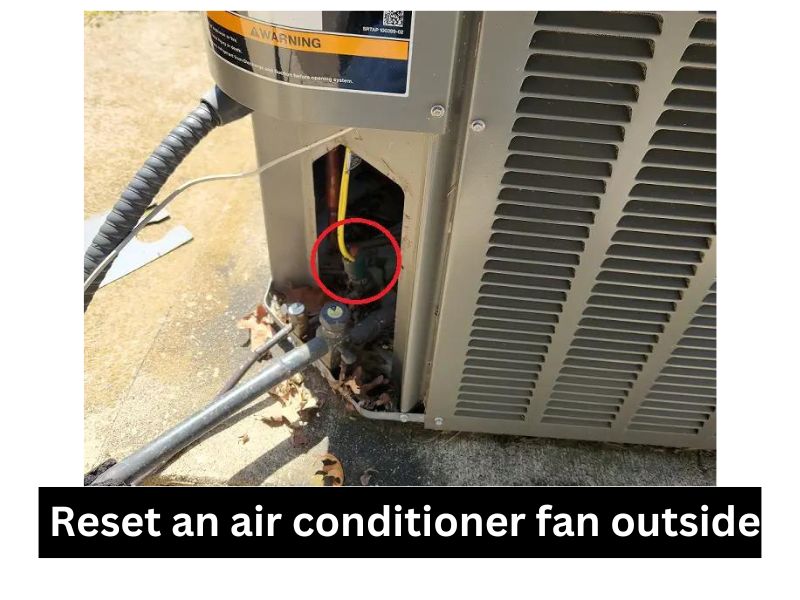
If your air conditioner fan is outside, you can reset it by doing the following:
1. Turn off the power to the air conditioner at the breaker box.
2. Remove the fan blades from the motor.
3. Clean the fan blades with a soft cloth.
4. Inspect the fan blades for damage.
5. Replace any damaged fan blades.
6. Reattach the fan blades to the motor.
7. Turn on the power to the air conditioner at the breaker box.
Why is my fan on but not spinning?
Your computer’s fan is an important part of its cooling system, and if it’s not spinning, that could be a sign of a serious problem. If your fan isn’t spinning, it could be because of a failed bearing, a blockage in the blades, or a problem with the power supply.
How to fix your AC: fan not spinning?
The outside ac unit fan not running but inside is
If your outside AC unit’s fan isn’t running but the inside unit’s fan is, there are a few possible causes. First, check to make sure that your AC unit is turned on. If it is, then the most likely cause is a problem with the compressor.
If the compressor isn’t running, then the fan won’t run either. Another possibility is that the fan motor itself is defective. In either case, you’ll need to call a qualified AC repair technician to diagnose and repair the problem.
Ac fan not spinning after replacing the capacitor
If your AC fan isn’t spinning after you replace the capacitor, there are a few possible explanations. The most likely explanation is that the new capacitor isn’t properly connected. Make sure that the new capacitor is properly installed according to the manufacturer’s instructions.
Another possibility is that the new capacitor is defective. If you suspect that the new capacitor is defective, you can test it with a multimeter. Check for continuity between the terminals of the capacitor.
If there is no continuity, the capacitor is defective and needs to be replaced. If the new capacitor is properly installed and not defective, the problem may be with the AC fan motor itself. The motor may be seized up or otherwise damaged.
In this case, you’ll need to replace the AC fan motor. If you’re having trouble troubleshooting the problem, it’s best to call a professional. A qualified HVAC technician will be able to diagnose and fix the problem quickly.
Outside ac unit not turning on
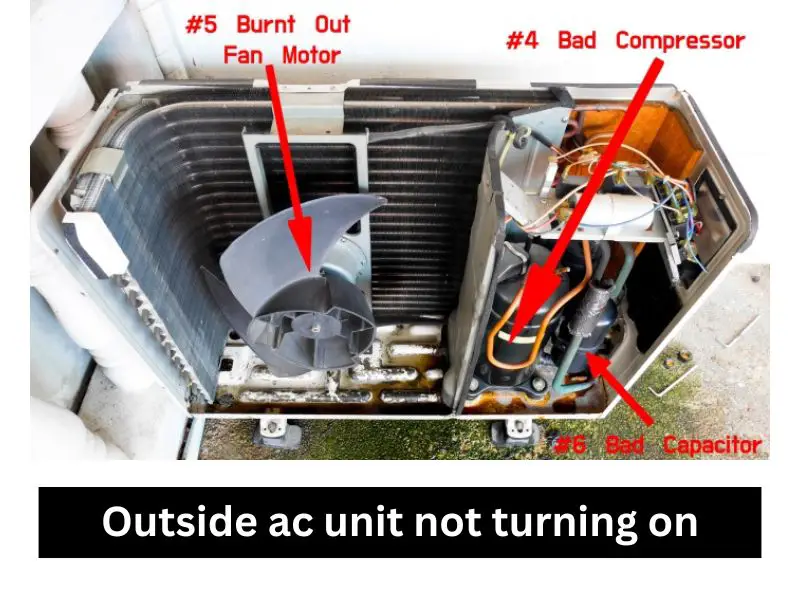
If your outside AC unit isn’t turning on, there are a few things you can check to try and troubleshoot the issue. First, make sure that the unit is properly plugged in and that the circuit breaker hasn’t been tripped. Next, check to see if the unit’s thermostat is set to “cool” and that the temperature is set lower than the current temperature inside the home.
If all of these things are in order and the unit still isn’t turning on, it’s possible that the compressor or fan motor may be faulty and will need to be replaced.
Ac unit fan not spinning and hot
If your AC unit’s fan isn’t spinning, it could be a sign of a bigger problem. If the fan isn’t spinning, the AC unit won’t be able to properly circulate air, which can lead to a build-up of heat. This can be a serious problem, as a build-up of heat can damage the AC unit’s compressor.
Air conditioner fan not spinning
If your air conditioner’s fan is not spinning, it could indicate a variety of potential problems ranging from a failed motor, a damaged fan blade, or an electrical issue such as a blown fuse or tripped circuit breaker.
These issues prevent the fan from operating effectively and circulating cool air, leading to a decrease in the overall efficiency and performance of the air conditioner. Prompt attention from a qualified technician is crucial to resolve this issue and restore your unit to its normal functioning state.
Running ac without condenser fan
If your condenser fan isn’t running, your AC unit won’t work properly. The condenser fan is responsible for circulating air over the condenser coils. These coils are what removes heat from the refrigerant, so without the fan, the coils can’t do their job.
There are a few reasons why your condenser fan may not be running. The most common reason is a faulty capacitor. The capacitor is responsible for providing power to the fan motor.
If it’s damaged, the fan won’t run. Another possibility is that the fan motor itself is damaged. If the motor is burned out, it won’t be able to start the fan.
If your condenser fan isn’t running, you’ll need to call a technician to diagnose the problem. Once the problem is fixed, your AC unit will be back up and running properly.
Window ac unit fan not spinning
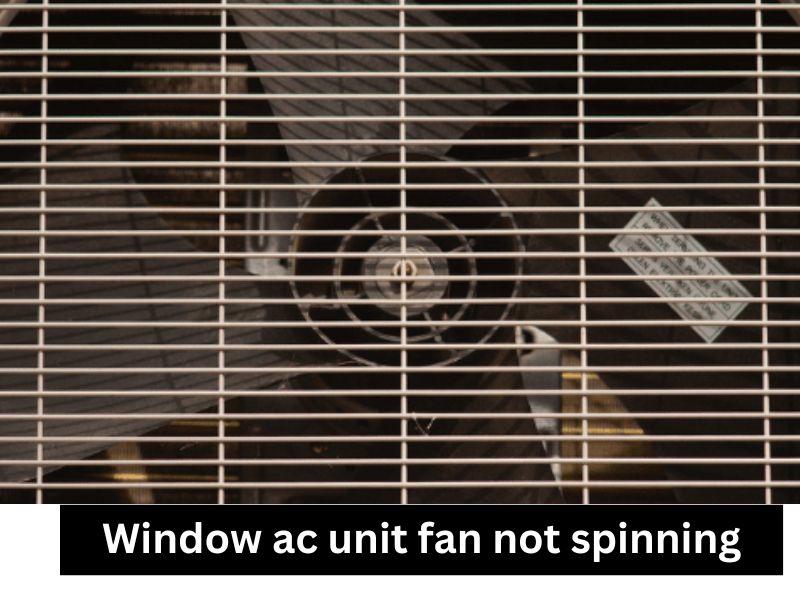
If your window air conditioner’s fan isn’t spinning, there could be a few reasons why. First, check to make sure that the unit is plugged in and that the circuit breaker hasn’t been tripped. If everything looks good there, then take a look at the fan blade to see if it’s obstructed in any way.
When it is, clear the obstruction and try again. If the fan still isn’t spinning, then it’s possible that the motor is defective and will need to be replaced.
Lg split ac outdoor unit fan not working
If you have an LG split AC unit and the outdoor fan is not working, there are a few things you can check. First, make sure that the power is turned on at the breaker box. Next, check to see if the outdoor unit is clean and free of debris.
If it is dirty, clean it off with a garden hose. Finally, check to see if the fan blades are free of dirt and debris. If they are, then the problem may be with the motor.
Portable ac fan not spinning
If your portable AC fan is not spinning, there are a few things you can check to troubleshoot the issue.
First, make sure that the unit is properly plugged in and that the power switch is turned on.
Next, check the airflow settings to make sure they are not set to “recirculate.” If the settings are correct and the fan still isn’t spinning, you may need to reset the unit by unplugging it and then plugging it back in.
Finally, if the unit is still not working, you may need to contact customer service for assistance.
Conclusion
If your outdoor AC unit’s fan isn’t spinning, there could be a few reasons why. First, check to see if there’s any debris blocking the fan from spinning. If there is, clear it away and see if that fixes the problem. If the fan still isn’t spinning, there could be an issue with the motor or the capacitor.
