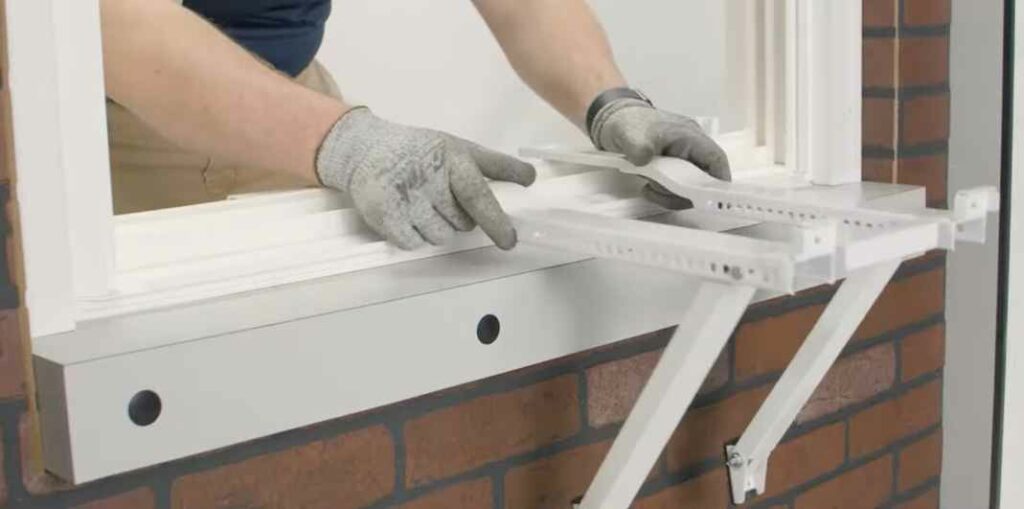
Yes, You can install a window air conditioner without drilling into the window frame.
Special brackets are available that attach to the sides of the window and hold the AC unit in place.
These can be found at most hardware stores.
You will also need to purchase some weatherstripping to seal off any gaps between the unit and the window.
Here is how?
- Select an air conditioner unit that is the appropriate size for the room.
- Place the air conditioner in the window and mark where the mounting brackets will need to be attached to the window frame.
- Remove the air conditioner from the window and drill pilot holes into the window frame at the marks made in step 2.
- Attach mounting brackets to the window frame using screws and washers provided with the air conditioner unit.
- Suspend the air conditioner unit in the window using the mounting brackets and secure it with retaining bolts or latches provided with the unit.
- Install Foam Weatherstripping around all four sides of the air conditioner to create a seal between the unit and the windowpane..
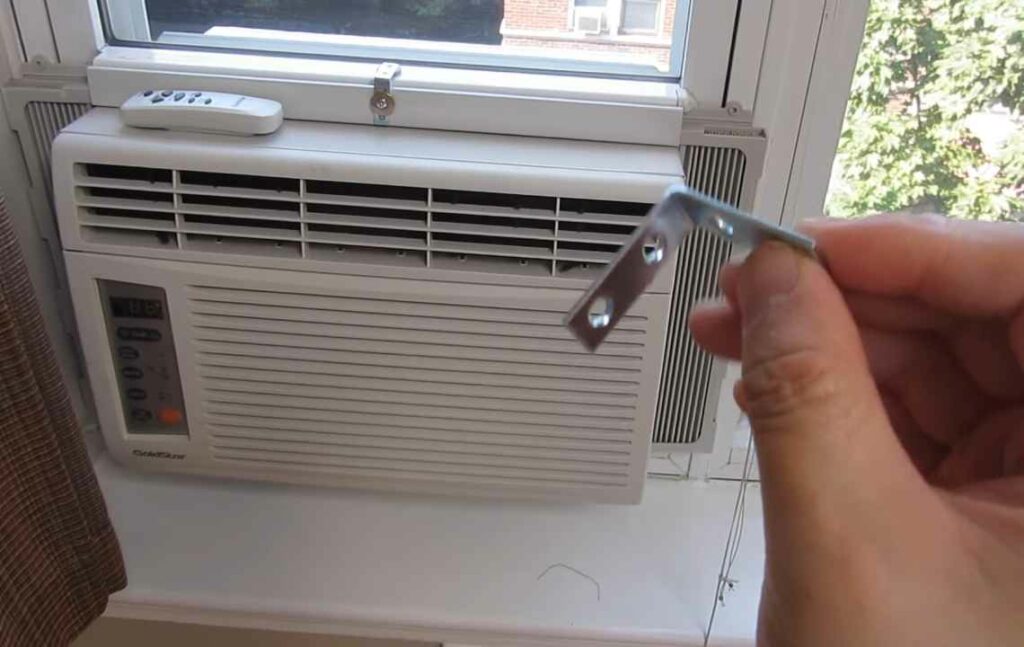
How Can I Secure My Window Air Conditioner Without Drilling?
If you want to secure your window air conditioner without drilling, you can do a few things.
First, try using heavy-duty suction cups.
These can be found at most hardware stores and will provide a stronghold for your AC unit.
Another option is to use zip ties or bungee cords. Simply loop these around the AC unit and secure them to the window frame.
Both of these options should keep your AC unit in place without damaging your window or requiring any tools.
Can You Use an Air Conditioner Without Putting It in the Window?
Air conditioners are not just for windows anymore.
You can use your air conditioner without putting it in the window with a few simple supplies.
By following these steps, you can have cool, comfortable indoor temperatures all summer long.
What You’ll Need:
- -An air conditioner
- -A stable surface on which to place the air conditioner
- -Foam weatherstripping
- -A heavy towel or blanket
- -An electric drill
- -1/4 inch diameter bolts (4) with washers and nuts (8)
- -Measuring tape
Instructions:
1. Place the air conditioner on the chosen surface.
If using a concrete floor, consider placing the unit on casters for easy movement later on.
2. Line up the exhaust hose with an open window, door, or other vent where you want to release the hot air outside.
3. Use weatherstripping to seal any gaps around the perimeter of the unit where cold air might escape indoors.
4. Wrap a heavy towel or blanket around the entire unit, tucking it in so that no light shines through and no cold air escapes.
5. Drill four holes through both sides of the unit and into the chosen surface below.
Secure AC Window Unit without Drilling Holes and Damaging Window How to Install Tips Solution
Drilling into Vinyl Window Frame for Air Conditioner
If you’re looking to install an air conditioner in your home, you may be wondering if it’s possible to drill into a vinyl window frame.
The answer is yes! Drilling into vinyl window frames is a popular method for installing air conditioners, and it’s actually quite easy to do.
Here’s a step-by-step guide on how to drill into a vinyl window frame for your air conditioner:
1. Measure the width of your air conditioner and mark the spot on the vinyl window frame where you’ll need to drill.
2. Using a power drill, create a pilot hole at the marked spot on the frame.
3. Enlarge the hole with a spade bit that’s slightly wider than the diameter of your AC unit’s mounting bracket bolts.
4. Insert the AC unit’s mounting bracket bolts through the enlarged holes and secure them in place with washers and nuts.
5. Hang your AC unit on the brackets and plug it in!