“How many BTU per square foot cooling” is a commonly asked question in the HVAC industry. The answer to this question depends on several factors, including the size of the room, the level of insulation, and the climate in which the building is located.
As a general rule of thumb, it is recommended to have 20-25 BTU per square foot for cooling purposes.
However, it is always best to consult with a professional HVAC technician to determine the exact cooling needs of a particular space. This can ensure optimal energy efficiency and cost-effectiveness of the cooling system.

How Many BTU Per Square Foot Cooling? A General Overview
You should always consider “How many BTUs do I need” when purchasing or installing a new HVAC system in your home. You should take into account a number of considerations before answering this. The size, shape, and insulation level of the space are only a few of the variables that affect how many BTU per square foot cooling are needed.
Generally speaking, an uninsulated room with 8-foot ceilings typically requires 30 to 35 BTU/sq ft in order to cool it adequately. Insulating the walls and ceiling properly can reduce this figure significantly; for example, an insulated room with 8-foot ceilings typically only needs 15 to 20 BTU/sq ft.
Additionally, larger rooms require more total BTUs of cooling than smaller rooms; for instance, a 10x15ft room would require about 40BTU/sq ft whereas a 5x8ft room may need 25BTU/sq ft or less.
When it comes to air conditioning, knowing how many British Thermal Units (BTU) are necessary per square foot of space is an important factor in determining the size and power of your system.
Generally speaking, most homes require at least 20 BTUs per square foot for cooling purposes, although this number may vary depending on factors such as orientation, insulation, and climate.
Additionally, higher ceilings may require a few extra BTUs than average to ensure adequate coverage by the AC unit.
How Many BTUs Do I Need?
Determining the appropriate BTU (British Thermal Unit) required to cool space is an important aspect of HVAC system design. It is essential to choose an air conditioner with a BTU rating that is suitable for the size of the room.
An oversized unit may result in excessive energy consumption and a shorter lifespan, while an undersized unit may struggle to cool the space effectively. Several factors need to be considered when calculating the required BTU, including the size of the room, ceiling height, insulation, windows, and doors.
It is recommended to consult with a professional HVAC contractor to ensure that the appropriate BTU rating is selected for your specific needs.

BTU Calculation Formula for Air Conditioner
The Btu (British Thermal Unit) calculation formula for air conditioners is a simple mathematical equation used to determine the cooling capacity of the air conditioning system.
To calculate the amount of cooling needed, you must first measure the area in square feet that needs to be cooled and then multiply it by 25 BTUs per square foot.
This will give you an estimate of how many BTUs your air conditioner should have in order to properly cool your home or office.
If you want to know the formula for calculating BTU per hour for an air conditioner, let’s get it below-
BTUH = CFM x ΔT x 1.08
BTU Per Square Foot Heating Rule of Thumb
When considering home heating, a frequently used rule of thumb is to provide 20-30 BTUs per square foot of living space. This number can be adjusted up or down depending on the climate and insulation levels in the house, as well as personal comfort preferences. It’s important to remember that this is just a guideline; determining the exact amount of BTU needed for your particular situation requires consulting with an experienced HVAC specialist.
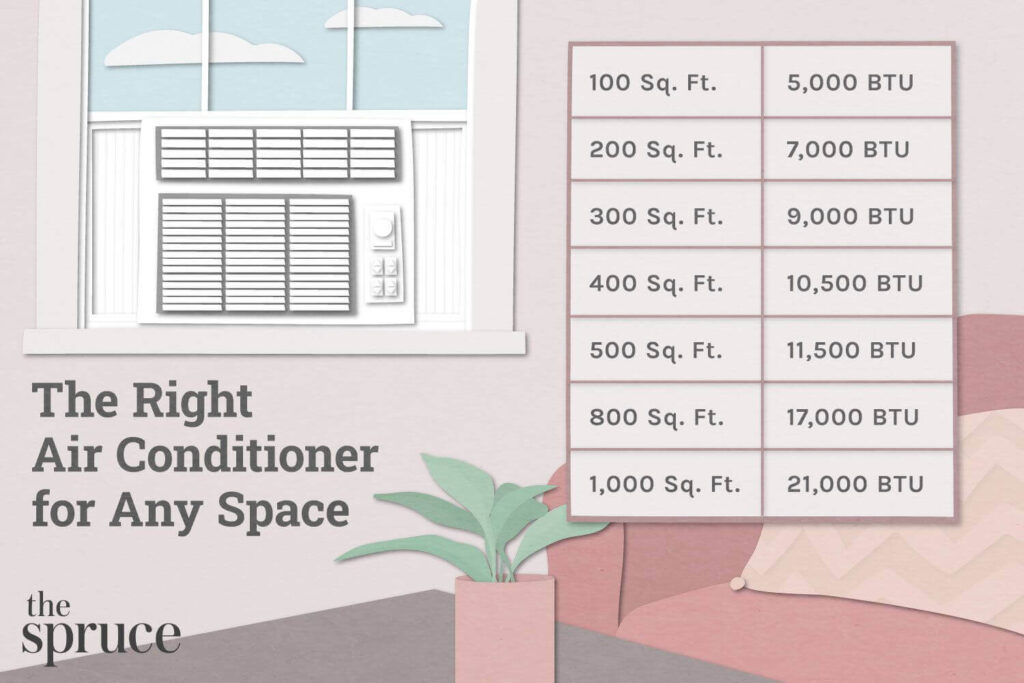
How Many Btu for 500 Sq Ft?
A 500 square foot space generally requires approximately 20,000 BTU per hour of heating capacity. This number is based on the assumption that each room in the 500 sq ft area has a ceiling height of 8 feet, and the climate is temperate. To accurately calculate how many BTUs your particular space needs to be heated or cooled, you should consult an HVAC professional for an exact assessment.
How Many BTUs Do I Need to Heat 1,500 Square Feet?
When deciding how many BTUs you need to heat 1,500 square feet of space, it is important to take into account the climate and insulation of your home. A typical rule of thumb for this size area is 45,000 to 60,000 BTU per hour. However, if you live in a colder climate or have an older home with minimal insulation then you might consider bumping up your BTUs needs by 10-15%.
Additionally, depending on the type and size of the furnace that you purchase additional adjustments may be necessary.
BTU to Sq Ft Chart
A Btu to Sq Ft Chart is an important tool for understanding the amount of heat needed to maintain a comfortable temperature in a given area. It helps determine how much space heating equipment needs to be installed and helps calculate energy costs associated with that equipment. The chart provides estimates of the number of BTUs needed per square foot for various types of spaces including living rooms, bedrooms, kitchens, offices, and other areas.
Knowing the exact size and type of room that requires heating can help ensure efficient use of energy while maintaining comfort levels at home or work.
Heating BTU Calculator
A BTU calculator can be a great tool when it comes to heating your home. It helps you determine the number of BTUs (British Thermal Units) necessary to properly heat your space, taking into account factors such as your home’s square footage, window size and exposure, insulation levels, and climate zone.
With this information in hand, you can make an informed decision about the type of heater or furnace that is best for you and ensure it is sized correctly for optimal efficiency.
Cooling BTU Calculator
A cooling Btu calculator can be a helpful tool when trying to determine how much cooling capacity you will need for your home or office. It takes into account factors such as the size and layout of the space, insulation levels, number of occupants, and other environmental factors to calculate the number of BTUs (British Thermal Units) required.
Having an accurate calculation can help you select an air conditioner that’s powerful enough to keep your environment comfortable while also helping save energy costs.
How Many Square Feet Will 40,000 BTU Heat
40,000 BTUs will heat approximately 1,000 square feet of living space. Depending on the insulation and other factors in the room in which you are heating, you may need to adjust this number higher or lower.
Additionally, air circulation should be considered when determining how many square feet can be heated by 40,000 BTUs and any external factors that might affect your home such as cold temperatures outside.
How Many Square Feet Will a 12000 BTU Air Conditioner Cool?
When considering how many square feet a 12000 BTU air conditioner can cool, it is important to consider the climate and insulation of the space being cooled. Generally speaking, a 12000 BTU air conditioner will be able to effectively cool an area up to 500-550 square feet, depending on factors such as ceiling height, window size and type, the direction of sunlight, and humidity levels. Additionally, if you have high ceilings or large windows that let in more light/heat than usual then this number may decrease further.
It’s also essential for consumers to remember that larger rooms require additional BTUs per square foot in order for them to stay comfortable during hot weather months so if you’re looking at cooling a larger room with a 12000 BTU air conditioner then it may not provide the desired results.
Lastly, don’t forget about your insulation needs – having adequate insulation helps keep the cold air inside while blocking out any outside heat making it easier for your AC unit to maintain optimal temperatures throughout your home or office!
How Many Btus Do I Need to Cool 1000 Square Feet?
When it comes to cooling a space, one of the most important factors to consider is how many BTUs (British Thermal Units) are needed. This number can vary depending on your climate and other variables, but generally speaking, if you’re cooling an area of 1,000 square feet then you will need about 18-25 BTU per square foot for efficient cooling. This means that for a 1,000 square feet space you should look at an air conditioner with between 18,000 and 25,000 BTUs.
However, this can also depend on the orientation or size of windows in the room as well as any insulation or other specifications related to heating/cooling efficiency so it’s always best to consult with professionals before making your final decision.
Additionally, when shopping for an air conditioning unit make sure you take into account additional features such as energy efficiency ratings and noise level outputs so that you end up getting the right model for all aspects of comfort needs!
How Many Btus Do I Need to Cool 2000 Square Feet?
When trying to determine the number of BTUs (British Thermal Units) needed to cool a 2000 square feet area, it is important to consider the climate in which you live. If you live in an area with moderate temperatures and low humidity levels, then a 12,000 BTU air conditioner should be sufficient. However, if your home is located in an extremely hot or humid environment like Texas or Florida, then a unit that can handle up to 18,000 BTUs may be necessary.
Additionally, if there are more people living inside than usual or other electronics running simultaneously like computers and televisions that generate extra heat into the space – larger units ranging from 24-36 thousand BTUs will be appropriate for cooling down your home.
It is also worth considering investing in energy efficient models that use less electricity while providing superior cooling performance too!
How Many Square Feet Will a 10000 Btu Air Conditioner Cool?
A 10000 BTU air conditioner can cool up to 350-400 square feet of space. Depending on the size and insulation of your room, as well as other factors such as sunlight, ceiling height, and humidity, you may need a unit with higher or lower BTUs in order to effectively cool your area. A 10 000 BTU air conditioner is designed for medium to large rooms that measure between 18’ x 20’ and 25’ x 30’ respectively.
It is best used for single-room cooling needs; however, it can be used in larger areas if multiple units are placed throughout the house or apartment. Regardless of which model you choose, it’s important to remember that an AC unit’s performance depends on many variables including external temperature conditions and proper maintenance of filters. With good care and appropriate usage, a 10000 BTU air conditioner will help keep you comfortable during those hot summer days!
Simple Calculating of BTU Per Square Foot
Conclusion
In conclusion, it can be seen that there is no single answer to the question of how many BTU per square foot cooling is required. Depending on the size of the room and other factors such as insulation and airtightness, different amounts may be necessary. However, a good rule of thumb is 10-15 BTUs per square foot for standard residential rooms.
If you have specific requirements or need additional advice, consulting with a professional HVAC technician would be wise in order to determine what will work best for your space.
