“How Cold Should My AC Blow?” is a common question that many homeowners ask themselves during the hot summer months. The answer to this question is not as straightforward as you may think, as the ideal temperature can vary depending on a number of factors.
However, most experts agree that the optimal range for an air conditioning unit is between 72 and 78 degrees Fahrenheit. This temperature range strikes the perfect balance between keeping your home cool and comfortable while also minimizing energy usage and costs.
In this blog post, we’ll explore the ideal temperature for an air conditioning unit, as well as the reasons behind it. We’ll also delve into the importance of maintaining your AC unit and the potential consequences of running it at the wrong temperature. So, stay tuned with us.
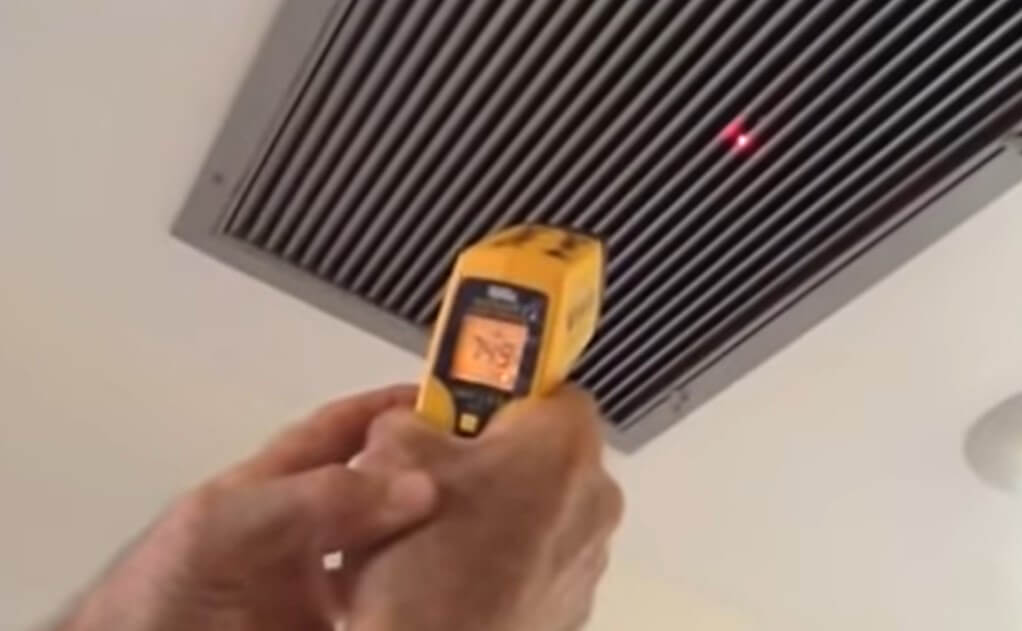
How Cold Should My AC Blow? Know the Ideal Temperature For Your AC?
Most people keep their AC at about 78 degrees, but if it’s still too warm for your comfort, you can lower it a few degrees. Just be careful not to go too low, or you’ll be wasting energy (and money) cooling an empty house.
If your AC is blowing cold air, but not as cold as you want it to, there are a few possible reasons. One is that your AC unit is undersized for the space it’s cooling. Another possibility is that there’s something blocking the airflow, like a dirty filter.
Finally, it could be that the refrigerant level is low. If you’re not sure what the problem is, it’s best to call a professional.
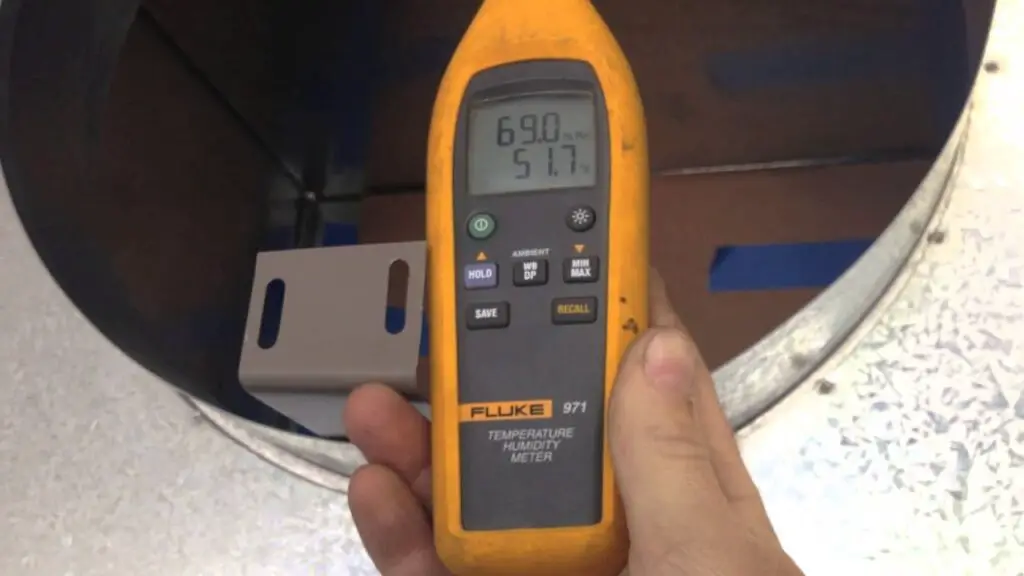
How cold should the air be blowing out of the vents?
If your home has a central heating and cooling system, you know that there are a few things you can do to keep your energy bills down and maintain a comfortable temperature in your home.
One question you may have is: how cold should the air be blowing out of the vents? The answer to this question depends on a few factors, including the type of system you have, the climate you live in, and your personal preferences.
Here are a few general guidelines to help you set the perfect temperature in your home: If you have a central heating and cooling system, the air should be blowing out of the vents at a temperature that is comfortable for you.
In general, the air should be set to a temperature that is about 10-15 degrees cooler than the temperature in the room.
If you live in a climate that is very hot or very cold, you may need to adjust the temperature of the air coming out of the vents accordingly.
For example, if you live in a climate that is very hot, you may want to set the air to blow out at a temperature that is cooler than 10-15 degrees cooler than the room temperature. Your personal preferences will also play a role in setting the perfect temperature in your home.
If you prefer a warmer or cooler environment, you will need to adjust the temperature of the air accordingly.

How cold should ac blow in the car?
When it comes to your car’s air conditioner, there is no one-size-fits-all answer to the question of how cold it should blow. Depending on the outside temperature, your personal preferences, and even the type of car you drive, the ideal setting for your AC could be anything from “barely cool” to “bone-chilling cold.”
In general, though, it’s generally best to err on the side of caution and go for a cooler setting rather than a warmer one.
After all, you can always turn the AC up if it’s not cold enough, but you can’t turn it down if it’s too cold!
Of course, there are a few other things to keep in mind when adjusting your car’s AC.
First, remember that the temperature you feel inside the car will be affected by how fast you’re driving; the faster you go, the more the wind will cool things down.
Second, if you have the AC on full blast and the windows up, you may want to crack the windows open a bit to avoid feeling like you’re in a sauna.
Finally, if you’re still not sure what temperature to set your AC at, a good rule of thumb is to start at the highest setting and then turn it down until you find the perfect balance of comfort and coolness.
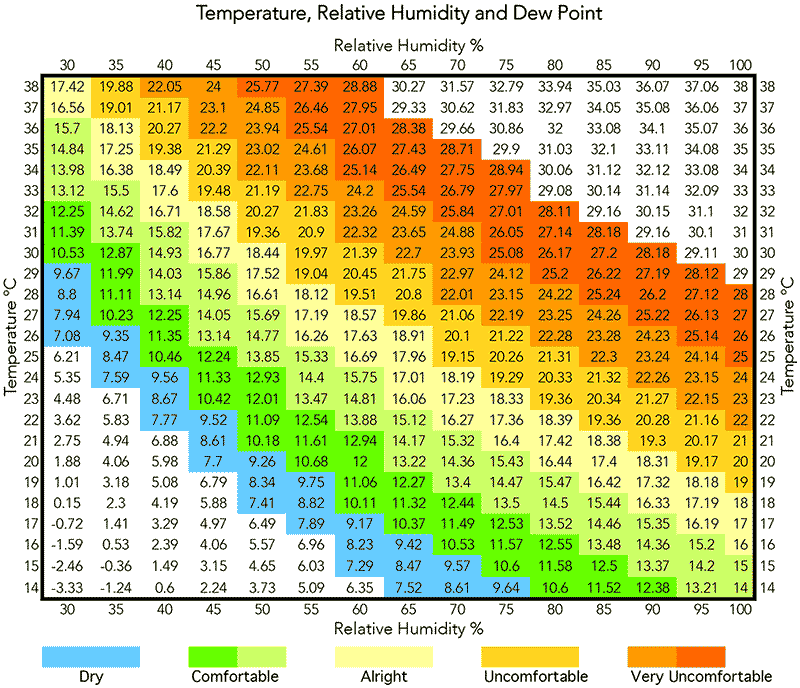
Home ac temperature chart
If you’re looking for a home ac temperature chart, you’ve come to the right place. In this blog post, we’ll provide you with a detailed chart that you can use to ensure your home air conditioner is working properly. The first thing you’ll want to do is take a look at the chart and find the temperature that corresponds to the temperature outside.
This will tell you what temperature you should set your AC to in order to keep your home cool. Next, take a look at the humidity level. This will tell you how much moisture is in the air and will help you determine how often you need to run your AC.
Finally, take a look at the dew point. This will tell you when the air is saturated with moisture and will help you determine when you need to turn on your AC.
By following this home ac temperature chart, you can ensure that your air conditioner is working properly and that your home is cool and comfortable.
Air conditioning temperature difference between the supply and return air should be
Most people think that the temperature of the air conditioning system should be set to what feels comfortable to them. However, there is actually a specific temperature difference that is recommended by HVAC professionals.
The temperature of the air coming out of the supply vents should be about 20 degrees cooler than the temperature of the air in the room.
The temperature of the air coming out of the return vents should be about 10 degrees warmer than the temperature of the air in the room. This temperature difference helps the air conditioning system to operate more efficiently.
What is the coldest temperature for an air conditioner?
On a hot summer day, the last thing you want is for your air conditioner to break down. But when temperatures outside are in the 90s, your air conditioner is working overtime to keep your home cool and comfortable. So, what is the coldest temperature for an air conditioner?
While most air conditioners are designed to operate in temperatures up to 100 degrees Fahrenheit, some can operate in temperatures as low as 35 degrees.
But, if the temperature outside is below 60 degrees, your air conditioner won’t be able to effectively cool your home. If you live in an area with extreme temperatures, it’s important to choose an air conditioner that’s designed for your climate.
If you live in a hot climate, look for an air conditioner with a high SEER rating. SEER stands for Seasonal Energy Efficiency Ratio, and it measures how much energy your air conditioner uses to cool your home. The higher the SEER rating, the more efficient your air conditioner will be.
If you live in a cold climate, look for an air conditioner with a low EER rating. EER stands for Energy Efficiency Ratio, and it measures how much energy your air conditioner uses to cool your home. The lower the EER rating, the more efficient your air conditioner will be.
What should the home ac vent temp be?
If you’re like most people, you probably don’t think much about your home’s air conditioning vents. But believe it or not, the temperature of those vents can actually have a big impact on your comfort level. So what should the home ac vent temp be?
In most cases, the ideal temperature for air conditioning vents is around 70 degrees Fahrenheit. Of course, this can vary depending on the specific circumstances of your home. For example, if you have a lot of windows that get direct sunlight, you might want to set the vents a few degrees cooler.
One thing to keep in mind is that the temperature of your vents can have a direct impact on your energy bill. So if you’re looking to save money, it’s worth taking a few minutes to adjust the vents in your home.
Overall, the best way to determine the ideal temperature for your air conditioning vents is to experiment a bit.
Start with 70 degrees and then make adjustments as needed. You’ll soon find the perfect balance of comfort and savings.
Air conditioner air temperature output
Most air conditioners have a default setting of 78 degrees Fahrenheit (ca. 26 °C), but the temperature output can be changed to meet your needs. The range that an air conditioner can output is typically between 60 and 80 degrees Fahrenheit (ca. 27 °C).
To change the output temperature of your air conditioner, first locate the thermostat. The thermostat is usually located on the wall in the room that is being cooled. Once you have located the thermostat, locate the temperature control knob.
This knob will be turned to the left to lower the temperature and to the right to raise the temperature. Keep in mind that the air conditioner will not work if the temperature outside is cooler than the temperature you have set the air conditioner to.
In other words, if you have your air conditioner set to 68 degrees, and it is currently 80 degrees outside, your air conditioner will not turn on.
Also, keep in mind that the air conditioner will run constantly if the difference between the temperature inside your home and the temperature you have set on the air conditioner is more than 20 degrees.
For example, if it is 90 degrees outside and you have your air conditioner set to 68 degrees, your air conditioner will run constantly in an attempt to reach the set temperature.
Auto ac vent temperature chart
When it comes to your car’s AC, there is an ideal temperature that it should be set in order to achieve maximum efficiency. This temperature will differ based on the outside temperature and humidity.
For instance, in hot and humid conditions, it is best to set your AC at a lower temperature than usual in order to prevent the car from feeling like a sauna.
However, in cooler and drier conditions, you can set the AC a bit higher and still maintain comfort. To help you determine what temperature to set your car’s AC at, we’ve put together this handy chart. Simply find the current outside temperature and humidity on the chart and set your AC accordingly.
Outside Temperature:
- 60-70 degrees Fahrenheit: 72-74 degrees Fahrenheit
- 71-80 degrees Fahrenheit: 74-76 degrees Fahrenheit
- 81-90 degrees Fahrenheit: 76-78 degrees Fahrenheit
- 91-100 degrees Fahrenheit: 78-80 degrees Fahrenheit
Humidity:
- 60-70% humidity: 72-74 degrees Fahrenheit
- 71-80% humidity: 74-76 degrees Fahrenheit
- 81-90% humidity: 76-78 degrees Fahrenheit
- 91-100% humidity: 78-80 degrees Fahrenheit
Remember, these are just guidelines. You may need to experiment a bit to find the perfect temperature for your car’s AC.
How cold should AC blow out of vents?
Most people keep their homes at a comfortable temperature by using an air conditioner in the summer and a furnace in the winter. But have you ever wondered how cold your air conditioner should blow out of the vents? The answer may surprise you.
The ideal temperature for your air conditioner is actually quite warm – around 78 degrees Fahrenheit. Why is this the ideal temperature? For one, it’s energy efficient.
The lower the temperature of your air conditioner, the harder it has to work to cool your home. This means that it uses more energy and costs you more money. Secondly, it’s better for your health.
AC that blows out cold air can actually cause health problems, such as sinus infections, colds, and flu. So there you have it – the next time you’re wondering how cold your air conditioner should be, remember that 78 degrees is the ideal temperature.
How cold should your AC be able to get?
The average home air conditioner can achieve temperatures between 20 and 30 degrees Fahrenheit. But it can get much colder than that. Some air conditioners can reach 0 degrees Fahrenheit.
But most people don’t need their air conditioners to get that cold.
How cool should my house be if it’s 100 outside?
If it’s 100 degrees outside, your house should be about 78 degrees.
How cold can an AC blow?
Your air conditioner blows cold air into your home to remove heat and humidity. The colder the air that comes out of the unit, the more efficient it is at removing heat. However, there is a limit to how cold the air can be.
If the air is too cold, it can actually make your home feel uncomfortable. The ideal temperature for your air conditioner is around 78 degrees Fahrenheit. However, some units can blow air that is much colder than this.
If you find that your unit is blowing air that is too cold, there are a few things that you can do. First, check the thermostat to make sure that it is set to the correct temperature. If it is set too low, it will cause the unit to blow colder air.
Next, check the air filter. A dirty air filter can restrict airflow and cause the unit to blow colder air. Finally, check the ductwork.
If the ductwork is leaky, it can cause the unit to blow colder air. If you have checked all of these things and the unit is still blowing cold air, it is time to call a professional. They can help you troubleshoot the problem and get your unit back to blowing air at the correct temperature.
How cold should my air conditioning Be?
FAQs For How Cold Should My AC Blow
How Cold Should a Window Air Conditioner Blow?
A window air conditioner should ideally blow air at a temperature of around 55-60 degrees Fahrenheit. This temperature range ensures that the air being circulated is cool enough to provide relief from the heat, but not too cold that it causes discomfort or health issues.
It is important to note that the temperature setting may vary based on individual preferences and the size of the room being cooled.
How Cold Should My House AC Blow?
It is recommended that the air conditioning unit in a house blows between 65-75 degrees Fahrenheit. This temperature range provides the optimal level of comfort and energy efficiency. It is important to regularly maintain and clean the AC unit to ensure that it is functioning properly and effectively.
Additionally, proper insulation and sealing of windows and doors can improve the efficiency of the AC unit and reduce energy costs.
How Cold Should My Central AC Blow?
The ideal temperature for central AC to blow is between 70 and 78 degrees Fahrenheit (ca. 26 °C) to maintain a comfortable indoor environment. However, this may vary depending on individual preferences and external weather conditions. It is recommended to set the thermostat to the highest temperature possible during the summer months to save energy and reduce utility bills.
Additionally, regular maintenance and cleaning of the AC system can ensure optimal performance and efficiency.
How Cold Should an Air Conditioner Blow?
The ideal temperature for an air conditioner to blow is between 68 and 72 degrees Fahrenheit. This comfortable range ensures that the indoor environment remains cool and refreshing, without being too cold. It is important to note that excessively cold air can lead to discomfort and even health problems, such as headaches and respiratory issues.
Therefore, it is recommended to set the air conditioner temperature to a moderate level that suits your personal comfort level.
How Cold Should a Car AC Blow?
The ideal temperature for a car AC system to blow is between 35 and 45 degrees Fahrenheit. This temperature range provides maximum comfort and efficiency for passengers while preventing the AC system from overworking and potentially causing damage.
It is important to regularly maintain and service the AC system to ensure it is functioning properly and providing the desired temperature range.
Conclusion
If your home is too hot, it can be tempting to crank up the AC to cool things off quickly. However, you should be aware that setting your AC to blow very cold air can actually be harmful to your health. When the air is too cold, it can cause your body to go into shock and can even lead to hypothermia.
In addition, cold air can dry out your skin and mucous membranes, which can lead to dehydration.
So how cold should your AC be blowing? The ideal temperature is around 72 degrees Fahrenheit. If you need to cool your home down quickly, you can lower the temperature a few degrees, but be sure to raise it back up once your home is comfortable.
