Birds can be a real nuisance when they roost on your air conditioner. Not only can they cause damage to the unit, but they can also leave behind a mess. But how to keep birds off my air conditioner? Don’t worry! There are a few things you can do to keep birds off your air conditioner.
One of the best things you can do is to cover the unit with a bird net. This will prevent the birds from being able to land on the unit, and it will also keep them from getting inside the unit and nesting.
You can also try using a bird deterrent spray. These sprays contain a chemical that will discourage birds from landing on your air conditioner. You can find these sprays at most hardware stores.
If you have a problem with birds roosting on your air conditioner, you can also contact a pest control company.
They will be able to help you find a solution that will work for your specific situation.
- To keep birds off your air conditioner, you can try a variety of different methods
- One popular method is to place a plastic or metal screen over the air conditioner unit
- This will prevent birds from being able to land on the unit and build a nest
- You can also try installing a bird net over the air conditioner unit
- This will also prevent birds from being able to land on the unit and build a nest
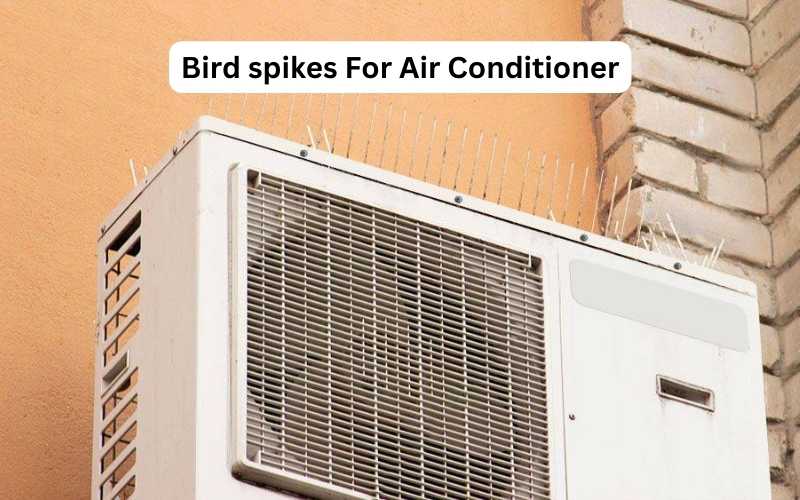
- Another option is to place a bird spike strip on the unit
- This will deter birds from landing on the unit, as they will not be able to get a good grip
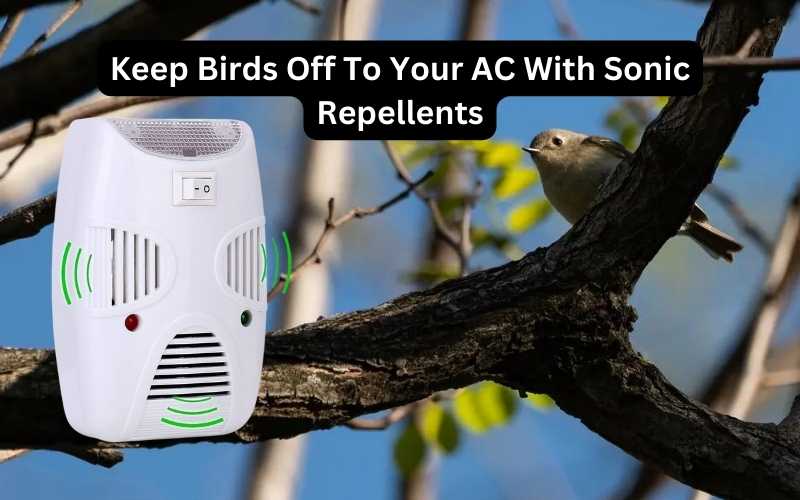
- Finally, you can try using a sonic bird repeller
- This emits a high-frequency sound that birds find to be very unpleasant
Besides the above, we will show you five simple ways to keep birds away from your air conditioner which are effective as well as not harmful to the birds. Let’s get started.
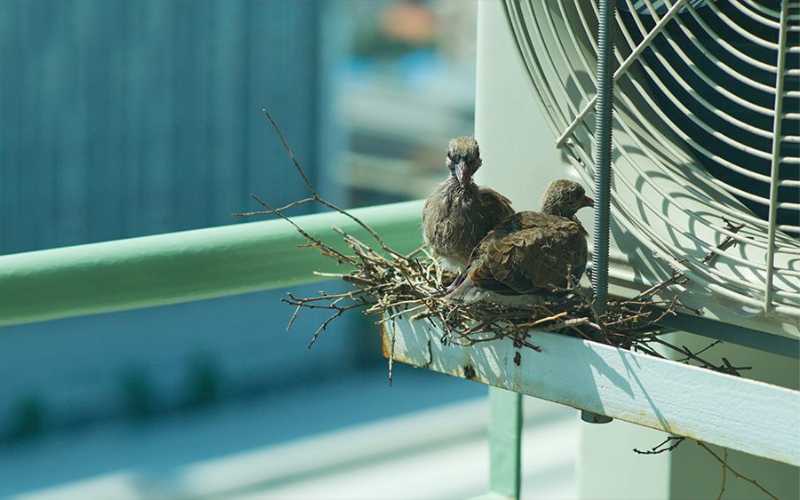
5 Simple Hacks On How To Keep Birds Off My Air Conditioner
Find below the five simple methods that help you to keep birds away from your air conditioner.
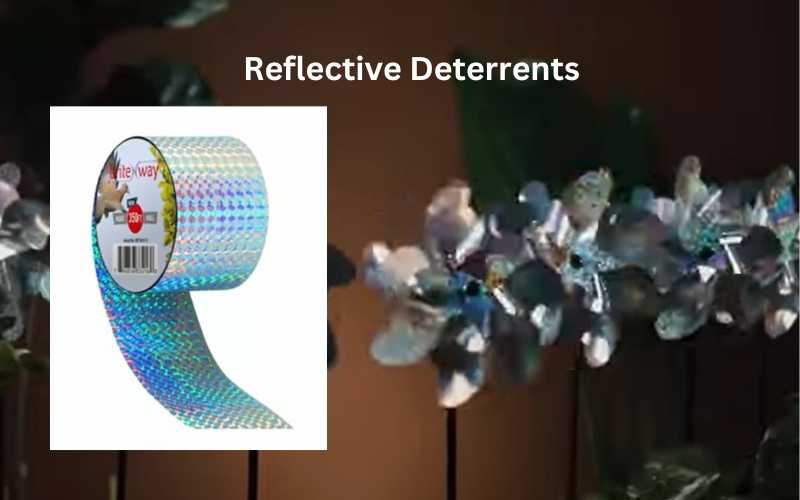
1. Reflective Deterrents:
Place shiny objects or reflective surfaces near your air conditioner, such as aluminum foil strips or old CDs. Birds are often scared away by the flashes of light and movement caused by these deterrents, reducing their interest in perching on your unit.
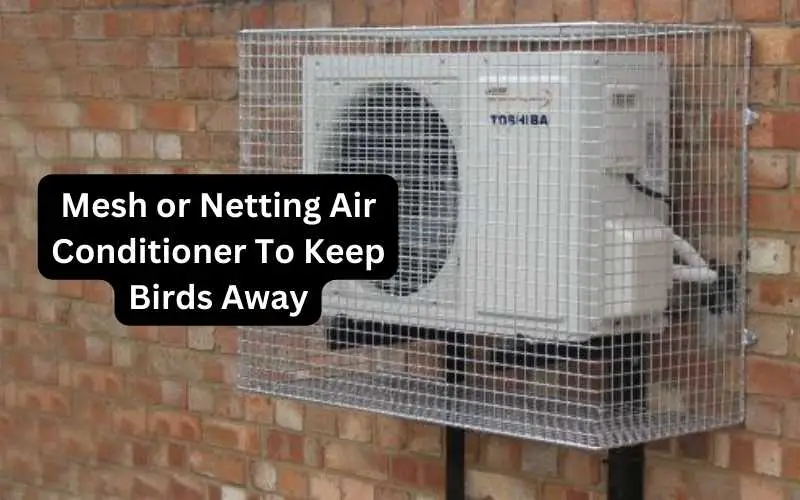
2. Mesh or Netting:
Install a mesh or netting around your air conditioner to create a barrier between the birds and the equipment. Make sure the mesh has small enough gaps to prevent birds from squeezing through.
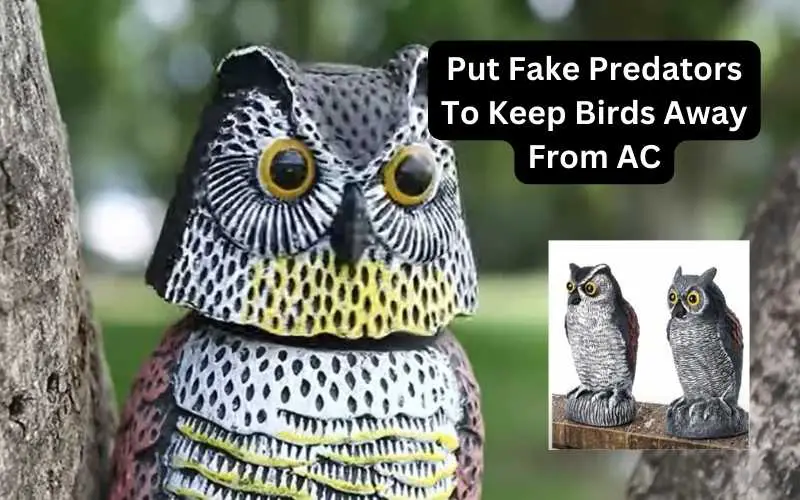
3. Fake Predators:
Use decoys of natural bird predators, such as plastic owls or hawks, around your air conditioner. Birds are instinctively wary of these creatures and are less likely to come near when they perceive a potential threat.
4. Citrus Scents:
Birds have a strong aversion to citrus scents. Consider spraying a mixture of water and lemon or orange essential oil around the air conditioner to create a natural deterrent.

5. Sonic Repellents:
Invest in a sonic bird-repellent device that emits high-frequency sounds or predator calls inaudible to humans but irritating to birds. These devices create a hostile environment, encouraging the birds to seek calmer locations away from your air conditioner.
Remember, it’s essential to choose humane methods to keep birds away without causing them harm. These hacks should help you maintain the efficiency of your air conditioner while keeping birds at a distance.
How do you keep birds away from your air conditioner?
If you have a problem with birds nesting in or near your air conditioner, there are a few things you can do to keep them away. First, try to make the area around your air conditioner less attractive to birds. This means removing any potential nesting materials, such as sticks, leaves, and debris.
You should also trim back any trees or shrubs that are near the unit, as these can provide birds with a place to perch and easy access to your AC. If birds are already nesting in or near your air conditioner, you’ll need to take more aggressive measures. One option is to install a physical barrier, such as chicken wire, around the unit.
This will prevent birds from being able to get close enough to build a nest. You can also try using a chemical repellent. There are a variety of commercial products available, or you can make your own using a mixture of vinegar and water.
Spray the repellent around the air conditioner, being careful to avoid the unit itself. If birds are still a problem, you may need to call in a professional. A wildlife control expert can help you identify the cause of the problem and take steps to solve it.
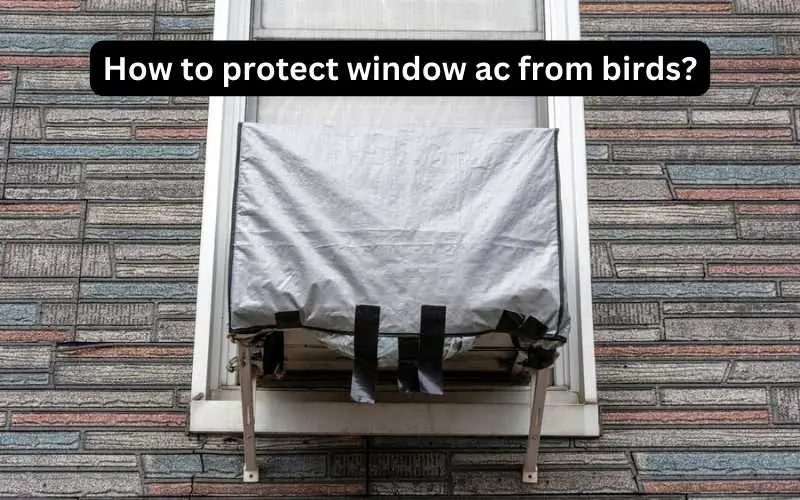
How to protect window ac from birds?
To protect a window AC unit from birds, it is recommended to cover it with a mesh screen. This screen should be made of a durable material that is resistant to weather conditions, such as aluminum or stainless steel. The screen should be installed securely to prevent birds from entering through gaps or holes.
It is also important to regularly clean the AC unit and surrounding area to remove any nesting materials or debris that may attract birds.
If birds persist in attempting to enter the unit, additional measures such as bird spikes or deterrents can be installed around the area to discourage them from landing or perching.
By taking these steps, you can protect your window AC unit from damage and keep your home comfortable and cool throughout the summer.
How do you install bird spikes on an air conditioner?
If you’re looking to keep birds from roosting on your air conditioner, installing bird spikes is a great solution.
Here’s a step-by-step guide on how to install bird spikes for air conditioners:
1. Start by measuring the width of your air conditioner. This will determine how many bird spikes you’ll need to purchase.
2. Next, using a drill, make pilot holes along the edge of your air conditioner.
3. Once the pilot holes are drilled, insert the bird spikes into each one.
4. Finally, using a hammer, tap the spikes in until they’re flush with the surface of the air conditioner. And that’s it!
By following these simple steps, you’ll have your air conditioner bird-proofed in no time.
Do birds like the AC?
Assuming you are asking if birds enjoy the feeling of cool air on a hot day, then the answer is yes! Birds have feathers that provide insulation against both cold and heat, but on a hot day, they will often seek out areas where they can cool down. This can include flying into the wind, sitting in wet grass, or even sitting in front of a fan or air conditioner.
So, if you see a bird sitting in front of your AC unit, it’s likely because they are enjoying the cool air!
Netting for air conditioner
As the weather gets warmer, many of us are cranking up the air conditioner to stay cool. But did you know that your air conditioner can also be working overtime to keep the bugs out? That’s right, by installing a simple netting around your air conditioner, you can help keep those pesky insects from getting inside your home.
Installing a netting around your air conditioner is a relatively easy process. First, you’ll need to purchase a netting kit from your local hardware store. Once you have the kit, simply follow the instructions to install the netting around your air conditioner.
In most cases, the netting can be installed in just a few minutes. Once the netting is in place, you can sit back and enjoy the cool air, without worrying about bugs getting inside your home. And, since the netting is see-through, it won’t obstruct your view of the outdoors.
So, why not give it a try? You may be surprised at how well it works.
Bird stuck in air conditioner
If you’ve ever had a bird get stuck in your air conditioner, you know how frustrating it can be. Not only is it a pain to get the bird out, but it can also be dangerous for both the bird and your AC unit.
Here’s a step-by-step guide on how to safely remove a bird from your air conditioner.
1. First, turn off your air conditioner. This will help to prevent the bird from getting injured by the fan blades.
2. Next, open up the air conditioner unit. You’ll likely need to remove a few screws or bolts to do this.
3. Once the unit is open, gently remove the bird. If it is stuck, you may need to use a pair of pliers or other tool to carefully loosen it.
4. Finally, release the bird outside. Be sure to keep an eye on it to make sure it flies away safely.
If you find yourself in this situation, don’t panic. With a little care and patience, you can safely remove the bird from your air conditioner.
Bird spikes For Air Conditioner
If you have birds roosting on ledges, awnings, or other horizontal surfaces around your home or business, you may be wondering how to get rid of them. Bird spikes are one option that can help deter birds from these areas. Bird spikes are long, thin strips of metal or plastic that are installed on ledges, awnings, or other horizontal surfaces.
They have sharp points that make it difficult for birds to land or perch on the surface. Bird spikes are available in different sizes and colors to match the surface on which they will be installed. Installing bird spikes is relatively simple and can be done with just a few tools.
First, decide where you want to install the bird spikes. It is important to make sure that the spikes are installed in a way that will not harm people or animals. Next, use a drill to make pilot holes for the spikes.
Once the holes are drilled, insert the bird spikes into the holes and secure them with screws or adhesive. If you are concerned about birds harming your property or creating a nuisance, bird spikes may be a good option for you. Bird spikes are a humane way to deter birds and can be used in a variety of settings.
How to keep birds from perching on window sills?
If you have a problem with birds perching on your window sills, there are a few things you can do to keep them away. One option is to install bird spikes on the sill. These spikes will make it uncomfortable for birds to land, and they’ll eventually give up and find somewhere else to perch.
You can also try covering the sill with a piece of Plexiglas or other smooth, slippery material. Birds don’t like landing on slippery surfaces, so this will deter them from perching.
Finally, you can try using a bird-repellent spray on the sill. These sprays contain a variety of ingredients that birds find unpleasant, such as capsaicin and naphthalene. You can find these sprays at most hardware stores.
If you use one of these methods or a combination of them, you should be able to keep birds from perching on your window sills.
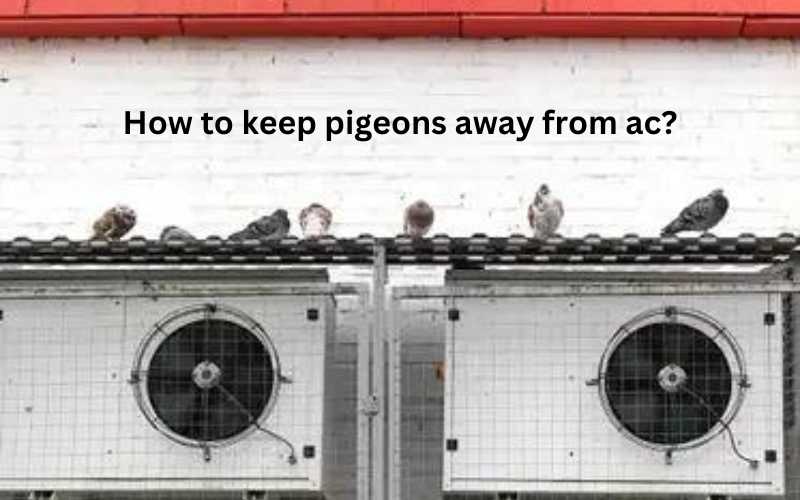
How to keep pigeons away from ac?
Keeping pigeons away from your AC unit is essential, as their droppings can cause damage to the unit and create a potential health hazard. To prevent pigeons from roosting and nesting around your AC, there are a few effective methods you can use.
- Firstly, install bird spikes or netting around the unit to prevent pigeons from landing and nesting.
- Secondly, keep the area around the AC unit clean and free from debris, food, and water sources that pigeons may be attracted to.
- Thirdly, use a humane bird deterrent such as bird-repellent gel or ultrasonic devices.
It’s important to take necessary precautions to protect your AC unit and ensure it functions optimally over time.
Bird repellent gel
If you’re looking for a safe, effective way to keep birds away from your home or business, bird repellent gel may be the solution you’re looking for. This gel is applied to surfaces where birds are a problem, and the birds’ natural aversion to the gel keeps them away. Bird repellent gel is safe for use around people and pets, and is an environmentally-friendly way to keep birds from becoming a nuisance.
It’s also long-lasting, so you won’t have to reapply it frequently. If you’re interested in giving bird-repellent gel a try, be sure to purchase it from a reputable source. There are many imitations on the market, and not all of them are effective.
How to Keep Birds Out of Window Air Conditioners?
Conclusion
If you’re tired of birds perching on your air conditioner, there are a few things you can do to keep them away. Try hanging a brightly-colored balloon or ribbon from the unit, or placing a fake owl or hawk nearby. You can also spray the unit with a mixture of water and vinegar, or cover it with chicken wire.
