Skip to content
Smart AC Solutions
  • CategoriesExpand
    • AC Troubleshooting
    • Air ConditionerExpand
      • Portable Air Conditioners
      • Room Air Conditioners
      • Split System Air Conditioners
      • Window Air Conditioners
      • Reviews & Prices
    • Thermostat Solutions
    • Calculator
  • Directory
  • Request HVAC Service
  • Join Our Pro NetworkExpand
    • HVAC BusinessesExpand
      • Residential
      • Commercial
      • Emergency Services
    • Add Business
  • Register
  • Login
  • Forgot Password?
Smart AC Solutions
Air Conditioner

Mitsubishi Air Conditioner Leaking Water Inside: Causes & Fixes

ByRalph P. Sita Updated onJune 28, 2026

If your Mitsubishi air conditioner is leaking water inside, the cause is almost always drainage, not refrigerant. On a Mitsubishi mini-split or any indoor air handler, condensation that should run out through the drain line is instead overflowing into the room. The three usual culprits are a clogged condensate drain line, a dirty air filter that freezes the coil and then drips as it thaws, and an indoor unit that is not pitched correctly toward the drain. Start by turning the unit off, cleaning or replacing the filter, and clearing the drain line. If water keeps coming after that, the problem is more likely a cracked drain pan, a failed condensate pump, or a refrigerant fault, and that is when you call a technician. Below we break down each cause, how to confirm it, and how to fix the indoor water leak for good.

Page Contents

Toggle
  • Mitsubishi Air Conditioner Leaking Water Inside
  • Mitsubishi AC Dripping Water Inside
  • How to Prevent the AC Unit from Leaking Inside?
  • Why is the Split AC Indoor Unit Leaking Water?
  • How to Fix AC Leaking Water Inside?
  • Mitsubishi AC Drain Pan
  • AC Leaking Water Inside the Apartment
  • LG Ductless AC Leaking Water
  • How to Fix AC Leaking Water Outside?
  • Frequently Asked Questions
  • Next Steps
    • Related Articles

Mitsubishi Air Conditioner Leaking Water Inside

Mitsubishi Air Conditioner Leaking Water Inside

Your indoor unit pulls humidity out of the air, and that moisture collects on the cold evaporator coil and drips into a drain pan. From there it should flow out through a sloped condensate line. When water shows up inside your home instead, something is interrupting that path.

The most common reasons, roughly in order, are: a clogged or algae-blocked drain line, a dirty filter that starved the coil of airflow and let it ice over, an indoor head that has drifted out of level so water pools on the wrong side, a cracked or rusted drain pan, or a failed condensate pump on units that need one to lift water up and out.

A true refrigerant leak does not usually drip water inside, but low refrigerant can freeze the coil, and when that ice melts you get a puddle. So freezing is worth ruling out before assuming the worst.

Work the easy fixes first: turn the unit off, clean the filter, and clear the drain line. If the leak survives all three, bring in a pro to check the pan, pump, and refrigerant charge.

If the evaporator coil is iced over, do not chip at it. Switch the unit off and let it thaw fully so the water drains, then fix the airflow or charge problem that caused the ice in the first place.

Mitsubishi AC Dripping Water Inside

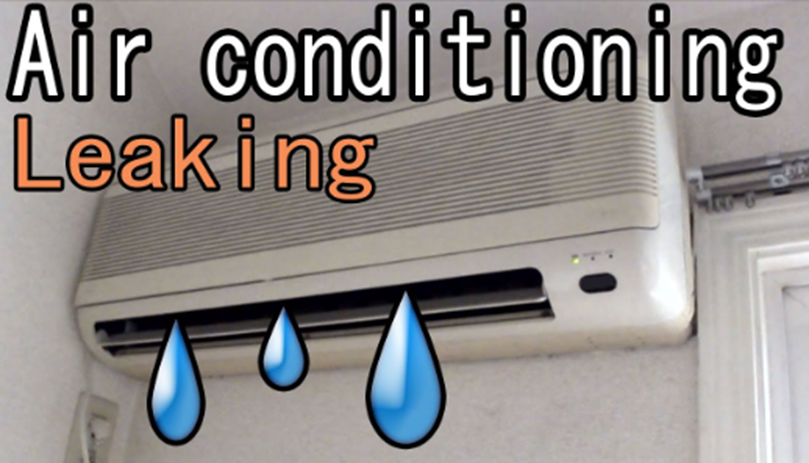
When a Mitsubishi air conditioner drips water inside, improper drainage is the leading cause. A condensate line clogged with dust, dirt, or biological growth backs water up until it spills out of the indoor unit.

Installation matters too. The indoor head and its drain piping need a slight downward slope toward the outside. If the unit was hung slightly off-level or the line sags, water cannot flow out and collects instead. A dirty air filter adds to the problem by restricting airflow and encouraging the coil to freeze and then drip.

If you have cleared the filter and the line and the dripping continues, have a technician inspect the pan, the pump, and the refrigerant charge rather than guessing.

How to Prevent the AC Unit from Leaking Inside?

To stop indoor water leaks, stay ahead of the three things that cause most of them:

– Keep the filter clean. Check it monthly and wash or replace it so airflow stays strong and the coil does not freeze.

– Confirm the indoor unit sits level and the drain line slopes down toward the outside, with no sags or low spots that trap water.

– Flush the condensate line each season. Clearing clogs early keeps the drain pan from overflowing into your room.

Why is the Split AC Indoor Unit Leaking Water?

A split-system indoor unit usually leaks for one of two reasons: a blocked drain or a frozen coil. A dirty or clogged filter is the easiest to rule out, so clean or replace it first and clear any debris from the drain line.

The other common cause is a frozen evaporator coil, driven by restricted airflow or low refrigerant. When the ice melts, the runoff overwhelms the pan and drips inside.

To clear a frozen coil, turn the air conditioner off and let it thaw completely on its own. Avoid prying or scraping the ice. If the coil keeps freezing after you have cleaned the filter, have a technician check the refrigerant charge and airflow.

How to Fix AC Leaking Water Inside?

Here are the steps, in order:

– Turn the unit off and clean or replace the air filter to restore airflow.

– Clear the condensate drain line. A wet/dry vacuum on the outdoor end pulls out most clogs; flush with clean water or a mild vinegar solution afterward.

– Check that the indoor unit is level and the drain pan is intact, with no cracks or rust.

– If the leak persists from another source, seek professional servicing. A trained technician can pinpoint a failed condensate pump, a damaged pan, or a refrigerant fault and restore normal, dry operation.

Mitsubishi AC Drain Pan

Mitsubishi AC Drain Pan

A full or blocked drain pan is a frequent reason for an indoor water leak in a Mitsubishi AC. To service the pan safely:

1. Turn off and disconnect power to the unit before you touch anything.

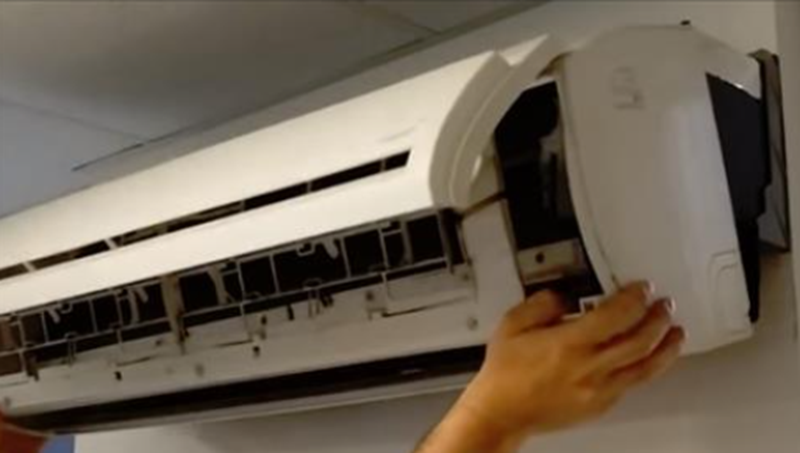
2. Open the indoor unit to access the drain pan beneath the evaporator coil. On a wall-mounted mini-split this means removing the front cover and, carefully, the housing.

3. Empty the pan and rinse it with clean water, removing any sludge or algae.

4. Inspect the pan for cracks. A cracked pan cannot hold water and should be replaced. Reassemble carefully.

5. Restore power, run the unit, and confirm the leak has stopped. If you are not comfortable opening the indoor unit, have a technician do it.

AC Leaking Water Inside the Apartment

In an apartment, an indoor water leak from the AC usually traces back to the same drainage issues, and it is worth acting fast because the water can reach a downstairs neighbor.

An indoor unit that has drifted out of level collects water on one side until it overflows. Confirming the unit is level and properly pitched toward the drain resolves this.

A blocked drain line is the other common reason. Clearing debris from the line and flushing it restores proper drainage.

If you rent, report a persistent leak to your building or landlord promptly. A refrigerant fault or hidden pan damage needs a professional, and waiting risks water damage to the unit below you.

LG Ductless AC Leaking Water

An LG ductless system leaks for the same reasons a Mitsubishi does, so the troubleshooting carries over. Water inside means the condensate is not draining the way it should.

Start by cleaning or replacing the filter, then clear debris from the condensate drain. Finally, check the indoor unit for level, an intact pan, and a clear, properly sloped drain line.

If these steps do not stop the leak, have a technician inspect the unit. Persistent leaks often come from a failed condensate pump or a refrigerant problem that needs professional tools.

How to Fix AC Leaking Water Outside?

Some condensate dripping at the outdoor end of the drain line is normal. Excessive water or pooling around the unit, though, points to a problem worth checking.

Confirm the condensate line is clear and draining freely. Clear any clog with a wire or by vacuuming the line end, and make sure the line is not crushed or kinked.

Finally, keep the area around the outdoor unit clear of leaves and debris so drainage holes stay open and water can run off as designed.

Frequently Asked Questions

Is a Mitsubishi AC leaking water inside dangerous? The water itself is condensation, not refrigerant, so it is not toxic. But it can damage drywall, flooring, and ceilings below, and standing water encourages mold. Address it quickly.

Can I just keep running the unit while it leaks? No. Running it keeps producing condensate that has nowhere to go, and if the cause is a frozen coil, running it makes the ice worse. Turn it off, fix the cause, then restart.

Why does my mini-split only leak on humid days? Higher humidity means more condensate. A drain line that is partly clogged may keep up in dry weather but overflow when the unit pulls more moisture from the air.

Next Steps

Most Mitsubishi indoor water leaks come down to a dirty filter, a clogged drain line, or an out-of-level unit, and those you can often handle yourself.

If the leak continues after you have cleaned the filter, cleared the drain, and checked the pan, contact a qualified technician to inspect the condensate pump and refrigerant charge before water damage spreads.

4/5 - (4 votes)
Ralph P. Sita
Author: Ralph P. Sita

Ralph P. Sita is a seasoned professional with deep roots in both the HVAC and tech industries. His family’s business, Ralph P. Sita, Inc., is a locally owned and operated HVAC contractor with over 42 years of experience, serving the DC, Maryland, and Virginia areas. The company specializes in residential, commercial, and industrial heating, ventilation, and air conditioning services, offering everything from installation and maintenance to custom ductwork and indoor air quality solutions -www.ralphpsita.com. A former CPA, he spent the last decade as co-founder and co-CEO at Cybrary, a leading platform for cybersecurity and IT training. Cybrary became the largest, most well-known cybersecurity training businesses in the industry under his leadership. Smart AC Solutions is an opportunity to give back to the HVAC community by providing reliable, actionable information on all things heating and cooling.

Related Articles:

  1. Mitsubishi Mini Split Leaking Water? Causes & Fixes
  2. Why Is My AC Vent Leaking Water? Causes & Fixes
  3. Why Is My New AC So Loud Inside? Causes & Fixes
  4. Car AC Leaking Water: How to Fix Inside Cabin
Ralph P. Sita

Ralph P. Sita is a seasoned professional with deep roots in both the HVAC and tech industries. His family’s business, Ralph P. Sita, Inc., is a locally owned and operated HVAC contractor with over 42 years of experience, serving the DC, Maryland, and Virginia areas. The company specializes in residential, commercial, and industrial heating, ventilation, and air conditioning services, offering everything from installation and maintenance to custom ductwork and indoor air quality solutions -www.ralphpsita.com.

A former CPA, he spent the last decade as co-founder and co-CEO at Cybrary, a leading platform for cybersecurity and IT training. Cybrary became the largest, most well-known cybersecurity training businesses in the industry under his leadership.

Smart AC Solutions is an opportunity to give back to the HVAC community by providing reliable, actionable information on all things heating and cooling.

Linkedin

Try our new Smart AC Solutions GPT

Description of Smart AC Solutions GPT and link to access.

  • Mastering Whole-Home Ventilation Rate Calculations: A Guide to ASHRAE 62.2 Standards
    by Ralph P. Sita
  • Understanding the Ozone-Based Air Purifier Risks in Occupied Spaces
    by Ralph P. Sita
  • Duct Pressurization Testing (Duct Blaster) Explained: What You Need to Know
    by Ralph P. Sita
  • Optimize Your HVAC Scheduler for Utility Time-of-Use Rates and Slash Energy Bills
    by Ralph P. Sita
  • Ensuring Home Energy Management System (HEMS) Compatibility for Your Smart Home
    by Ralph P. Sita
  • Fresh Air Damper Sizing Guide for Tight Construction: Ensuring Optimal Ventilation
    by Ralph P. Sita

Sites we love:
TrainACE

Facebook Twitter Pinterest YouTube

SmartACSolutions is your go-to source for the latest in heating and air conditioning news, tips, and expert advice.

  • About Us
  • Contact Us
  • Disclaimer
  • Privacy Policy
  • Sitemap

© 2026 Smart AC Solutions । DMCA Protected

SmartACSolutions.com is a property of FieldBin Inc.

Change Location
Find awesome listings near you!
  • Categories
    • AC Troubleshooting
    • Air Conditioner
      • Portable Air Conditioners
      • Room Air Conditioners
      • Split System Air Conditioners
      • Window Air Conditioners
      • Reviews & Prices
    • Thermostat Solutions
    • Calculator
  • Directory
  • Request HVAC Service
  • Join Our Pro Network
    • HVAC Businesses
      • Residential
      • Commercial
      • Emergency Services
    • Add Business
  • Register
  • Login
  • Forgot Password?