
Your AC breaker is tripping because the circuit is drawing more current than it’s rated for — and the most common trigger is a restricted, overworked system or a failing electrical part. Start with the cheap, safe checks: a clogged air filter, blocked vents, or dirty condenser coils force the unit to work harder and overheat, which trips the breaker. From there, the usual electrical causes are a failing capacitor, a worn contactor, a hard-starting or shorted compressor, a ground fault, or a tired breaker itself. Below we walk through each scenario — trips instantly, after 5 minutes, won’t reset, compressor cuts out — so you know what’s a safe DIY fix and what needs a licensed pro. Anything involving wiring, the compressor, or refrigerant should go to a professional.
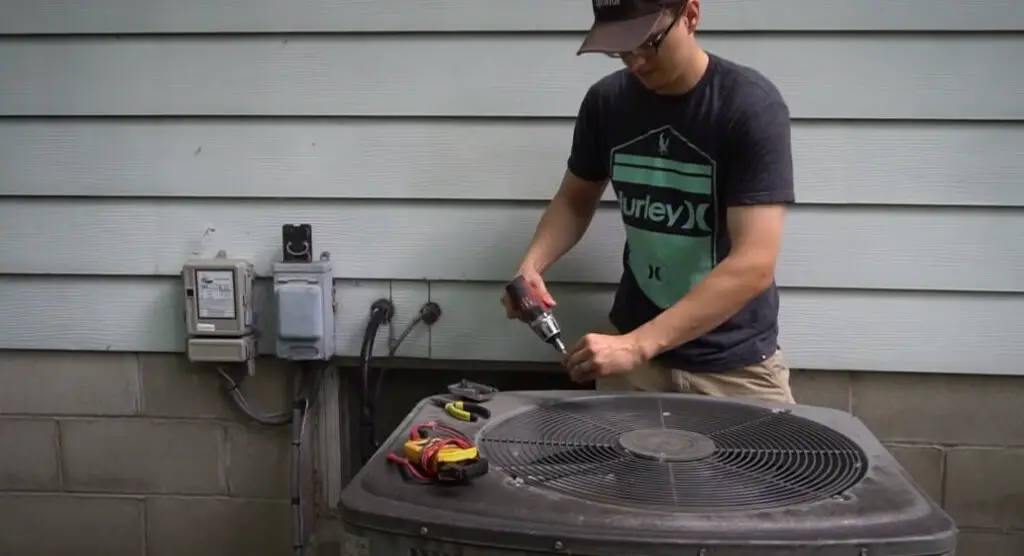
Why does the air conditioner breaker keep tripping?
The breaker is a safety device: it cuts power the instant the circuit pulls too much current, protecting your wiring and your AC. So a tripping breaker is a symptom, not the disease. The job is to find what’s causing the excess draw or the fault.
The most frequent harmless cause is a dirty air filter. When it clogs, airflow drops, the blower and compressor strain, the motor overheats, and the breaker trips. Replacing the filter often solves it outright. Beyond that, suspect an electrical component — a weak capacitor or a pitted contactor are common. Those are best left to a professional, because diagnosing and replacing live electrical parts is dangerous without training.

How do I stop my AC from tripping the breaker?
Work the safe checks first, in this order:
- Replace the air filter if it’s dirty, and open any closed or blocked vents to restore airflow.
- Clear debris from around the outdoor unit and gently clean the condenser coils so the system can shed heat.
- Make sure the AC has the circuit to itself — sharing it with other large appliances can overload it.
- Confirm the breaker is correctly sized for the unit; one that’s undersized will trip easily (an electrician’s check).
- If it still trips after the airflow fixes, stop and call an HVAC technician — the remaining causes are electrical.
Never repeatedly reset a breaker that keeps tripping. The breaker is doing its job; forcing it can overheat wiring and create a fire risk.
Why is my AC breaker popping?
For a central system, a “popping” breaker usually means one of three things. The circuit is overloaded — too much total draw, sometimes because other appliances share the circuit. There’s a fault in the unit such as a short, a loose wire, or a struggling compressor. Or the breaker itself has weakened with age and now trips below its rating.
Sort the easy from the serious: give the AC its own circuit and clean the system to rule out overload, but call a qualified technician for any suspected short, wiring fault, or compressor problem. A breaker that keeps popping shouldn’t be ignored — it can signal a real fire or equipment-damage risk.
How do you know if your AC breaker is bad?
A failing breaker often trips with little or no load, feels hot to the touch, looks scorched, or won’t reset cleanly. To test it, switch it fully off, then back on. If the AC runs fine, the earlier trip may have been a one-off. If it trips again right away — especially with nothing else on the circuit — the problem is either the AC or the breaker, and an electrician should confirm which before you keep using it.
AC trips breaker immediately
A breaker that trips the instant the AC starts almost always means a dead short or ground fault — a wire has shorted to ground or to another wire, or a component has failed internally. This is the most urgent scenario because it indicates a hard electrical fault, not just an overload.
Do not keep resetting it. Turn the AC off at the thermostat, leave the breaker off, and call an HVAC or electrical professional. A short can damage the compressor and poses a genuine fire and shock hazard, so this isn’t a DIY fix.
AC trips breaker after 5 minutes
When the AC runs for a few minutes and then trips, the cause is usually heat- or load-related: dirty condenser coils, a blocked filter, or a failing capacitor that makes the compressor draw rising current as it heats up. A compressor that’s beginning to fail can also pull more amps the longer it runs, until the breaker cuts out.
Start by cleaning the filter and condenser coils to rule out an airflow-driven overheat. If it still trips on a timer after that, have a technician test the capacitor, measure the compressor’s amp draw, and check the wiring. If the unit is genuinely too powerful for its circuit, an electrician may need to rewire it to a higher-capacity circuit.
AC breaker tripped and won’t reset
A breaker that won’t reset is usually still sensing a fault — most often a short circuit or a ground fault in the unit, or a breaker that has failed. To reset correctly, push the handle firmly to the full “off” position first, then back to “on”; a breaker only partway off won’t reset.
If it still won’t hold, don’t force it. Leave it off and call a professional. A breaker refusing to reset is a strong sign of an active electrical fault that needs to be found and repaired before the circuit is energized again.
How to reset an AC circuit breaker
If your AC keeps shutting off at the breaker, reset it like this: turn the AC off at the thermostat first, go to the breaker panel, push the tripped breaker fully to “off,” wait a minute, then switch it back to “on.” Give the system a few minutes before restarting the AC.
If the breaker trips again, stop there. One reset is reasonable; repeated resets are not. A breaker that trips a second time is telling you there’s an underlying problem that a professional needs to diagnose.
AC compressor tripping after a few seconds
A compressor that trips the breaker within seconds points to a high startup current it can’t complete — and several parts can cause it:
- Electrical fault: an overloaded circuit or short circuit. Have an electrician inspect it.
- Failing capacitor: the capacitor gives the compressor its starting boost; a weak one leaves the compressor drawing locked-rotor current that trips the breaker. A technician can test and replace it.
- Dirty condenser coils: restricted heat rejection makes the compressor overheat and draw more current. Keep the coils clean.
- Low refrigerant: low charge usually means a leak and can stress the compressor. This needs a professional to find the leak and recharge.
- Mechanical compressor failure: a seized or shorted compressor draws excessive current. Diagnosis and replacement are a pro’s job.
Because nearly all of these involve high-voltage parts or refrigerant, confirm the cause with a qualified HVAC technician rather than guessing.
AC compressor tripping after a few minutes
When the compressor runs a few minutes before tripping, the most likely culprit is the compressor itself drawing rising current as it heats up — a sign it’s overloading or beginning to fail. A wiring fault that worsens with heat, or a low refrigerant charge that makes the compressor labor, can produce the same delayed trip.
After cleaning the coils and filter to rule out overheating, have a technician measure the compressor’s running amps, inspect the wiring, and check the refrigerant charge. If the compressor is drawing well over its rated amperage, it may need to be repaired or replaced.
Circuit breaker for the air conditioner
An AC should be on a dedicated circuit with a breaker sized to the manufacturer’s specs. If the breaker constantly trips, the issue is usually the unit (age, a failing component, or a fault), an overloaded circuit, or wiring that isn’t up to code. An aging unit may simply be drawing more than it should.
Don’t ignore a chronically tripping AC breaker. Sometimes it’s a simple filter or coil fix; other times it warns of a wiring problem or a dying compressor. Having an electrician or HVAC pro verify the wiring and breaker sizing is the safe move.
Can a bad AC capacitor cause the breaker to trip?
Yes. The capacitor delivers the surge of current that starts the compressor and fan motors. When it weakens or fails, the motors struggle to start and draw excessive current trying to spin up — and that overcurrent trips the breaker. A failing capacitor is one of the most common, and most affordable, electrical causes of AC breaker trips. A technician can confirm it with a meter and swap it out quickly.
Refrigeration compressor tripping the breaker
On a refrigerator or freezer, a compressor that trips the breaker usually points to a failing start capacitor or start relay, a compressor drawing too much current because of internal wear, or a breaker that’s too small for the load. The start capacitor is the most common and easiest fix.
If a new start component doesn’t solve it, the compressor itself may be failing and need replacement, or an electrician may need to confirm the circuit can handle the appliance. As with AC compressors, repeated trips warrant a professional rather than repeated resets.
Air conditioner circuit breaker outside
Many systems have an outdoor disconnect or breaker near the condensing unit in addition to the indoor panel. If power to the AC is cut, check that outdoor disconnect as well as the main panel. To reset it, flip the switch fully to “off,” then back to “on.”
If it trips again, suspect a problem with the unit and call a technician. In the meantime, fans can help keep the home tolerable. Don’t keep cycling the disconnect repeatedly — a recurring trip signals a fault that needs proper diagnosis.
Why Does My Air Conditioner Circuit Breaker Keep Tripping?
How to keep your AC breaker from tripping in the future
Once a technician has fixed the immediate cause, a few habits keep the breaker from tripping again. The biggest is airflow maintenance: replace the filter every one to three months and keep supply and return vents open, because restricted airflow is the most common reason a healthy system overheats and trips. Just as important, keep the outdoor condenser clean and clear — hose off the coils each season and trim back any plants within a couple of feet so the unit can shed heat freely.
Beyond cleaning, schedule an annual professional tune-up before cooling season. During that visit, a technician measures the compressor’s amp draw, tests the capacitor and contactor, tightens electrical connections, and checks the refrigerant charge — the exact items that, when they drift out of spec, cause trips later in the summer. Catching a weak capacitor or a loose connection in spring is far cheaper than an emergency call during a heat wave.
Finally, give the AC the dedicated, correctly sized circuit it’s meant to have, and don’t run space heaters or other large appliances on the same circuit. If your breaker is old and trips below its rating even on a clean, healthy system, have an electrician evaluate whether the breaker itself needs replacing. These steps address the two root drivers of nuisance trips — overheating from poor airflow and electrical components drifting out of spec — so the protection only engages when there’s a genuine fault.
Next steps
The most common reason an AC breaker trips is an overload — too much current for the circuit — often driven by restricted airflow that makes the system overheat. The other usual suspects are a short circuit, a ground fault, a failing capacitor or contactor, a struggling compressor, or a worn-out breaker. Begin with the safe DIY checks: replace the filter, clean the coils, and make sure the AC has its own properly sized circuit. If it keeps tripping after that, leave the breaker off and call a licensed HVAC technician or electrician — repeated resets of a tripping breaker are a real fire hazard.
Frequently Asked Questions
Is it safe to keep resetting a tripping AC breaker?
No. One reset to clear a fluke is fine, but repeatedly resetting a breaker that keeps tripping can overheat the wiring and start a fire. If it trips twice, leave it off and call a pro.
Can a dirty filter really trip the breaker?
Yes. A clogged filter restricts airflow, which makes the blower and compressor overheat and draw extra current — enough to trip the breaker. It’s the cheapest and most common cause to rule out first.
When should I call a professional?
Call a pro if the breaker trips immediately, won’t reset, trips with nothing else on the circuit, or keeps tripping after you’ve cleaned the filter and coils. Those point to electrical, compressor, or refrigerant problems that aren’t safe to DIY.
Does a tripping breaker mean my compressor is dying?
Not always. Many trips come from cheap, fixable causes like a clogged filter or a worn capacitor. But a breaker that trips a few minutes into each run, especially with the compressor drawing high amps, can signal a failing compressor — which is why having a technician measure the amp draw is the best way to know whether you’re facing a small repair or a major one.

Author: Ralph P. Sita
Ralph P. Sita is a seasoned professional with deep roots in both the HVAC and tech industries. His family’s business, Ralph P. Sita, Inc., is a locally owned and operated HVAC contractor with over 42 years of experience, serving the DC, Maryland, and Virginia areas. The company specializes in residential, commercial, and industrial heating, ventilation, and air conditioning services, offering everything from installation and maintenance to custom ductwork and indoor air quality solutions -www.ralphpsita.com. A former CPA, he spent the last decade as co-founder and co-CEO at Cybrary, a leading platform for cybersecurity and IT training. Cybrary became the largest, most well-known cybersecurity training businesses in the industry under his leadership. Smart AC Solutions is an opportunity to give back to the HVAC community by providing reliable, actionable information on all things heating and cooling.