There are a few reasons why your AC may freeze up at night. The first reason is that the temperature outside may be too cold for your AC to function properly. Another reason is that your AC may be set too low and the unit is overworking itself to try to reach the set temperature.
Lastly, your AC may be low on refrigerant. When your AC is low on refrigerant, it can cause the coils inside the unit to freeze. If you think that your AC is low on refrigerant, you should contact a professional to have it checked and refilled.
If your AC is freezing up at night, there are a few possible reasons why. One possibility is that the thermostat is set too low. Another possibility is that the AC unit is too big for the room or space it is cooling.
How do I keep my air conditioner from freezing up?
If your air conditioner is freezing up, there are a few things you can do to try to fix the problem.
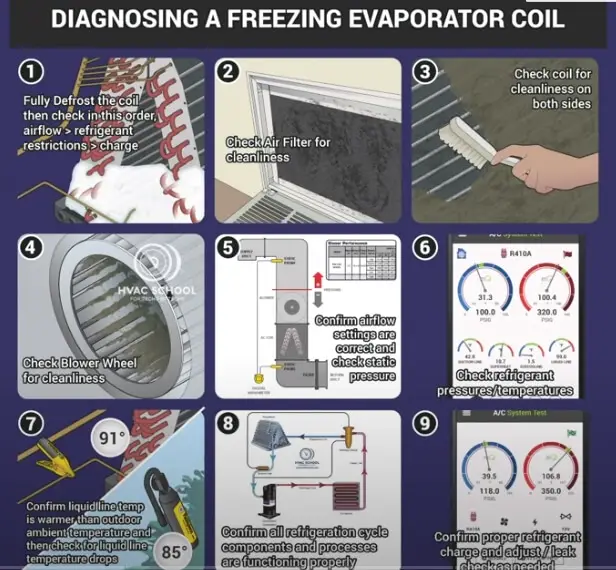
First, check the air filter and make sure it is clean. A dirty air filter can restrict air flow, causing the evaporator coil to freeze.
Also, make sure the coils are clean. A build-up of dirt and dust can also cause the coils to freeze. You can clean the coils yourself with a brush or a coil-cleaning solution, or you can hire a professional to do it.
Finally, check the Freon level and make sure it is full. If it is low, the evaporator coil will not get cold enough and will freeze. If you are not sure how to do this, you can call a professional to do it for you.
How do you unfreeze an air conditioner fast?
When your air conditioner freezes, it can be a real pain. Not only is it uncomfortable, but it can also be expensive to fix. Luckily, there are a few things you can do to unfreeze your air conditioner fast.
The first thing you need to do is turn off the power to the unit. Once the power is off, you can remove the ice from the coils. You can do this by using a soft brush or a hairdryer on the low setting.
Once the ice is removed, you need to turn on the power to the unit and let it run for a few minutes. This will help to melt any remaining ice and help to prevent the unit from freezing again.
What do you do when your air conditioner freezes in the winter?
If your air conditioner freezes in the winter, there are a few things you can do to fix the problem.
First, check to see if the air filter is clean. If it is dirty, replace it with a new one.
Next, check the air conditioner’s coils and see if they are clean. If they are dirty, clean them with a brush or vacuum.
Finally, check the air conditioner’s thermostat and make sure it is set to the correct temperature.
Why does my ac freeze up when it rains?
When the weather outside is cold and wet, the last thing you want is for your air conditioner to freeze up. But unfortunately, this is a common problem that can strike any AC unit, even if you take good care of it. So why does this happen, and what can you do to prevent it?
There are a few reasons why your air conditioner might freeze up when it rains. One is that the cold rain can lower the temperature of the air around your AC unit, causing it to work harder to cool down your home. This can lead to ice buildup on the coils and eventually a complete freeze.
Another reason is that moisture in the air can condense on the coils and freeze them solid. This is more likely to happen if your AC unit is not properly sealed or insulated. Finally, if there is any dirt or debris on the coils, it can prevent proper air flow and cause the unit to freeze up.
So what can you do to prevent your AC unit from freezing up in the rain?
First, make sure that it is properly sealed and insulated. This will help keep the warm air in and the cold air out.
Second, keep the coils clean by vacuuming them regularly. This will help ensure proper air flow and prevent ice buildup.
And third, if you do find that your AC unit has frozen up, turn it off immediately and call a professional for help.
Why does my ac keep freezing up?
If your AC keeps freezing up, it could be due to a number of different issues. One possibility is that your unit is low on Freon. This can happen if there is a leak in your system, or if the unit is not properly charged.
Another possibility is that your evaporator coils are dirty. When the coils are dirty, they can’t properly absorb heat, which can cause the unit to freeze up. Finally, it’s possible that your air filter is dirty.
A dirty air filter can restrict air flow, which can also cause the unit to freeze up.
What to do when your ac unit freezes up?
If your AC unit freezes up, don’t panic! There are a few things you can do to fix the problem. First, check to make sure that the unit is properly plugged in and that the circuit breaker hasn’t tripped.
If everything looks good there, take a look at the unit’s air filter. If it’s dirty, replace it with a clean one. Next, check the unit’s coils.
If they’re covered in ice, turn off the unit and let the coils thaw for about an hour. Once they’re thawed, turn the unit back on and see if it’s working properly. If your AC unit still isn’t working, call a professional to take a look at it.
They’ll be able to diagnose the problem and get your AC unit up and running in no time!
Ac freezing up in hot weather
As the weather begins to heat up, you may notice that your air conditioner starts to freeze up. This is most commonly caused by a lack of maintenance on your unit. Without regular cleanings, the coils and fins can become clogged with dirt and debris, which prevents proper airflow and causes the unit to freeze up.
If you notice your air conditioner freezing up, be sure to turn it off and call a professional for help. Trying to fix the problem yourself can often make it worse, so it’s best to leave it to the experts. In the meantime, you can try to prevent the problem from happening again by regularly cleaning your unit and making sure it has proper airflow.
Why does my air conditioner run more at night?
If you’ve ever wondered why your air conditioner seems to run more at night, you’re not alone. This is a common question that we get here at ACME Air Conditioning. There are a few reasons why this may be happening.
One reason your air conditioner may run more at night is because the temperature outside is cooler. This means that your air conditioner doesn’t have to work as hard to keep your home cool.
Another reason may be because your home is more likely to be closed up at night, which means the air inside is more stagnant. Your air conditioner has to work harder to circulate the air and remove any humidity.
Finally, if you have a home with poor insulation, this can also cause your air conditioner to run more at night. The heat from outside can seep into your home, making it harder for your air conditioner to keep things cool.
Why Does The Evaporator Coil Freeze (And How to Diagnose It)
Why does my window ac freeze up?
The most common reason your window air conditioner will freeze up is because the air filter is dirty. A dirty air filter restricts air flow, which can cause the evaporator coils to freeze.
In addition, frost can build up on the evaporator coils if the air conditioner is not properly sealed.
Improper sealing can allow warm air to enter the unit, which can cause the evaporator coils to freeze. If your window air conditioner is freezing up, check the air filter and make sure it is clean. If the air filter is dirty, replace it with a new one.
In addition, check the seals around the air conditioner to make sure they are tight. If the seals are loose, tighten them or replace them.
Why is my brand new ac unit freezing up?
If you’ve just installed a new AC unit and it’s already freezing up, there are a few possible reasons why. First, it could be that the unit is too big for the space it’s cooling. An AC unit that’s too big will cycle on and off too frequently, causing it to freeze up.
Another possibility is that the unit isn’t level. If it’s not level, the refrigerant can’t circulate properly and it will freeze up. Finally, it could be that the air filters are dirty.
Dirty air filters restrict air flow, causing the AC unit to work harder and eventually freeze up. If your brand-new AC unit is freezing up, check to see if it’s too big for the space, if it’s level, and if the air filters are clean. If you can’t figure out the problem, contact a professional AC technician for help.
Air conditioner freezing up symptoms
If your air conditioner is freezing up, there are a few possible explanations.
First, the air conditioner may be low on refrigerant. This can happen if there is a leak in the system.
Second, the air conditioner may be dirty. Dust and dirt can build up on the coils and cause the unit to freeze up.
Third, the air conditioner may be installed in a place where it is not getting enough air flow. This can happen if the unit is installed in a closet or other small space. If your air conditioner is freezing up, try these simple troubleshooting tips.
Conclusion
There are a few reasons why your AC may freeze up at night. One reason could be that the temperature outside is too cold. Another reason could be that your AC is too old and needs to be replaced. Finally, your AC could be low on Freon.
