There are a few reasons why your AC may be making cracking noises. One reason could be that the unit is old and the parts are starting to wear out. Another reason could be that the unit is not properly maintained and the coils are dirty or frozen.
Lastly, the unit could be low on refrigerant, which would cause the compressor to work harder and make more noise. If you are unsure of what is causing the noise, it is best to contact a professional for help.
If your air conditioner is making cracking noises, there could be a few different reasons. One possibility is that the unit is simply getting old and the parts are starting to wear out. This is especially true if the unit is not properly maintained.
Another possibility is that there is something wrong with the compressor. If the compressor is not working properly, it can cause the unit to make strange noises. If you hear cracking noises coming from your air conditioner, it’s best to call a professional to take a look and diagnose the problem.
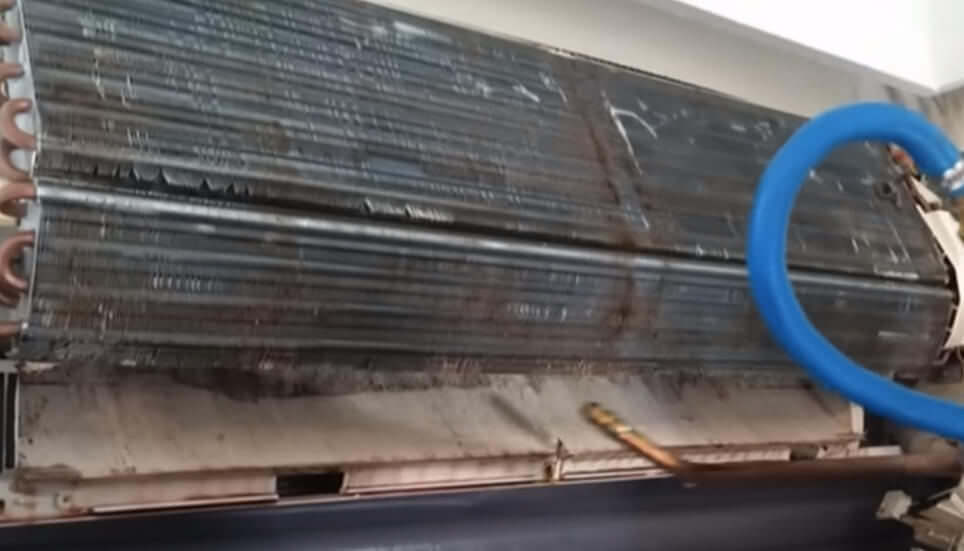
Why does my air conditioner make a crackling noise?
If you have an air conditioner that’s making a crackling noise, there are a few potential causes. One possibility is that the unit is simply old and the noise is coming from worn-out parts. Another possibility is that there’s something caught in the unit’s fan, such as a piece of debris.
If this is the case, the noise will usually stop once the debris is removed. Another potential cause of a crackling noise from an air conditioner is loose wiring. This is a more serious problem that should be addressed by a qualified technician.
Loose wiring can create sparks that could potentially start a fire, so it’s important to have it fixed as soon as possible. If your air conditioner is making a crackling noise, it’s best to have it checked out by a professional to determine the cause. In most cases, the noise is harmless and can be fixed easily.
However, in some cases, the noise may be a sign of a more serious problem that needs to be addressed.
How do I stop my air conditioner from making noise?
If your air conditioner is making noise, there are a few things you can do to try to stop it. First, check to see if anything is blocking the unit. Sometimes, leaves or other debris can get caught in the unit and cause it to make noise.
If there is something blocking the unit, remove it and see if that stops the noise. If the unit is not blocked, the next thing to check is the air filter. A dirty air filter can cause the unit to make noise.
Clean or replace the air filter and see if that stops the noise. If the unit is still making noise, it may be low on refrigerant. This can happen if there is a leak in the system.
Have a professional check the system for leaks and recharge it if necessary. If none of these things stop the noise, the unit may be damaged and need to be replaced.
Central AC popping noise may be easy to fix.
Why is my window ac making a crackling noise?
If your window air conditioner is making a crackling noise, there are a few potential causes. First, the most common cause is simply age. As air conditioners age, the metal components can begin to deteriorate, causing them to make strange noises.
Another potential cause is loose hardware. If any of the screws or bolts holding your air conditioner in place are loose, it can cause the unit to vibrate and make noise. Finally, if your air conditioner is frozen, it can also make crackling or popping noises as the ice thaws.
When your air conditioner is making a crackling noise, the first thing you should do is check the unit for loose hardware. If any of the screws or bolts are loose, tighten them up. If that doesn’t solve the problem, you may need to thaw out your air conditioner.
To do this, turn off the unit and unplug it from the wall. Then, use a hair dryer to thaw out any ice that has formed on the coils. Once the ice is melted, your air conditioner should run quietly.
Split ac making crackling noise
If your split air conditioner is making a crackling noise, it could be a sign that the unit is overloaded and needs to be repaired. The crackling noise is caused by the unit’s compressor, which is responsible for cooling the air. When the compressor is overloaded, it can cause the unit to make a loud, crackling noise.
If you hear this noise, it’s important to turn off the unit and call a professional for repairs.
Indoor ac unit making clicking noise
If you have an indoor ac unit that’s making a clicking noise, there are a few possible explanations. First, it could be that the unit is simply turning on or off. This clicking noise is usually accompanied by a humming noise, and is perfectly normal.
If the clicking noise is more persistent, it could be that the unit’s compressor is turning on and off too rapidly, which can be caused by a variety of factors. In this case, it’s best to consult a professional to diagnose the problem and find a solution.
Split ac indoor unit making noise when off
If your split AC indoor unit is making noise when it’s off, there are a few possible explanations. The most common reason is that the fan blades are hitting something, causing a rattling noise. This can be caused by a build-up of dirt and debris, or simply by the fan blades being out of alignment.
If this is the case, you can try cleaning the unit and/or realigning the fan blades. Another possible explanation is that the compressor is still running even when the AC is turned off. This can be due to a faulty compressor, or a problem with the AC’s wiring.
If this is the case, you’ll need to call a professional AC repair person to take a look. In rare cases, the noise may be coming from something else entirely, such as a piece of furniture vibrating against the AC unit. If you can’t identify the source of the noise, it’s best to call a professional to take a look.
Ac unit making clicking noise when off
If your AC unit is making a clicking noise, it could be due to a few different issues. When the unit is old, the noise could be due to a build-up of dirt and debris in the unit. If the unit is new, the noise could be due to a loose component.
In either case, it’s important to have the unit checked out by a professional to ensure that the noise is not indicative of a more serious issue.
Crackling sound in vent
If you’re hearing a crackling sound coming from your vent, there’s a good chance that there’s something blocking the airflow. This could be anything from a build-up of lint to a bird’s nest. If you have a gas furnace, it’s also possible that the sound is coming from the pilot light.
If you think that there’s something blocking the airflow, the first thing you should do is check the vent cover. Covered in lint or debris, that could be the problem. When the cover is clear, then take a look inside the vent.
If you see a bird’s nest or other blockage, you’ll need to remove it before the vent will work properly. If you have a gas furnace, the crackling sound could be coming from the pilot light. Sometime pilot light is dirty or defective, it can make a crackling sound. You’ll need to clean or replace the pilot light to fix the problem.
Ac drain line popping noise
If you’ve ever heard a popping noise coming from your AC drain line, you may be wondering what it is and if it’s something to be concerned about. The good news is that in most cases, this noise is nothing to worry about and is simply the result of normal condensation build-up. When your AC is running, it pulls warm air from your home and passes it over the cold evaporator coils.
This causes the air to cool and also causes condensation to form on the coils. This condensation drips into a drain pan and then down the AC drain line to the outside of your home. As the condensation builds up in the drain line, it can start to make a popping noise.
This is perfectly normal and is simply the result of the condensation hitting the sides of the drain line. In most cases, this noise is nothing to be concerned about and will go away on its own. However, if the popping noise is accompanied by water leaking from the AC unit, then this is something that you will want to have checked out by a professional.
Water leaking from your AC unit can be a sign of a more serious problem, so it’s best to have it looked at right away.
Car ac making popping noise
If you’re driving along and suddenly your car’s AC starts making a popping noise, it can be really alarming. But don’t worry, in most cases it’s not a sign of anything serious and can be easily fixed. The most common cause of a popping noise from your car’s AC is simply that the air pressure in the system is too high.
When this happens, the pressure relief valve will open and release some of the pressure, which can make a popping noise. If your car’s AC has been making a popping noise, the first thing you should do is check the pressure in the system using a pressure gauge. If it’s too high, you can simply release some of the pressure by opening the valve.
When the pressure in the system is normal, then the popping noise is likely being caused by something else.
One possibility is that there’s a build-up of ice in the AC unit, which is causing the pressure to increase and the popping noise when the ice melts. If you think this might be the problem, you can try turning off the AC and letting the car warm up for a few minutes.
This will melt the ice and hopefully stop the popping noise. Another possibility is that there’s something blocking the AC unit, such as a leaf or piece of debris. If this is the case, you’ll need to remove the blockage to allow the AC to work properly.
Conclusion
If you’re hearing cracking noises coming from your AC unit, there are a few potential causes. First, it could be that the unit is simply old and needs to be replaced. Alternatively, the noise could be caused by a build-up of dirt and debris in the unit, which is preventing it from operating smoothly.
Finally, it’s possible that there’s a loose component somewhere in the AC unit, which is causing the noise when it vibrates. In any case, it’s best to have a professional take a look at your AC unit to diagnose the problem and recommend a solution.
