If your car’s air conditioner light is blinking, it means that there is a problem with the air conditioner system. The most common cause of this problem is a blown fuse. If you suspect that the fuse is blown, replace it with a new one and see if the light goes off.
If the light does not go off, there may be a more serious problem with the air conditioner system and you should take your car to a mechanic for further diagnosis.
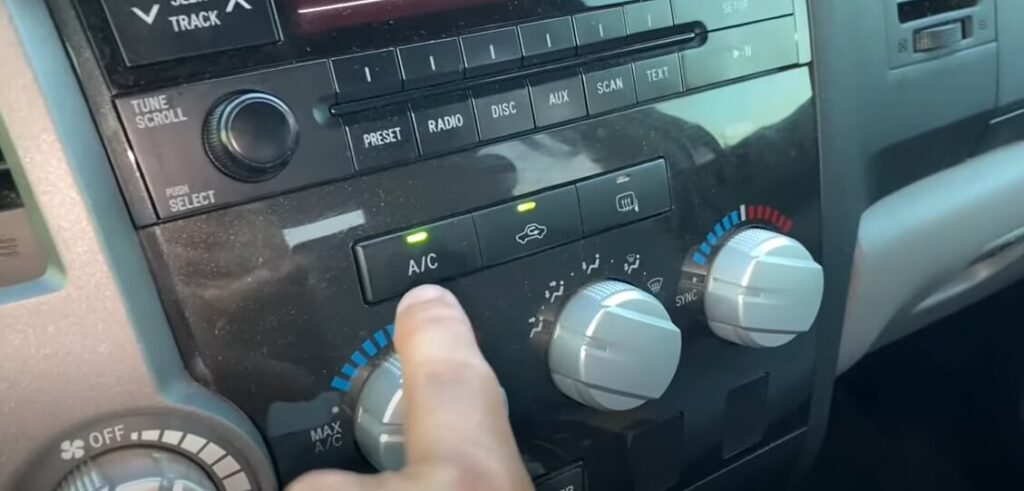
How Do You Fix a Blinking Ac Light?
The most common reason for a blinking AC light is a problem with the outdoor unit. If the light is blinking, it means the unit is not getting power. The first thing you should do is check the circuit breaker or fuse box to make sure the power is turned on.
If the power is off, turn it on and see if the light stops blinking. If the light continues to blink, there may be a problem with the wiring between the outdoor unit and the indoor unit. You will need to call an HVAC technician to come and take a look at your system.
How Do You Reset the Ac in a Car?
If your car’s air conditioner isn’t working, you may need to reset the AC. Here’s how to do it:
1. Turn off the car and open the hood.
2. Locate the air conditioner compressor, which is usually near the front of the engine.
3. Disconnect the negative battery cable from the compressor. This will discharge any static electricity that could damage delicate electronic components when you reconnect it later.
4. Reconnect the negative battery cable to the compressor and close the hood.
5. Start the car and turn on the air conditioner to its highest setting with the fan on high as well.
How Do I Know If My Ac in My Car Needs to Be Recharged?
There are a few things that you can look for to know if your car’s AC needs to be recharged. One is that the air coming out of the vents is not as cold as it used to be. Another is that the AC compressor is not running as often as it used to.
If you notice either of these things, then it’s likely that your car’s AC needs to be recharged.
Ac Light Blinking But Not Working
If your AC unit’s light is blinking but the unit itself isn’t working, there are a few potential causes. It could be a simple issue like a blown fuse or tripped circuit breaker. Or, it could be something more serious like a failed compressor.
If you’re not sure what’s causing the problem, it’s best to call a certified HVAC technician for diagnosis and repair.
Why is My Ac Light Blinking 3 Times?
If you have an AC system, you may have noticed that the light on the front of the unit is blinking. This can be normal behavior or it could be a sign that something is wrong with your system. Here’s a look at what those blinking lights mean and why your AC light may be blinking.
The first thing to know is that there are usually two lights on an AC unit – a power light and a status light. The power light will stay lit when the unit is plugged in and receiving power. The status light, on the other hand, will change color or blink to indicate different things.
In most cases, a green status light means everything is working as it should while a red or amber light means there’s an issue that needs to be addressed. Now, as for why your status light might be blinking, there are several possibilities. One possibility is that your system is in standby mode, which means it’s not actively cooling but it’s ready to do so if needed.
A more serious possibility is that there’s an error code being displayed by the blinking lights. If this is the case, you’ll need to consult your owner’s manual to determine what the error code means and how to fix it. In any case, if you’re unsure about what those blinking lights mean or how to fix any potential problems they’re indicating, it’s always best to call in a professional AC technician for help.
They’ll be able to quickly diagnose any issues and get your system up and running again in no time!
Car Ac Button Not Working
If your car’s air conditioning button isn’t working, there are a few things you can do to try and fix the problem. First, check to make sure that the button itself is not dirty or obstructed in any way. If it is, simply clean it off with a soft cloth.
If that doesn’t work, then you may need to replace the button. Another possibility is that the problem lies with the fuse for the air conditioning system. This fuse is usually located in the engine bay, so check there first.
If it looks like the fuse has blown, then replace it with a new one of the same amperage. If none of these solutions work, then you may need to take your car to a mechanic to have them diagnose and fix the problem.
Ac Button Flashes Then Turns off
If your AC button flashes then turn off, there are a few things that could be causing the issue. First, check to make sure that the unit is properly plugged in and that the circuit breaker has not been tripped. If both of those things are fine, then the problem is likely with the unit itself.
There are a few different parts inside the AC unit that could be malfunctioning and causing the button to flash and turn off. The most common culprit is the compressor, which is responsible for circulating refrigerant throughout the unit. If the compressor is not working properly, it can cause the unit to overheat and shut down.
Other potential causes include a failed capacitor or relay, or a Freon leak. If your AC button is flashing and turning off, you’ll need to have a technician take a look at it to diagnose and fix the problem. Trying to repair an AC unit yourself can be dangerous, so it’s best to leave it to the professionals.
Air Conditioner Red Light Blinking
If your air conditioner’s red light is blinking, it could indicate a problem with the unit. Here are some potential causes and solutions:
1. The air conditioner is not receiving power. Check to make sure that the unit is plugged in and that the circuit breaker has not been tripped.
2. The air conditioner’s compressor is not working. This could be due to a lack of refrigerant or an issue with the compressor itself.
If you suspect this is the problem, call a qualified technician for assistance.
3. The air conditioner’s fan is not working. This could be caused by a faulty fan motor or a blockage in the airflow path. Again, if you suspect this is the problem, call a qualified technician for assistance.
4. There is an issue with the air conditioner’s control panel or wiring.
Ac Light Blinking Toyota
If you have a Toyota that was manufactured between 2002 and 2006, then you may be familiar with the dreaded “AC light blinking” problem. This is a fairly common issue on these models of Toyota, and unfortunately it can be quite costly to fix. The most likely cause of this problem is a faulty AC compressor clutch relay.
When this relay fails, it prevents the compressor from engaging, which in turn causes the AC light to blink. The good news is that this is generally a pretty easy fix – simply replacing the relay should do the trick. However, if your Toyota is still under warranty, then you may want to take it to the dealer for repairs.
They should be able to fix the problem at no cost to you. Otherwise, if your car is out of warranty, then you’re looking at a bill of around $600-$700 to have the compressor replaced by a qualified mechanic. So if you’re experiencing this problem on your Toyota, don’t despair – while it may not be cheap to fix, it’s certainly not impossible!
Carrier Air Conditioner Operation Light Blinking
If your Carrier air conditioner starts blinking, it could be an indication of a simple problem like a tripped circuit breaker or loose wire. It could also be a sign of a more serious issue like compressor failure. If you see your Carrier AC’s operation light blinking, don’t panic!
Here’s what you need to do: First, check for any obvious problems like a tripped circuit breaker or loose wire. If everything looks okay there, take a look at the air filter.
A dirty air filter can cause all sorts of problems, including making the operation light blink. Clean or replace the air filter and see if that solves the problem. If the air filter isn’t the issue, then it’s time to call in a professional.
carrier offers excellent customer support and should be able to help you troubleshoot the problem over the phone. If it turns out to be something more serious, they can help you find a qualified technician in your area to come take a look at your unit.
Why is My Ac Light Blinking in My Lexus?
If you’re like most people, you rely on your car to get you where you need to go. But what do you do when something goes wrong? Your first instinct may be to panic, but try to stay calm.
One thing that can happen is your AC light may start blinking. There are a few different reasons why this could be happening. It could be something as simple as a loose wire or it could be a more serious issue with your AC system.
Either way, it’s important to have it checked out by a professional so they can diagnose the problem and fix it accordingly. In the meantime, there are a few things you can do to troubleshoot the issue. First, check all of the fuses in your car and replace any that are blown.
Next, check the wiring harnesses for any loose or damaged wires. If everything looks good there, then the next step is to check the compressor itself for any damage. If you’re still having trouble, then it’s time to take your car to a mechanic or dealership so they can figure out what’s going on and get it fixed for you.
In the meantime, try not to use your AC system until it’s been repaired so you don’t cause any further damage.
Conclusion
If you’re driving and notice your air conditioner light blinking, there’s no need to panic. In most cases, it’s a simple problem that can be fixed easily. The most common reason for an air conditioner light to blink is a blown fuse.
Check the fuse box under the hood and replace any blown fuses. If that doesn’t solve the problem, the next step is to check the compressor. Make sure the compressor is getting power by testing it with a voltmeter.
If it’s not receiving power, check the wiring harness for any loose or damaged wires.
