If your car air conditioner isn’t blowing hard, there are a few potential reasons why. The most common reason is that the air conditioner is low on refrigerant. If this is the case, you’ll need to take your car to a mechanic to have it recharged.
Another possibility is that there’s something blocking the airflow, such as a dirty filter or an obstruction in the vents. Or, it could be that the compressor or another component of the AC system is not working properly. In any case, if your car AC isn’t blowing hard enough to keep you cool, it’s definitely a problem worth investigating further.
One of the most common issues with car air conditioners is that they stop blowing hard. This can be frustrating, especially on a hot day. There are a few things that could be causing this issue.
One possibility is that the air conditioner is low on refrigerant. This is something that needs to be checked by a professional, as too much or too little refrigerant can damage the system.
Another possibility is that there is something blocking the airflow from the outside.
This could be leaves or debris in the vents, or even a build-up of ice if the temperature has been very cold. Again, this will need to be checked and cleared by a professional.
Finally, it’s possible that there is an issue with the compressor itself.
This is a more serious problem that will likely require replacement parts or even a new compressor.
WHY AC DOES NOT BLOW STRONG | AC HEATER NOT BLOWING GOOD
Air Not Blowing Hard Out of Car Vents
If you notice that the air blowing out of your car vents isn’t as strong as it used to be, there are a few potential causes. One possibility is that the blower motor, which is responsible for circulating air through the vents, is starting to fail. Another possibility is that there’s something blocking the airflow, such as a build-up of dirt and debris.
If you think the problem might be with the blower motor, one way to test this is by turning on the fan at its highest setting. If it sounds like it’s struggling to circulate air, or if the airflow is very weak, then the motor may need to be replaced.
If you suspect there’s something blocking the vents, first check to see if they’re clean.
If they’re not, use a vacuum cleaner with a small attachment to suck out any dirt and debris. If that doesn’t improve things, then there may be something bigger blocking the airflow, such as a leaf or piece of paper. In this case, you’ll need to take your car to a mechanic so they can locate and remove whatever it is.
Air Conditioner Blowing Weak
If your home air conditioner is blowing weak, there are a few potential causes. One possibility is that the unit is low on refrigerant. This can happen if there’s a leak in the system, or if the unit wasn’t properly charged when it was installed.
Another possibility is that the air filter is dirty and needs to be replaced. A third possibility is that one of the fans in the unit isn’t working properly.
If you’re not sure what’s causing the problem, it’s best to call a qualified HVAC technician for diagnosis and repair.
Trying to fix an air conditioner yourself can be dangerous, so it’s best to leave it to the professionals.
Ac Not Blowing Hard Through Vents in House
If you find that your AC isn’t blowing hard through the vents in your house, there are a few potential causes. First, check to see if the fan on your AC unit is set to “auto” or “on.” If it’s set to “on,” then the fan will run continuously, even when the compressor isn’t running.
This can cause reduced air flow. Set the fan to “auto” instead so that it only runs when the compressor is running.
Another potential cause of reduced air flow is a dirty filter.
A dirty filter can restrict air flow and should be replaced every 1-3 months (depending on the type of filter).
Finally, make sure all of your vents are fully open. Sometimes people close off vents in unused rooms thinking it will save energy, but this actually puts extra strain on your AC unit and can reduce air flow throughout the house.
Ac Cold But Not Blowing Strong
If you find that your car’s AC is cold but not blowing strong, there are a few potential causes. One possibility is that the compressor is not working properly. If this is the case, you’ll need to have it repaired or replaced.
Another possibility is that the Freon level may be low. Again, this will require a trip to the mechanic to have it refilled. Finally, if the problem is simply that the AC vents are dirty, you can clean them yourself with a can of compressed air.
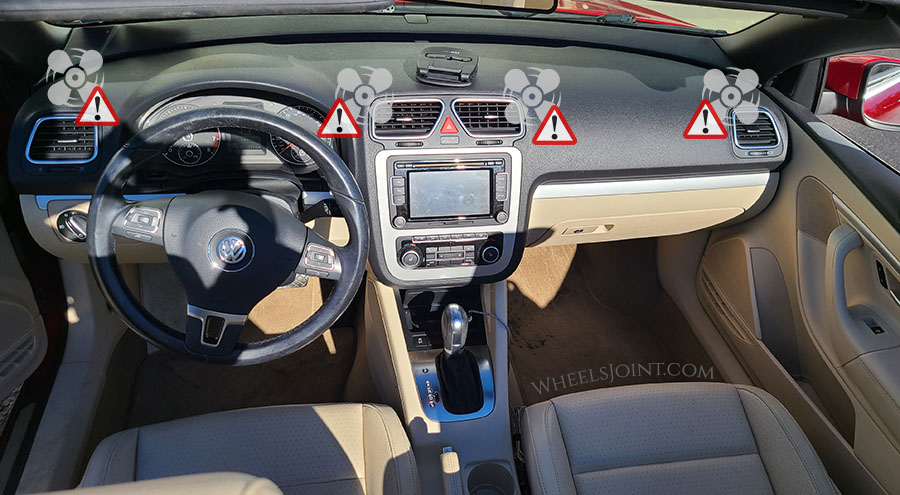
Credit: www.wheelsjoint.com
How Do I Increase the Airflow in My Car Air Conditioner?
If you find that the airflow from your car’s air conditioner isn’t as strong as it used to be, there are a few potential causes. One possibility is that the air filter is dirty and needs to be replaced. Another possibility is that the vents are blocked by debris or leaves.
If this is the case, you’ll need to clear them out so that air can flow freely again. Finally, if your car’s cooling system isn’t working properly, this could also be causing reduced airflow. If you suspect this is the issue, you’ll need to take your car to a mechanic for further diagnosis and repairs.
Why is My Ac Blowing So Weak?
If your AC is blowing weak, there are a few potential reasons. The most common reason is that the air filters are dirty and need to be replaced. Another potential reason is that the evaporator coils are frozen.
This can happen if the unit is set too low or if there is a problem with the Freon levels. If this is the case, you will need to contact a professional for assistance. Finally, another potential reason for weak airflow could be a blockage in the ductwork.
This can happen if debris has accumulated over time or if there is an issue with one of the vents. If you suspect this may be the case, you should have your ductwork inspected by a professional.
How Do You Fix a Weak Ac Airflow?
If your AC unit has weak airflow, there are a few potential causes and solutions:
1. Dirty air filter – A clogged or dirty air filter is the most common cause of weak airflow from an AC unit. Simply replacing the air filter can often fix the problem.
2. Blocked vents – If your vents are blocked by furniture or other objects, this can restrict airflow and cause weak airflow from your AC unit. Be sure to keep all vents clear and unobstructed for optimal airflow.
3. Refrigerant leaks – If your AC unit is leaking refrigerant, this can lead to insufficient cooling and weak airflow.
A certified technician will need to repair any leaks and recharge the system with refrigerant.
4. Fan problems – Both the condenser fan and evaporator fan play an important role in circulating cool air throughout your home. If either of these fans is not working properly, it could result in weak airflow from your AC unit.
A certified technician can diagnose and repair any fan issues that may be present.
Why is There Barely Any Air Coming Out of Vents?
There could be a few reasons why there is barely any air coming out of your vents. One possibility is that the blower motor, which is responsible for moving air through the vents, is not working properly. Another possibility is that the ductwork that carries air to the vents could be blocked or damaged.
Finally, it’s possible that the settings on your thermostat are not correctly configured, which would prevent air from flowing through the vents even if the blower motor and ductwork are both functioning properly.
If you notice that there is barely any air coming out of your vents, you should first check to see if the blower motor is running. If it is not, then you will need to replace it.
If the blower motor is running but there still isn’t much airflow, then inspect the ductwork for any blockages or damage. You may be able to clear away minor blockages yourself, but more serious damage will likely require professional repairs. Finally, take a look at your thermostat settings and make sure that everything is configured correctly.
If all else fails, consult with a heating and cooling professional to diagnose and solve the problem.
Conclusion
If you’re driving along and suddenly your car’s air conditioner stops blowing hard, there are a few potential reasons why. The most common reason is that the system is low on refrigerant. This could be because of a leak in the system, or simply because it needs to be recharged.
Other potential culprits include a clogged filter, faulty compressor, or debris in the vents. If you’re not sure what’s causing the problem, take your car to a mechanic for diagnosis and repair.
