If you notice steam coming out of your air conditioner, there could be a few different reasons why. One possibility is that your air conditioner is leaking water. This could be due to a clogged drain line or a problem with the unit itself.
Another possibility is that the air conditioner is overheating. This could be caused by a dirty filter or a problem with the unit’s cooling coils. If you notice steam coming out of your air conditioner, it’s important to have a professional investigate the problem so it can be fixed.
Why is fog coming out of my air conditioner?
There are a few reasons why your air conditioner may be emitting fog. One possibility is that the air conditioner is over-cooling the air in your home, causing the water vapor in the air to condense and turn into fog.
Another possibility is that your air conditioner is not properly draining the water it condenses from the air, causing the water to build up and eventually be released as fog.
What does it mean when your AC is blowing smoke?
If you’ve ever seen smoke coming from your air conditioner, it’s probably not something you want to ignore. Although it may not seem like a big deal, it could be a sign of a serious problem. When your AC is blowing smoke, it means that something is overheating.
This could be caused by a variety of things, such as a dirty air filter, a clogged evaporator coil, or a problem with the compressor. If you see smoke coming from your AC, it’s important to turn it off right away. Once it’s off, you can try to troubleshoot the problem yourself.
If you can’t figure out what’s causing the smoke, or if the problem persists, you’ll need to call a professional for help. Ignoring a smoking AC can be dangerous. If the problem isn’t fixed, the smoke could turn into a fire.
So, if you see smoke coming from your AC, don’t hesitate to take action.
How do I fix condensation in my air conditioner?
Condensation is a common problem for air conditioners, especially during humid summer months. While a little condensation is normal, too much can lead to water damage and mold growth. If you’re noticing excessive condensation on your air conditioner, there are a few things you can do to fix the problem.
First, make sure that your air conditioner is the right size for your home. An air conditioner that’s too small will have to work harder to cool your home, leading to more condensation.
Second, clean or replace your air conditioner’s filters regularly. Dirty filters can restrict air flow, causing your air conditioner to work harder and produce more condensation.
Finally, keep your air conditioner’s coils clean. Dirty coils can also restrict air flow and cause your air conditioner to produce more condensation.
Air conditioner blowing white mist
If your air conditioner is blowing white mist, there’s a good chance that the unit is frozen. This can happen for a number of reasons, including low refrigerant levels, dirty coils, or blocked air flow. If your AC unit is frozen, the first thing you’ll want to do is turn it off.
Then, you can try thawing the unit with a hair dryer. If that doesn’t work, you’ll need to call a professional for help.
In the meantime, there are a few things you can do to prevent your AC unit from freezing.
First, make sure that the unit has enough refrigerant. If it’s low, you’ll need to have it refilled by a professional. Second, keep the coils clean.
Dirty coils can cause the unit to freeze more easily. You can clean the coils yourself with a brush or a vacuum.
Finally, make sure that there’s good air flow around the unit. If it’s blocked by furniture or other objects, the unit won’t be able to breathe, and it will be more likely to freeze. If your air conditioner is blowing white mist, there’s a good chance that it’s frozen.
To prevent this, make sure that the unit has enough refrigerant, the coils are clean, and there’s good air flow around the unit.
If the unit does freeze, you can try thawing it with a hair dryer.
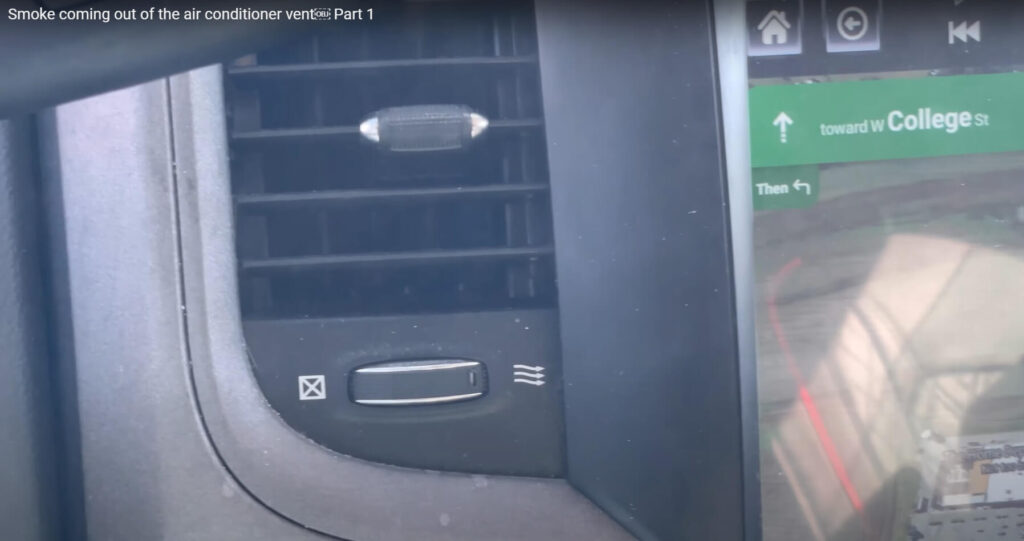
Smoke coming out of the air conditioner vent
White mist coming from car air conditioner
If you notice white mist coming from your car air conditioner, there’s no need to panic. This is a perfectly normal occurrence and is nothing to be concerned about. The white mist is simply water vapor that has condensed on the cold evaporator coils inside the air conditioner.
When the coils are cold, they cause the water vapor in the air to condense and turn into liquid water. The water then drips down into a drain pan where it is eventually drained out of the car. So, if you see white mist coming from your car’s air conditioner, don’t worry, it’s perfectly normal.
Just know that it’s simply water vapor that has condensed on the cold coils and is being drained out of the car.
Steam coming out of ac car
If you notice steam coming out of your car’s AC, it could be a sign that your coolant levels are low. Coolant, or antifreeze, is a fluid that helps to keep your car’s engine cool. If there’s not enough coolant in the system, it can cause the engine to overheat.
If you see steam coming from your car’s AC, pull over and turn off the engine. Then, check the coolant levels. If they’re low, add more coolant to the system.
Be sure to use the correct type of coolant for your car. If you’re not sure how to add coolant or check the levels, consult your car’s owner’s manual or take it to a mechanic. Don’t ignore the problem, as it could cause serious damage to your car’s engine.
Mist coming out of ac
If your AC is blowing out mist, there’s a good chance that it’s due to a clogged air filter. A clogged air filter can restrict air flow, causing the evaporator coil to freeze. When the coil thaws, water drips into the drain pan and the unit starts blowing out mist.
If you suspect that a clogged air filter is the cause of your AC’s mist problem, replace the filter and see if that fixes the issue. If the problem persists, it’s possible that there’s a problem with the evaporator coil itself. In this case, it’s best to call a professional for help.
Steam.coming out of heater
If you have a steam coming out of heater, it’s important to take action immediately. Steam can cause serious burns, so it’s important to be careful. If you see steam coming out of your heater, turn it off and call a qualified technician.
Car air conditioner blowing fog
If you’ve ever had your car air conditioner blow fog, you know it’s not a pleasant experience. Fog can form on the inside of your windshield, making it difficult to see. It can also make the interior of your car feel damp and cold.
There are a few reasons why your car air conditioner might be blowing fog. One possibility is that the air conditioner is set too low. When the air conditioner is set too low, the humidity in the air can condense on the cold surfaces inside the car, forming fog.
Another possibility is that there is something blocking the air conditioner’s vents. This could be a build-up of dust or debris, or even an object that’s been accidentally left in the vents. If the vents are blocked, the air conditioner can’t do its job properly and fog can form.
If your car air conditioner is blowing fog, there are a few things you can do to fix the problem.
First, check the air conditioner’s settings. If it’s set too low, turn it up a notch or two.
This will help to reduce the humidity in the air and prevent fog from forming. If the air conditioner’s vents are blocked, take a look inside and see if you can remove the obstruction. If you can’t, you may need to take your car to a mechanic to have the vents cleaned out.
White smoke coming from heat pump
If you see white smoke coming from your heat pump, it’s important to take action right away. This smoke is a sign that the heat pump is overheating and could be in danger of catching fire. If you see white smoke, turn off the heat pump and unplug it from the power source.
Then, call a qualified repair technician to come and inspect the unit. Do not try to repair the heat pump yourself. Overheating is usually caused by a problem with the heat pump’s compressor.
The compressor is responsible for circulating refrigerant throughout the system. If the compressor is damaged or not working properly, it can cause the heat pump to overheat. If your heat pump is overheating, it’s important to have it repaired as soon as possible.
Once the compressor is repaired or replaced, the heat pump should be back to working properly.
Steam coming out of furnace
If your furnace is leaking steam, it’s not something to ignore. Although it may not seem like a big deal, steam coming out of your furnace is actually a sign of a serious problem. The most likely cause of steam coming out of your furnace is a cracked heat exchanger.
The heat exchanger is a key component of your furnace, and it’s responsible for transferring heat from the combustion chamber to the air that’s circulated throughout your home.
If the heat exchanger is cracked, it can allow dangerous gases, like carbon monoxide, to leak into your home.
In addition, a cracked heat exchanger can also cause your furnace to overheat, which can lead to a fire. If you see steam coming out of your furnace, it’s important to shut it off right away and call a qualified furnace repair technician.
Don’t try to fix the problem yourself, as you could make it worse or put yourself in danger.
Conclusion
If you’re noticing steam coming out of your air conditioner, there are a few potential reasons why. It could be that your AC unit is too big for the space it’s cooling, which causes it to work overtime and produce condensation. It could also be that your AC unit isn’t draining properly, causing water to build up and eventually turn into steam.
If you’re not sure what the problem is, it’s always best to call a professional to take a look.
