Skip to content
Smart AC Solutions
  • CategoriesExpand
    • AC Troubleshooting
    • Air ConditionerExpand
      • Portable Air Conditioners
      • Room Air Conditioners
      • Split System Air Conditioners
      • Window Air Conditioners
      • Reviews & Prices
    • Thermostat Solutions
    • Calculator
  • Directory
  • Request HVAC Service
  • Join Our Pro NetworkExpand
    • HVAC BusinessesExpand
      • Residential
      • Commercial
      • Emergency Services
    • Add Business
  • Register
  • Login
  • Forgot Password?
Smart AC Solutions
Air Conditioner

Can I Pressure Wash My AC Unit? (Read First)

ByRalph P. Sita Updated onJune 28, 2026

No, you should not pressure wash your AC unit. While it’s tempting to blast the dirt off your outdoor condenser, the high pressure easily bends the thin aluminum cooling fins and can force water past seals into the electrical components, which damages the unit and can be unsafe. The right way to clean an outdoor AC unit is to shut off its power, then rinse it gently with a regular garden hose (low pressure), using a soft brush or fin comb for stubborn dirt. That removes the buildup without wrecking the fins. If your unit is heavily caked or you’d rather not risk it, a professional coil cleaning is inexpensive and thorough. Save the pressure washer for the driveway.

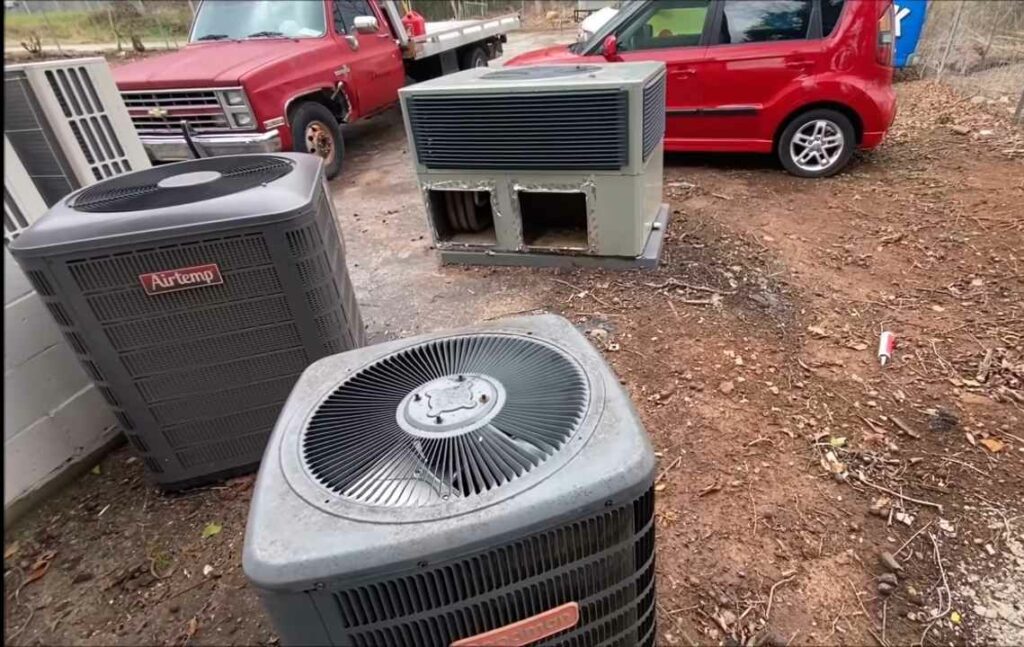
Can I Pressure Wash My Ac Unit

Page Contents

Toggle
  • How to clean an outside AC unit (the safe way)
  • Is it necessary to clean the AC outdoor unit?
  • How to clean an outside AC unit without a hose
  • Is it OK to spray water on your air conditioner?
  • Why you don’t use a Pressure Washer to Clean an Air Conditioner
  • Frequently Asked Questions
    • Can I pressure wash my AC unit?
    • What’s the best way to clean an AC condenser?
    • How often should I clean my outdoor AC unit?
    • What if the fins are already bent?
    • Related Articles

How to clean an outside AC unit (the safe way)

An outdoor condenser gets dirty fast, and cleaning it well is straightforward without a pressure washer.

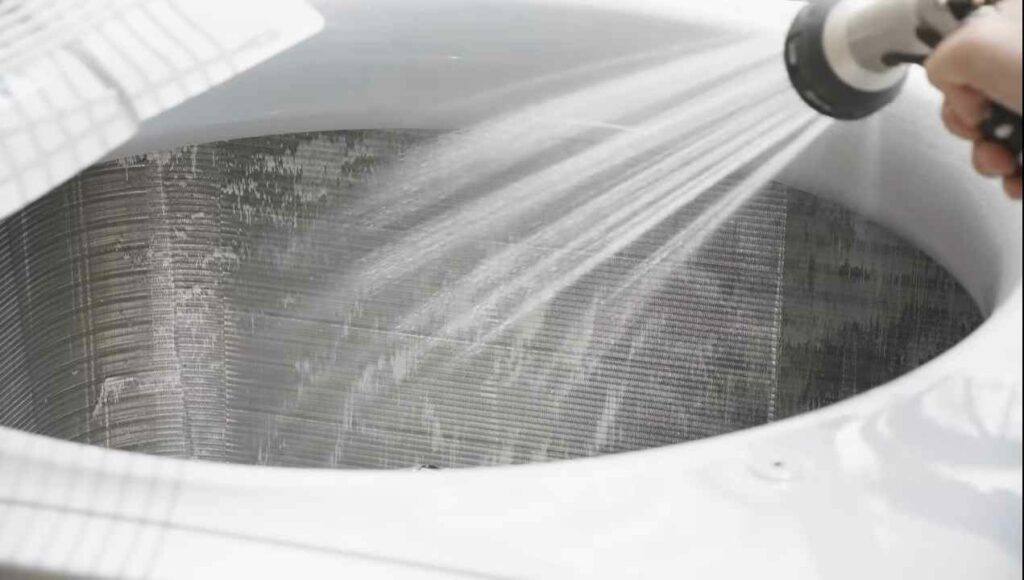
How to clean outside ac unitHow to clean outside ac unit

1. Turn off the power at the disconnect or breaker. Never clean a running unit or work near its electricals with power on.

2. Clear large debris (leaves, grass, cottonwood) by hand, then rinse the unit with a garden hose at normal pressure to wash away loose dirt.

3. For stubborn grime, use a soft brush or a dedicated fin comb, brushing gently in line with the fins so you don’t bend them. Avoid wire brushes and high pressure.

4. Rinse again with the hose to flush the loosened dirt out of the coil.

5. Let the unit dry, then restore power and run it to confirm normal operation.

Is it necessary to clean the AC outdoor unit?

Yes, you should clean the outdoor unit regularly.

Here’s why: the outdoor unit sits exposed to the elements and dirties quickly.

A buildup of dirt and debris on the coil makes the unit work harder to release heat, which raises energy use and can lead to premature wear.

A dirty system can also hurt overall performance and comfort. Keeping the condenser clean helps it run efficiently and last longer.

So how do you clean it safely?

Start by turning off the power to the unit at the breaker or disconnect box.

Then use a garden hose at normal pressure to rinse the unit, keeping the spray off the electrical compartment.

For heavier buildup, gently brush the fins or use a fin comb rather than scraping or blasting them.

Once the dirt is rinsed away, let the unit dry.

Finally, turn the power back on and check that the unit runs properly. Aim to do this at least once a season.

How to clean an outside AC unit without a hose

No hose? You can still clean the unit, just more by hand.

The simplest approach is a soft brush to sweep away dirt, dust, and debris from the fins and housing.

A vacuum with a brush attachment works well for loose debris and tight spots, pulling buildup off the coil without bending the fins.

A no-rinse coil cleaner spray, designed for AC condensers, can also lift grime that you then wipe or brush away, following the product directions.

Whatever method you use, always turn off the power to the unit before you start.

When you’re done, if you can get even a small amount of clean water to it (a bucket and cup, or a watering can), a gentle rinse helps clear any loosened residue.

With a brush and a vacuum, you can keep an outdoor unit clean without a hose at all.

Is it OK to spray water on your air conditioner?

Yes, it’s fine to spray water on your outdoor air conditioner to clean it, as long as you use a regular garden hose rather than a pressure washer.

Doing it every few months helps keep the coil clear and the unit efficient.

With the power off, you can remove the protective grille and rinse the coils with the hose.

Don’t use a pressure washer, because the high pressure can flatten the fins and drive water into the electricals.

Let the unit air dry for about an hour before replacing the grille and turning the power back on.

Why you don’t use a Pressure Washer to Clean an Air Conditioner

Frequently Asked Questions

Can I pressure wash my AC unit?

No. The high pressure bends the delicate cooling fins and can force water into the electrical components. Clean the unit with a regular garden hose and a soft brush instead, with the power turned off.

What’s the best way to clean an AC condenser?

Shut off the power, clear large debris by hand, rinse with a garden hose at normal pressure, and gently brush or comb stubborn dirt in line with the fins. A no-rinse coil cleaner helps with heavy grime.

How often should I clean my outdoor AC unit?

At least once a season, and more often if it’s near trees, cottonwood, or heavy dust. A clean coil runs more efficiently, uses less energy, and helps the unit last longer.

What if the fins are already bent?

Lightly bent fins can be straightened with an inexpensive fin comb sized to your coil’s fin spacing. Work gently. If a large area is flattened or you’re unsure, have a technician straighten and clean the coil.

5/5 - (2 votes)
Ralph P. Sita
Author: Ralph P. Sita

Ralph P. Sita is a seasoned professional with deep roots in both the HVAC and tech industries. His family’s business, Ralph P. Sita, Inc., is a locally owned and operated HVAC contractor with over 42 years of experience, serving the DC, Maryland, and Virginia areas. The company specializes in residential, commercial, and industrial heating, ventilation, and air conditioning services, offering everything from installation and maintenance to custom ductwork and indoor air quality solutions -www.ralphpsita.com. A former CPA, he spent the last decade as co-founder and co-CEO at Cybrary, a leading platform for cybersecurity and IT training. Cybrary became the largest, most well-known cybersecurity training businesses in the industry under his leadership. Smart AC Solutions is an opportunity to give back to the HVAC community by providing reliable, actionable information on all things heating and cooling.

Related Articles:

  1. Can You Wash Air Conditioner Filters? Read First
  2. How to Test a 3 Wire AC Pressure Switch (Multimeter)
  3. Ac High Pressure Switch Location – The right Location
  4. Understanding Negative Pressure Building Syndrome: Causes and Effective Fixes
Ralph P. Sita

Ralph P. Sita is a seasoned professional with deep roots in both the HVAC and tech industries. His family’s business, Ralph P. Sita, Inc., is a locally owned and operated HVAC contractor with over 42 years of experience, serving the DC, Maryland, and Virginia areas. The company specializes in residential, commercial, and industrial heating, ventilation, and air conditioning services, offering everything from installation and maintenance to custom ductwork and indoor air quality solutions -www.ralphpsita.com.

A former CPA, he spent the last decade as co-founder and co-CEO at Cybrary, a leading platform for cybersecurity and IT training. Cybrary became the largest, most well-known cybersecurity training businesses in the industry under his leadership.

Smart AC Solutions is an opportunity to give back to the HVAC community by providing reliable, actionable information on all things heating and cooling.

Linkedin

Try our new Smart AC Solutions GPT

Description of Smart AC Solutions GPT and link to access.

  • Mastering Whole-Home Ventilation Rate Calculations: A Guide to ASHRAE 62.2 Standards
    by Ralph P. Sita
  • Understanding the Ozone-Based Air Purifier Risks in Occupied Spaces
    by Ralph P. Sita
  • Duct Pressurization Testing (Duct Blaster) Explained: What You Need to Know
    by Ralph P. Sita
  • Optimize Your HVAC Scheduler for Utility Time-of-Use Rates and Slash Energy Bills
    by Ralph P. Sita
  • Ensuring Home Energy Management System (HEMS) Compatibility for Your Smart Home
    by Ralph P. Sita
  • Fresh Air Damper Sizing Guide for Tight Construction: Ensuring Optimal Ventilation
    by Ralph P. Sita

Sites we love:
TrainACE

Facebook Twitter Pinterest YouTube

SmartACSolutions is your go-to source for the latest in heating and air conditioning news, tips, and expert advice.

  • About Us
  • Contact Us
  • Disclaimer
  • Privacy Policy
  • Sitemap

© 2026 Smart AC Solutions । DMCA Protected

SmartACSolutions.com is a property of FieldBin Inc.

Change Location
Find awesome listings near you!
  • Categories
    • AC Troubleshooting
    • Air Conditioner
      • Portable Air Conditioners
      • Room Air Conditioners
      • Split System Air Conditioners
      • Window Air Conditioners
      • Reviews & Prices
    • Thermostat Solutions
    • Calculator
  • Directory
  • Request HVAC Service
  • Join Our Pro Network
    • HVAC Businesses
      • Residential
      • Commercial
      • Emergency Services
    • Add Business
  • Register
  • Login
  • Forgot Password?