If you have an air conditioner, you know that one of the most important things is to keep it at the right temperature.
But what temperature should my ac be blowing? And how can I tell if my air conditioner is blowing at the right temperature?
There are a few things to keep in mind when you’re trying to figure out the perfect temperature for your air conditioner. First, consider the temperature outside. If it’s hot outside, you’ll want your air conditioner to be blowing cooler air.
But if it’s not too hot outside, you can save energy by setting your air conditioner to a higher temperature. Another thing to keep in mind is the temperature inside your home. If you have a lot of people in your home, you’ll want to make sure the air conditioner is blowing cool air.
But if you’re home alone, you can set the temperature a little higher and still be comfortable. Finally, consider your personal preferences. Some people like their air conditioner to blow freezing air, while others prefer it to be a little warmer.
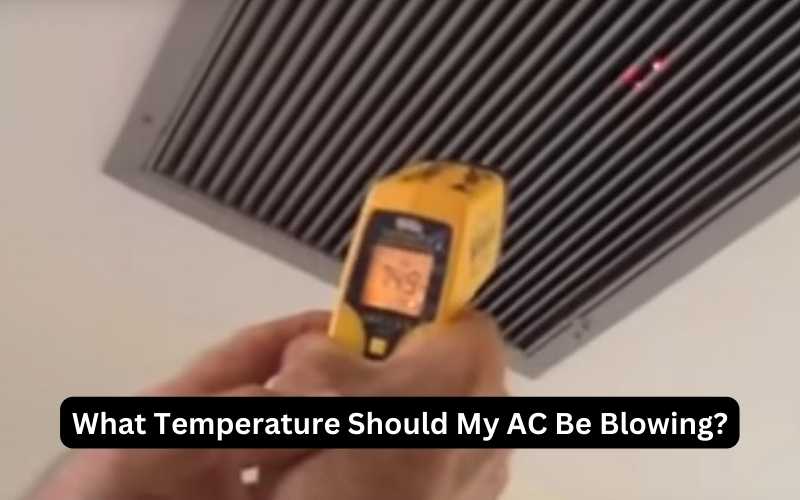
What Temperature Should My AC Be Blowing? Find the Right Temperature!
Figure out what temperature makes you comfortable and set your air conditioner to that temperature.
If you’re like most people, you probably don’t give much thought to your air conditioner’s temperature setting. You probably just leave it on auto and let it do its thing. But believe it or not, there is an ideal temperature setting for your AC unit.
And no, it’s not 72 degrees. So what is the ideal temperature for your air conditioner? Believe it or not, it’s actually 75 degrees.
That’s right, setting your AC unit to 75 degrees is the best way to stay cool and comfortable all summer long. There are a few reasons why 75 degrees is the perfect temperature for your AC unit. First, it’s energy efficient.
Setting your AC unit to 75 degrees will use less energy than setting it to a lower temperature. Second, it will help prevent your home from becoming too humid. If your AC unit is set too low, it can actually make your home more humid.
And lastly, 75 degrees is just the right temperature to keep you comfortable. It’s not too cold or too hot, it’s just right. So next time you’re adjusting your AC unit’s temperature, remember, 75 degrees is the perfect setting.
How cold should my ac blow?
The temperature of the air coming out of an air conditioner vent should be between 14° to 20° Fahrenheit cooler than the air entering the system. This means that if the air entering the system is 75°F, the air coming out of the vent should be between 55°F and 61°F.
As a general rule of thumb, the air should be about 15-20 degrees cooler than the air taken in.
However, there isn’t a universal fixed temperature recommendation, and personal comfort should always come first. If the air coming out of the vent is not within this range, it could indicate that the AC has an issue that needs troubleshooting.
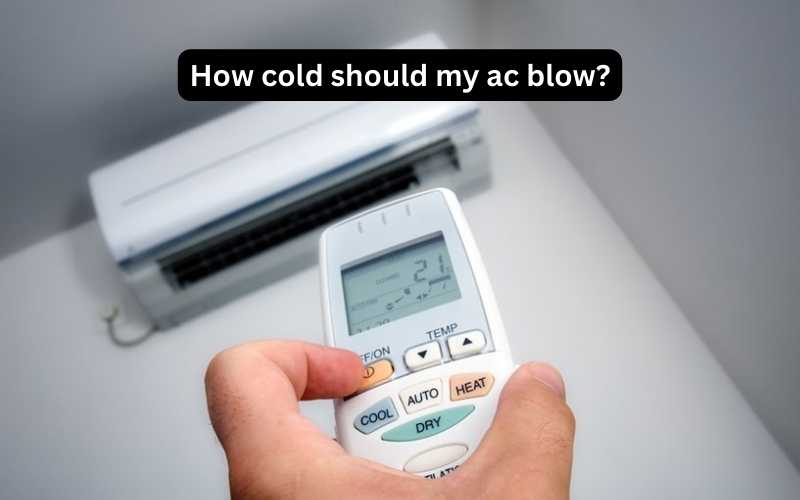
How cold should home ac blow?
The ideal temperature range for home air conditioning systems can vary based on individual preferences and the climate in which the home is located. However, as a general rule of thumb, the ideal temperature for home AC should be set between 72 and 78 degrees Fahrenheit.
Temperatures below 72 degrees can cause excessive cooling and lead to higher energy bills, while temperatures above 78 degrees can result in discomfort and cause the system to work harder than necessary.
It is important to note that proper maintenance and regular cleaning of the AC unit can also affect its efficiency and the temperature at which it blows.
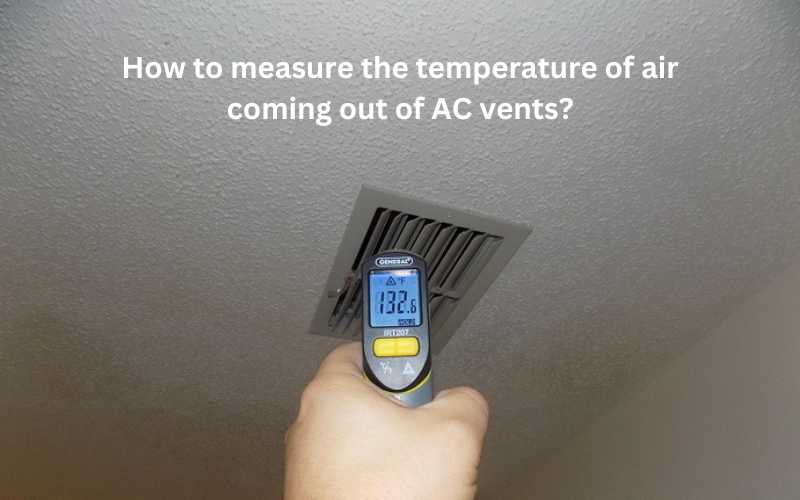
How to measure the temperature of air coming out of AC vents?
To measure the temperature of the air coming out of AC vents, you can use an infrared thermometer or a digital thermometer.
Using Infrared Thermometer:
Here are the steps to measure the temperature of the air coming out of AC vents using an infrared thermometer:
- Point the infrared thermometer at one of the supply vents. Ensure that the vent is in the line of sight of the thermometer.
- Press the measurement button and wait for the reading to stabilize. This will give you the temperature of the air being blown out by your AC system.
- Move the infrared thermometer to a return vent located near the HVAC system. Aim it at the vent and take the temperature reading once it stabilizes. This will provide the temperature of the air being drawn back into the system.
- Calculate the temperature differential by subtracting the return air temperature from the supply air temperature. The resulting value will give you the temperature differential or the evaporator Delta T.
Using Digital Thermometer:
Alternatively, you can use a digital thermometer to measure the temperature of the air coming out of the AC vents. Here are the steps to measure the temperature of the air coming out of AC vents using a digital thermometer:
- Wait until the conditions are ideal. You want a day with a temperature of at least 80 degrees Fahrenheit outside. If the temperature in your region is rarely that high, measure on the hottest day possible. After that, let the air conditioner run for at least 15 minutes.
- Place the thermometer on a vent for five minutes and then remove it. Make a note of the temperature.
- Replace the thermometer in a return vent and repeat the process. The air that exits should be 14 to 20 degrees colder than that which enters.
- Place the thermometer in each space or region of your home near a vent. If some of the vents are much cooler or warmer than the others, there may be an issue.
By following these steps, you can accurately measure the temperature of the air coming out of your AC vents.
How cold should the air be blowing out of the vents?
If your home is too hot or too cold, it’s not comfortable. Most people prefer a temperature between 68 and 72 degrees Fahrenheit. But, of course, comfort is subjective and some people prefer it a little cooler or warmer.
When the temperature is set too low, the furnace runs more often to maintain the set temperature, wasting energy and money. If you have a central heating and cooling system, you know that there are vents in each room that blow air from the system into the room. You may have also noticed that the air coming out of the vents is not always the same temperature.
The temperature of the air coming out of the vents is controlled by the thermostat. The thermostat is set to the temperature that you want the room to be. The furnace or air conditioner will run until the temperature in the room reaches the set temperature on the thermostat.
Then, the furnace or air conditioner will turn off. If the furnace is blowing cold air, it could be because the thermostat is set too low. Turn up the thermostat a few degrees and see if that helps.
If the problem persists, you may need to call a heating technician to take a look at your furnace.
Home ac temperature chart
There is no definitive answer to what temperature you should set your home air conditioner to, but there are some general guidelines that can help you make the decision. The most important thing is to strike a balance between comfort and energy efficiency. In the summer, the recommended temperature is 78 degrees Fahrenheit.
This is the temperature that is most comfortable for the majority of people and will also help you save on your energy bill. Of course, you can adjust this up or down depending on your preferences. If you find that you are constantly adjusting your thermostat throughout the day, it might be time to invest in a programmable thermostat.
This allows you to set different temperatures for different times of the day, so you don’t have to worry about constantly adjusting it. In the winter, you can set your thermostat a bit lower, around 68 degrees Fahrenheit. Again, this is just a general guideline, and you can adjust it up or down as needed.
Just be sure not to set it too low, as this can be uncomfortable and can also lead to higher energy bills. These are just some general tips to help you set the temperature in your home. Of course, every home is different, and you might need to experiment a bit to find the perfect setting.
But following these guidelines should help you get started.
Ac blowing 70 degree air
If your air conditioner is blowing air that feels like it’s only 70 degrees, there are a few possible explanations. First, check your thermostat to make sure it’s set to the correct temperature. It’s also possible that your air conditioner is low on refrigerant, which can cause it to blow lukewarm air.
You may need to have your air conditioner serviced by a professional to recharge the refrigerant. Finally, make sure that all the vents in your home are open and unobstructed. If any vents are closed or blocked, it can cause your air conditioner to work harder and not blow as cold of air.
What should home ac vent temp be?
There are a few things that you should keep in mind when it comes to the temperature of your home’s AC vents. The first is that the temperature should be consistent throughout the house. This means that if one room is significantly cooler or warmer than the others, there is a problem.
The second thing to keep in mind is that the temperature of the vents should be comfortable for you and your family. If the vents are too cold, it can be uncomfortable and even cause health problems. Conversely, if the vents are too hot, it can be a fire hazard.
So, what is the ideal temperature for your home’s AC vents? The answer may surprise you, but the ideal temperature for home ac vents is actually around 78 degrees. This is the temperature that is most comfortable for most people and is also the temperature that is most energy efficient.
Of course, you may need to adjust the temperature up or down depending on the time of year and the weather outside. But, in general, 78 degrees is the ideal temperature for home ac vents.
Air conditioning temperature difference between the supply and return air should be?
There are a few different factors that will affect the temperature difference between the supply and return air for your air conditioning system. The first is the type of system you have. If you have a central air system, the temperature difference will be greater than if you have a window unit.
The second factor is the size of your unit. The larger the unit, the greater the temperature difference will be. The third factor is the age of your unit.
Older units will have a greater temperature difference than newer units. The fourth factor is the climate you live in. If you live in a hot, humid climate, the temperature difference will be greater than if you live in a cooler climate.
The ideal temperature difference between the supply and return air for your air conditioning system is about 20 degrees. This means that the air coming out of the supply vents should be about 20 degrees cooler than the air coming out of the return vents. If the temperature difference is greater than 20 degrees, it means that your system is not operating efficiently and is wasting energy.
If the temperature difference is less than 20 degrees, it means that your system is not cooling your home effectively. There are a few things you can do to ensure that your system is operating at its most efficiently. First, make sure that your air filter is clean.
A dirty air filter will restrict airflow and make your system work harder to cool your home. Second, have your air conditioning system serviced regularly.
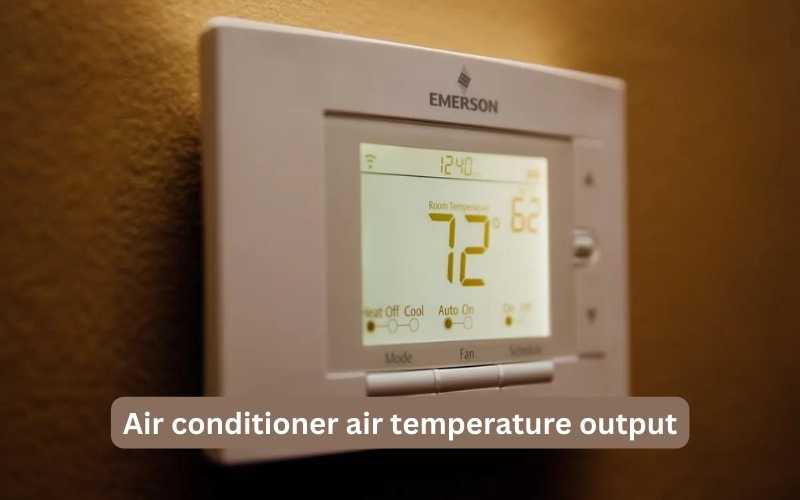
Air conditioner air temperature output
Your air conditioner works by taking in warm air from your home and passing it over a cold evaporator coil. This process removes the heat from the air, cooling it down. The now-cool air is then passed over a hot condenser coil.
This heats the air back up and blows it back into your home. The temperature of the air coming out of your air conditioner depends on a few factors. The first is the temperature of the air going in.
If the air going in is already cool, the air coming out will be cooler. If the air going in is warm, the air coming out will be cooler, but not as cool as it could be. The second factor is the temperature of the evaporator coil.
The colder the evaporator coil, the cooler the air coming out of your air conditioner will be. The third factor is the temperature of the condenser coil. The hotter the condenser coil, the warmer the air coming out of your air conditioner will be.
You can usually adjust the temperature of the air coming out of your air conditioner by adjusting the thermostat. The lower you set the thermostat, the cooler the air coming out of your air conditioner will be.
How to measure ac vent temperature?
If you want to know how to measure ac vent temperature, there are a few things that you will need to do. First, find an ac vent that is in an open area and not near any heat sources. Second, using a thermometer, take a reading of the temperature of the air coming out of the vent.
Finally, compare this reading to the temperature inside the room to see how well the AC is working.
Auto ac vent temperature chart
If you own a car, you know that the air conditioning (AC) system is one of the most important components. The AC system keeps you and your passengers cool and comfortable during those hot summer months. But have you ever wondered what temperature your AC vents should be set at?
There is no “one size fits all” answer to this question, as the ideal AC vent temperature will vary depending on the outside temperature and the number of people in the car. However, there are some general guidelines that you can follow. If it’s a hot day (80 degrees Fahrenheit or above), you’ll want to set your AC vents to the lowest temperature setting that is comfortable for you.
This will help keep the car cool and prevent the AC system from working overtime. If it’s a mild day (70-80 degrees Fahrenheit), you can set your AC vents to a slightly higher temperature. This will help improve the efficiency of the AC system and prevent the car from becoming too cold.
And on a cool day (below 70 degrees Fahrenheit), you can set your AC vents to the highest temperature setting. This will help the AC system warm up the car faster and prevent you from feeling chilly. Keep in mind that these are just general guidelines.
The best way to find the perfect AC vent temperature for your car is to experiment and see what works best for you.
How cold should air coming out of AC be?
If your home feels stuffy and hot even when your air conditioner is running, it might not be doing its job properly. In order to be effective, air conditioners need to cool the air in your home to at least 20 degrees Celsius below the temperature outside. If the air coming out of your AC isn’t cold enough, there are a few potential reasons why.
One possibility is that your AC unit is too small for the space it’s trying to cool. If your AC unit is too small, it won’t be able to cool your home properly, no matter how low you set the temperature. Another possibility is that your AC unit isn’t getting enough power.
If the voltage to your AC unit is too low, it won’t be able to run at full capacity and will struggle to cool your home. If your AC unit is the right size and is getting enough power, the most likely reason why it’s not cooling your home properly is that the coils are dirty. The coils inside your AC unit need to be kept clean in order for the unit to work properly.
Over time, the coils can get clogged with dust and dirt, which reduces their ability to cool the air. If your AC unit’s coils are dirty, the best way to clean them is to hire a professional. However, you can also clean the coils yourself if you’re comfortable working with electricity.
How hot should air coming out of vents be?
The temperature of the air coming out of your vents should be determined by the temperature that you have set your thermostat to. If your thermostat is set to 70 degrees, then the air coming out of your vents should be around 70 degrees as well.
However, if your home is not cooling down to the temperature that you have set your thermostat to, then there may be an issue with your HVAC system, and you should contact a professional for assistance.
How cool should my house be if it’s 100 outside?
Assuming you would like tips for cooling your house when it is hot outside:
1. Close your windows and curtains during the day to keep the sun from heating up your home.
2. Use ceiling fans to circulate air and make the room feel cooler.
3. Set your air conditioner to the coolest, comfortable setting.
4. Drink lots of cold water and avoid hot drinks.
5. Eat lighter meals and avoid using the oven.
6. Wear cool, loose clothing.
Separate room vents blowing different temperatures? How I fixed my central air. Warmer or colder
Conclusion
If your home is too hot or too cold, it’s probably because your AC isn’t working properly. So, what temperature should your AC be blowing? Well, it depends.
The ideal temperature for your home depends on the climate you live in, the time of year, and your personal preferences. In general, though, most people feel comfortable when the temperature is between 68 and 72 degrees Fahrenheit. So, if your AC is blowing hot air, turn it down.
And if it’s blowing cold air, turn it up. If you can’t find the sweet spot, it’s time to call a professional.

What’s up, yup this article is really fastidious and I have learned lot of things from it concerning blogging. thanks.