If your air conditioner is making a dripping noise, it could be due to a number of different issues. The most common cause of this problem is a clogged condensate drain line. When this happens, water can back up into the air conditioner and cause the unit to make a dripping noise.
In some cases, the drip may be due to a leak in the evaporator coil. This can happen if the coil is not properly sealed or if it is damaged. If you notice a dripping noise coming from your air conditioner, it is important to have the unit inspected by a qualified technician to determine the cause of the problem.
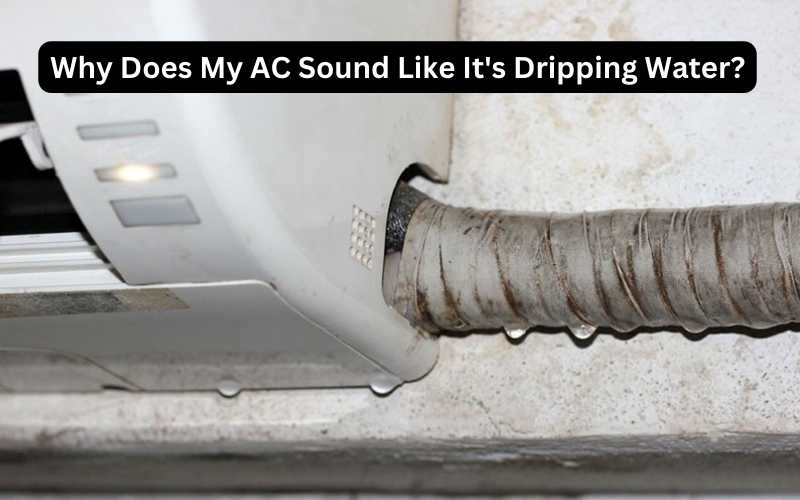
Why does my AC sound like it’s dripping water?
One of the most common questions we get here at ACME Air Conditioning is, “Why does my AC sound like it’s dripping water?” While it may seem like a small problem, this noise can be indicative of a much larger issue with your air conditioner. If you’re hearing this noise coming from your AC, it’s important to call a professional right away to have it checked out.
There are a few different reasons why your AC may sound like it’s dripping water. One possibility is that the condensate drain line is clogged. This line is responsible for carrying away any moisture that’s collected in the air conditioner.
If the line is clogged, the water will back up and drip down into the unit, causing that telltale dripping sound. Another possibility is that the evaporator coil is frozen. This can happen if the air conditioner is running constantly and isn’t able to take a break.
The coils need time to defrost in order to continue working properly. If they don’t, the ice will build up and cause water to drip down. If you’re hearing a dripping sound coming from your AC, it’s important to call a professional right away.
This noise can be indicative of a much larger issue with your air conditioner. ACME Air Conditioning has a team of experienced and certified technicians who can quickly diagnose the problem and get your AC up and running again.
Should I hear my AC dripping water?
If you hear your AC dripping water, it is most likely due to a clogged or frozen condensate line. This line is responsible for removing water that condenses on your AC unit’s coils. If the line becomes clogged, the water can back up and cause your AC unit to drip water.
If you think your condensate line may be clogged, the first thing you should do is check the line for any visible blockages. You can try removing them with a wire or pliers. If the line is completely blocked, you may need to replace it.
If your condensate line is not clogged, the next most likely cause of your AC unit dripping water is a frozen evaporator coil. This coil is responsible for absorbing heat from your home’s air. If it becomes frozen, it can cause your AC unit to drip water.
If you think your evaporator coil may be frozen, the first thing you should do is turn off your AC unit and wait for the coil to thaw. Once it is thawed, you can turn your AC unit back on and see if the dripping has stopped. If it has not, you may need to replace the coil.
If your AC unit is still dripping water after you have checked the condensate line and evaporator coil, it is most likely due to a leak in the unit itself.
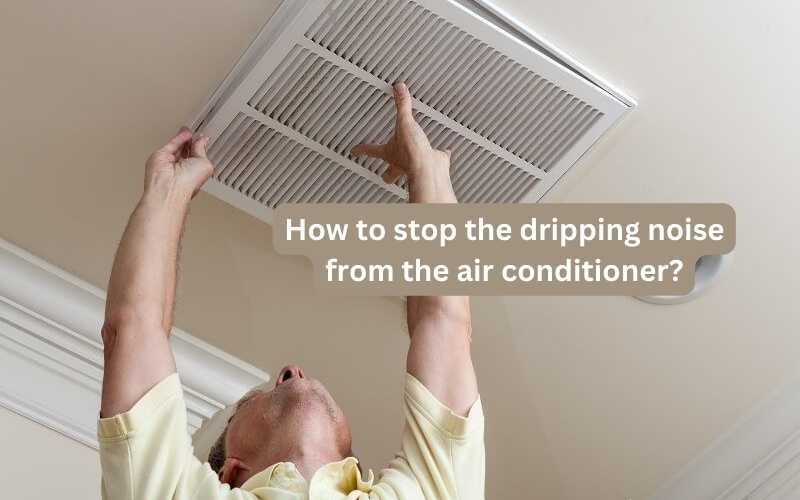
How to stop dripping noise from air conditioner?
To stop the dripping noise from your air conditioner, you can try the following steps:
Clear the condensate drain: If the drain is easily accessible, you can clear any clogs or debris that may be causing the water to drip.
Replace the condensate drain: If the drain is damaged or broken, it may need to be replaced to ensure proper drainage and prevent dripping.
Install a drip pad or cushion: You can buy and install a drip pad or cushion that absorbs the water drops from your air conditioner. This can help reduce the noise caused by dripping water.
If you are unable to locate the source of the dripping sound or if the drain lines are not accessible, it may be best to call an HVAC contractor for assistance. They can help diagnose and fix the issue to stop the dripping noise from your air conditioner.
Please note that these steps are general suggestions and may not apply to all air conditioning systems. It’s always recommended to consult the manufacturer’s instructions or seek professional help if you’re unsure about performing any maintenance tasks on your air conditioner.
What do you do if your AC sounds like running water?
If your AC sounds like running water, there could be a few different issues going on. First, check to see if there is water pooled around your AC unit. If so, this could be a sign of a leak, and you’ll need to call a professional to come and take a look.
When there is no water pooling, the next thing to check is the drain line. If the drain line is clogged, it can cause water to back up and make your AC unit sound like it’s running water. Again, you’ll need to call a professional to come and take a look.
How do I stop my air conditioner from dripping?
If your air conditioner is dripping, there are a few things you can do to stop it. First, check the unit’s coils. If they’re dirty, they may be causing the dripping.
Clean the coils with a brush or cloth, and be sure to remove any debris that may be clogging them. If the coils are clean and the dripping persists, check the unit’s drain pan. If it’s full of water, emptying it should stop the dripping.
When the pan is empty or the dripping continues, there may be a problem with the unit’s condensate line. This line drains the water that collects in the unit, and if it’s clogged, the water will back up and cause dripping. Clearing the line should stop the dripping.
If you’ve tried all of these things and the dripping persists, there may be a problem with the unit itself. In this case, you’ll need to call a technician to diagnose and fix the problem.
How to fix air conditioner leaking water inside?
To fix an air conditioner leaking water inside, you can follow these steps:
Turn off the air conditioner: Before attempting any repairs, it’s important to turn off the air conditioner to prevent further damage and ensure your safety.
Check the condensate drain line: A clogged condensate drain line is a common cause of water leaking from the AC unit into your home. The drain line can get clogged with dirt, dust, or debris over time, preventing proper drainage.
You can try the following methods to clear the clog:
- Use a wet/dry vacuum: Attach the vacuum to the condensate drain line and create suction to remove the clog.
- Use a wire brush or long wire: Insert the brush or wire into the drain line and gently push it through to dislodge any obstructions.
- Use compressed air: Blow compressed air into the drain line to clear the clog.
- Inspect the drain pan: The drain pan collects condensate water from the air conditioner. Check if the pan is cracked, damaged, or overflowing. If necessary, replace the drain pan to prevent water from leaking inside.
- Clean the evaporator coils: Dirty or clogged evaporator coils can cause water to drip from the air conditioner. You can clean the coils by mixing warm water and soap, then using a rag or sponge to wipe the coils. Allow the coils to air dry before turning the AC system back on.
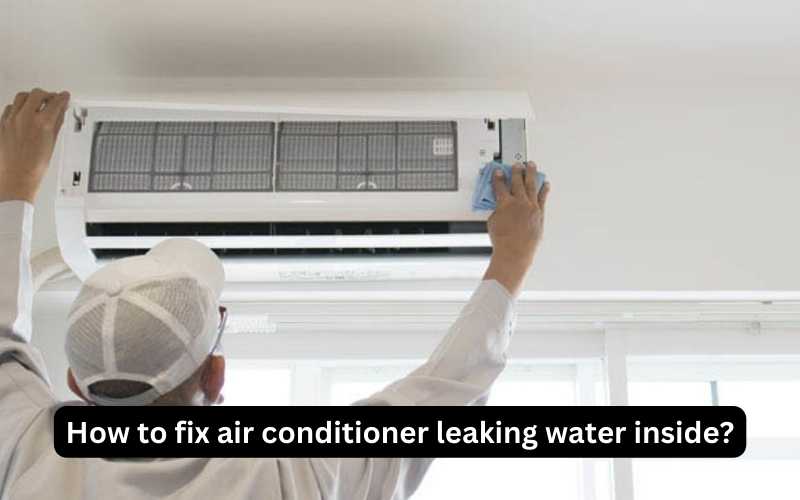
If you’re unsure about performing any maintenance tasks on your air conditioner or if the issue persists after attempting these steps, it’s recommended to contact a licensed HVAC technician for professional assistance. They can diagnose the problem and provide the necessary repairs to fix the air conditioner leaking water inside your home.
Dripping sound in wall when ac is on
If you’re hearing a dripping sound in your wall when your AC is on, it’s likely due to a condensation line that’s either blocked or has a leak. If the line is blocked, it can cause water to back up and drip out of the AC unit. When the line is leaking, it can drip onto the floor or into the wall.
Either way, it’s important to have the problem fixed as soon as possible to avoid water damage. If you suspect that you have a condensation line problem, the first thing you should do is check the line itself. If it’s blocked, you can try to clear it with a plunger or a snake.
Dripping sound when car ac is on
If you’re driving along and suddenly notice your car’s air conditioner making a strange dripping sound, it’s important not to ignore it. This noise is usually a sign that there’s a problem with your AC system, and it needs to be fixed as soon as possible. There are a few different things that could be causing the dripping noise.
One possibility is that there’s a leak in one of the AC hoses. This can be a dangerous situation, as refrigerant can leak out and cause harm to you and your car. Another possibility is that the AC evaporator is leaking.
This can also be dangerous, as it can lead to electrical shorts. If you hear a dripping noise coming from your car’s air conditioner, the best thing to do is to take it to a mechanic and have them take a look. They’ll be able to diagnose the problem and get it fixed quickly.
In the meantime, you can try to use the AC as little as possible until it’s repaired.
Why does my window ac sound like it has water in it?
If your window air conditioner is making a gurgling sound, it may be because water has gotten into the unit. This can happen if the unit is not level and water has pooled inside. You may also hear this sound if the unit is low on refrigerant.
To fix this, you will need to level the unit and make sure it is properly drained. You may also need to add refrigerant to the unit.
Dripping sound when ac turns off
If your air conditioner is making a dripping sound when it turns off, there are a few potential causes. First, it could be that water is condensing on the coils and dripping into the pan below. This is perfectly normal and nothing to worry about.
Second, it could be that your AC unit is low on Freon. This is also normal and can be easily fixed by a trained technician. Finally, it could be that your AC unit is leaking water.
Water sound when ac turns off
The sound of water running or dripping when an air conditioning unit turns off can be a cause for concern for many homeowners. However, this is a common occurrence and is not necessarily a sign of a serious problem.
The sound is typically caused by condensation that accumulates on the evaporator coils during the cooling process. When the AC unit shuts off, the water that has collected on the coils drips into a drain pan and is then carried away by a drain line.
To prevent water buildup, it is important to regularly clean or replace air filters and have the unit serviced by a professional. Additionally, ensuring that the drain line is clear and free of debris can also help prevent water sounds when the AC turns off.
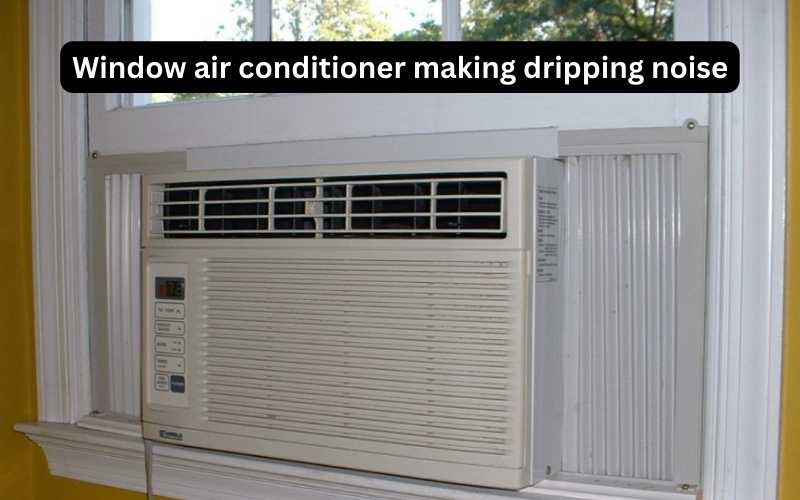
Window air conditioner making dripping noise
If your window air conditioner is making a dripping noise, it may be due to a clogged drainage hole. This hole is located on the bottom of the air conditioner unit and is used to drain away any condensation that forms on the unit. If this hole becomes clogged, the water will have nowhere to go and will eventually start to drip out of the unit.
To clean the drainage hole, first, make sure that the air conditioner is unplugged. Then, remove the front panel of the unit so that you can access the hole. Use a small brush or a toothpick to clear away any debris that is blocking the hole.
Once the hole is clear, replace the front panel and plug the unit back in. The dripping noise should now be gone.
How to stop a dripping noise?
If you have a dripping noise in your home, there are a few things you can do to try to stop it. First, check to see if the source of the dripping is coming from a faucet or pipe. If so, tighten the faucet or pipe to see if that stops the dripping.
If the dripping noise is coming from your furnace, check the humidifier to see if it needs to be refilled. When the humidifier isn’t the source of the dripping, then check your furnace filter to see if it needs to be replaced. If you still can’t identify the source of the dripping noise, you may need to call a plumber or HVAC technician to come and take a look.
Heater sounds like dripping water
If you have a heater that’s making a dripping sound, there’s a good chance that there’s water inside the unit. This can happen for a number of reasons, but the most common is that the unit isn’t draining properly. If you have a drip pan underneath the unit, it’s likely that the pan is full of water and needs to be emptied.
If you don’t have a drip pan, the water is probably coming from the unit itself. In either case, you’ll need to troubleshoot the issue to see what’s causing the water to build up. One possibility is that the unit’s condensate line is clogged.
The condensate line is responsible for draining water away from the unit, so if it’s blocked, the water has nowhere to go but into the unit itself. You’ll need to clean out the condensate line to fix this issue. Another possibility is that the unit’s evaporator coils are frozen.
This can happen if the unit isn’t getting enough airflow. The lack of airflow can be due to a number of things, such as a dirty air filter or a closed damper. Thawing out the coils will fix the problem.
If you’re not sure what’s causing the water to build up in your unit, it’s best to call a professional. They’ll be able to diagnose the problem and get your heater running properly again.
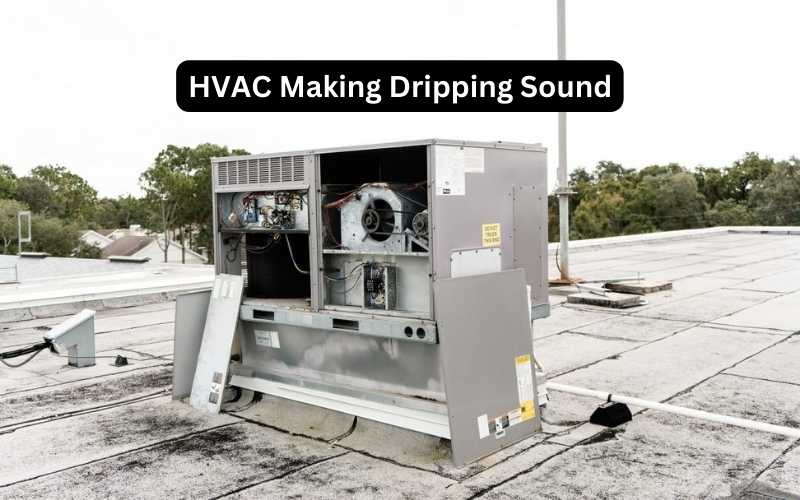
HVAC dripping sound
The sound of dripping water from your HVAC system can be a cause for alarm. However, it is a common occurrence and can be easily resolved with proper maintenance. There are several reasons that can cause a dripping sound from your HVAC, such as a clogged drain line, a blocked air filter, or a malfunctioning condensate pump.
A clogged drain line can lead to water buildup, which can cause a dripping sound. A dirty air filter can restrict airflow, leading to condensation buildup and water droplets. A malfunctioning condensate pump can result in inadequate drainage of water from the HVAC system.
Regular cleaning and maintenance, including changing air filters and unclogging drain lines, can help prevent dripping sounds and prolong the lifespan of your HVAC system.
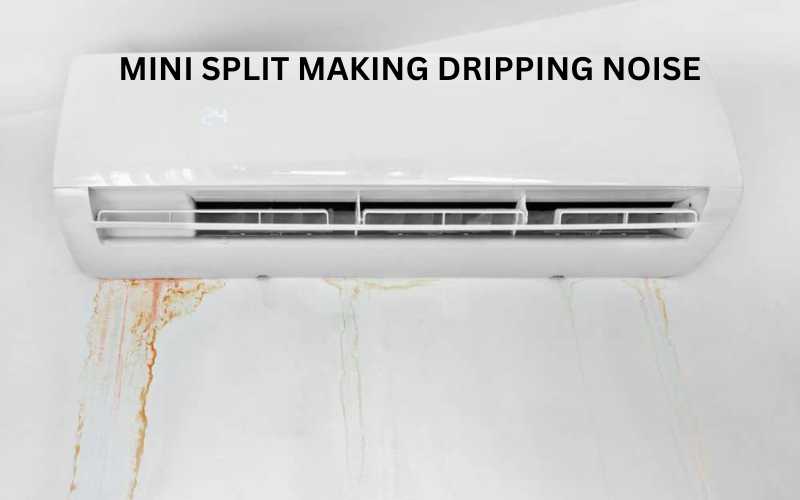
Mini split dripping noise
If you have a mini split system in your home, you may have noticed a strange dripping noise coming from the unit. This is actually a common problem with mini splits, and there are a few things that can cause it. One possible cause of the dripping noise is that the evaporator coils are frozen.
When this happens, the ice can build up and cause the coils to leak. If you think this may be the case, you can try turning up the thermostat to see if the ice melts and the dripping noise stops. Another possible cause of the dripping noise is that the drain pan is full.
The drain pan is where the water from the evaporator coils drains to. If it becomes full, it can cause the water to back up and drip from the unit. You can empty the drain pan yourself, or you can call a technician to do it for you.
If you can’t figure out what’s causing the dripping noise, or if it persists even after you’ve tried the solutions above, it’s best to call a technician. They will be able to diagnose the problem and get your mini split system back up and running properly.
Hear Water Dripping, but Can’t Find Any Water Damage?
Conclusion
If you have an air conditioner that sounds like it’s dripping water, there are a few possible reasons why. The most common reason is that the air conditioner is leaking water from the condensation line. This line is responsible for carrying away the condensation that forms on the evaporator coils.
If the line is clogged, the water can back up and leak out of the air conditioner. Another possible reason for a dripping sound is that the air conditioner is low on refrigerant. This can cause the evaporator coils to freeze, and when they thaw out, the water can drip onto the floor.
If you hear a dripping sound coming from your air conditioner, it’s important to have it checked out by a professional to determine the cause.
