
Yes, you should shade your AC unit, as long as the shade never blocks airflow. Shading the outdoor condenser keeps it out of direct sun, so it draws in slightly cooler air and does not have to work as hard to reject heat, which can modestly improve efficiency and ease wear on the unit. The one rule that matters more than any other: keep at least a couple of feet of clear space on all sides and plenty of room above, because a condenser that cannot breathe will overheat and lose far more efficiency than shade ever gains back. This guide covers when shading your AC unit helps, how to do it without choking airflow, and the best ways to protect an outdoor unit from sun.
Should I shade my AC unit? The real impact of shade
Shading helps, but the effect is modest, not dramatic. A condenser in direct sun runs a little hotter and works marginally harder to dump heat. Put it in shade and it pulls in cooler air, so it can run slightly more efficiently and stay a bit cooler over the course of a long, hot day. Over years, running cooler also means a little less thermal stress on the components.
Here is what to weigh before you shade your AC unit. The benefit only holds if the shade does not restrict airflow. A condenser rejects heat by pulling air through its coil and blowing it out the top, so anything that crowds the sides or caps the top traps hot air and forces the unit to re-breathe its own exhaust. That hurts efficiency far more than sun exposure ever would.
There are practical trade-offs too. The right shade spot can be hard to find, and structures placed too close make the unit harder to service. So the decision is simple: shade is worth it when you can provide it with generous clearance; if the only option crowds the unit, leave it unshaded.
If you can shade the unit without choking it, go for it. If you cannot, do not force it.
How to protect an AC outdoor unit from sunlight
Protecting your outdoor unit from sun helps it run efficiently and last longer, as long as you keep airflow in mind.
A few simple things help protect the unit from the sun:
— Place it in a naturally shady spot: The north or east side of the house, or an area shaded by the building itself, keeps the unit cooler without any added structure. Keep clearance generous.
— Use distant shade, not a tight cover: An awning or trees set well back shade the unit while leaving the coil open. Never wrap a running condenser, which blocks airflow.
— Keep it clean: Clear leaves, grass clippings, and dirt off the coil and out of the surrounding area. A clean coil sheds heat far better than a dirty one, which matters more than shade. Doing these things helps the unit run smoothly through the summer.
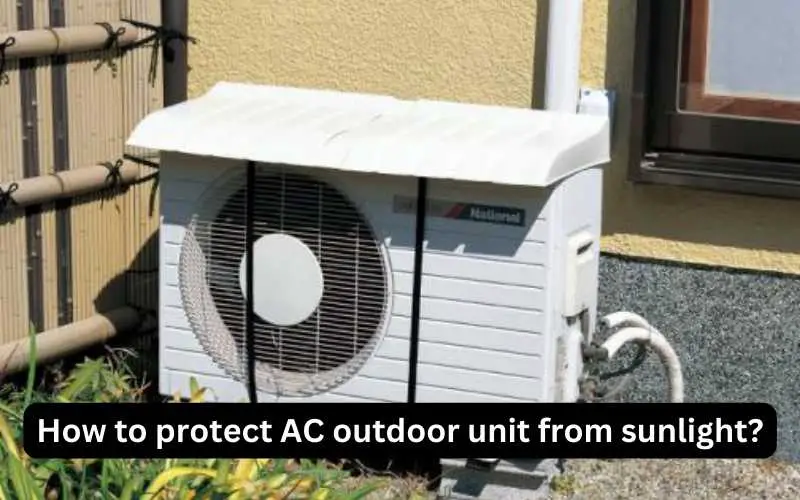
The best location for an AC outdoor unit
When choosing where the outdoor unit sits, a few things matter.
First, set it on a level, stable pad so it runs without vibration and drains properly. Second, keep it away from trees and shrubs that drop leaves and debris onto the coil; a little distance both protects the coil and improves airflow. A spot shaded by the house for part of the day is ideal because it cools the unit without crowding it.
Finally, think about noise. If you have a quiet neighborhood or nearby windows, place the unit where its sound will not be a nuisance.
Balance shade, airflow, drainage, and noise and you will land on the best location for your outdoor unit.

How to shade your outside AC unit
The best way to shade an outside condenser is with something that blocks sun but stays well clear of the coil, such as a tall awning, a pergola, or a trellis set back from the unit. These cut direct sunlight and reduce the heat the cabinet absorbs while leaving the airflow path open.
The non-negotiable part is clearance. Keep roughly two to three feet clear on every side and several feet of open space above the fan, which discharges upward. Anything closer can cause the unit to overheat and fail. Pair the shade with regular cleaning and a debris-free area, and the unit will run at its best.
Done right, shading protects the unit and helps it perform; done wrong, it does more harm than good.
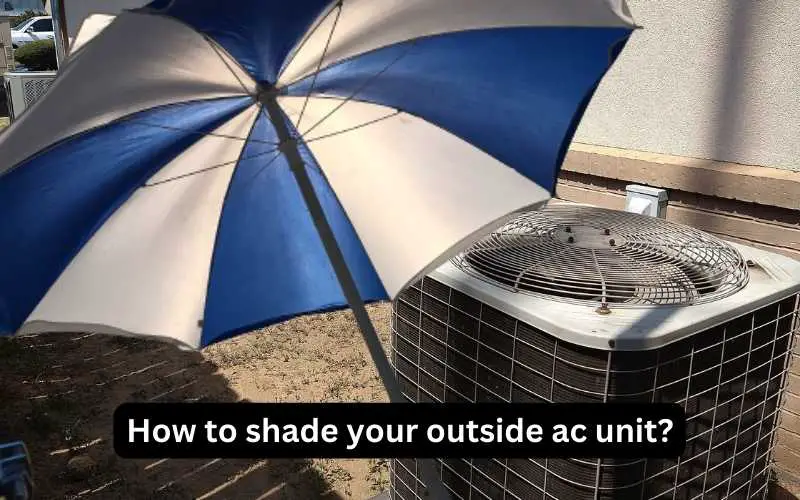
How to shade your AC unit
If your unit already sits in shade for much of the day, you may not need to add anything. If it bakes in full sun, a few approaches work. Planting trees or shrubs at a sensible distance gives natural shade and cools the surrounding air, but keep them far enough back that falling leaves and growth never block the coil. A freestanding awning or a tall, open frame with a fabric or slatted top can shade the unit while leaving the sides and top open.
Whatever you choose, never cover a running unit with a tarp, and never box it in tightly. A tarp belongs only on a unit that is fully shut down in the off-season, to keep out debris, and even then it should be breathable. The goal is shade with airflow, which keeps your home cool and comfortable all summer.
How to keep an outdoor AC unit cool
To keep your outdoor unit cool, combine sensible shade with airflow and cleanliness. Shade it from direct sun with a structure that has plenty of clearance. Clean the coil and clear debris regularly so heat sheds easily. And keep the area around the unit open, with no fences, plants, or stored items crowding it, so it always has the airflow it needs to work efficiently. Together these keep your outdoor AC unit cool and running smoothly.
Window air conditioner in direct sunlight
Window air conditioners can also run hotter in direct sun, since the outdoor-facing half is the condenser. Heavy, all-day sun can raise running temperatures and reduce efficiency.
You can ease this a few ways. Where possible, install the unit in a window that is not in direct afternoon sun. If the unit is unavoidably sun-exposed, a small awning above the window shades it without blocking the coil.
Keeping the room’s blinds or curtains closed during peak sun also reduces the cooling load, so the unit does not have to fight both the sun on its cabinet and heat pouring through the glass.
With a little shade and a lighter cooling load, a window unit handles direct sun far more comfortably.
Air conditioner umbrella
An air conditioner umbrella is a shade device placed above an outdoor unit to keep direct sun off it. Built from weather-resistant materials, it is designed to handle wind and rain while shading the cabinet.
The key, as with any shade, is that an umbrella must sit high and open enough that it never restricts the fan’s upward airflow or crowds the sides. Used correctly it shades the unit without trapping heat.

Roof or cover for an outside AC unit
A small roof or cover over the outdoor unit can shade it from sun and shield it from falling debris, hail, and heavy weather, provided it is mounted high above the fan with open sides. Mounted too low or enclosed, it traps exhaust and hurts performance.
If you are building one, match it to your climate so it stands up to wind, rain, or snow, and choose materials, such as metal, shingle, or composite, that suit your conditions. Keep it well above the fan discharge and leave the sides fully open for airflow.
For anything more than a simple overhead cover, have it installed properly so it is secure and correctly positioned. Done right, a roof shades and protects the unit without ever choking it.

AC unit shelter
A shelter for your air conditioning unit can protect it from sun, weather, animals, and debris, which helps safeguard the investment. The trick is building it so it protects without suffocating the unit.
Keep these points in mind. Make the shelter large enough that the unit has generous clearance on all sides, never a tight fit. Make it open and well ventilated, with no solid walls hugging the cabinet and plenty of open space above the fan, so heat can escape and the unit does not overheat.
Use materials that resist rust and corrosion so the structure lasts. And make it easy to access, so a technician can reach the unit to service it. A well-designed shelter protects your air conditioner while leaving it the airflow it needs.
Shade cover for an air conditioning unit
Shade covers are a popular accessory for keeping direct sun off an outdoor unit, and a few types are common.
A metal mesh shade cover is durable and rust-resistant and blocks sun while letting air pass through the mesh.
A fabric shade cover made from UV-resistant material offers long-lasting sun protection and is usually lighter to install.
Some makers offer custom-fit shade covers sized to a specific unit. Whatever style you pick, treat it as a top/sun shade only. It should never wrap the coil or seal the sides of a running condenser.
Chosen and fitted correctly, a shade cover supports efficiency and longevity rather than working against them.
Is it better for the AC unit to be in the shade?
Yes, it is generally better for your AC unit to be in the shade, provided airflow stays clear. A shaded unit pulls in cooler air and does not have to work quite as hard to reject heat, which can save a little on your energy bill. Just make sure the shade never crowds the coil or caps the fan, or you will lose more than you gain.
What can I use to shade my AC unit?
You have several good options, and they all share one rule: shade without blocking airflow. An awning or a tall, open frame with a fabric or slatted top is simple and effective. Trees or shrubs planted at a sensible distance give natural shade and cool the surrounding air, as long as they stay far enough back that leaves and growth never reach the coil.
A screen or open enclosure is a more permanent choice and works well if it is tall, open-sided, and ventilated, with clearance on every side and above the fan. Avoid anything that wraps the unit or hugs the cabinet, which traps heat and defeats the purpose.
How do I protect my air conditioner from sunlight?
Sun can fade and heat an outdoor unit, making it work a little harder. To protect it, keep it out of direct sun where you can: a naturally shaded location, a properly spaced awning or canopy, or trees and shrubs set well back all reduce sun exposure while leaving airflow open.
Choose durable, weather-resistant shade structures and keep them clear of the coil and fan. For off-season protection, a breathable cover keeps debris off the unit when it is shut down, but never run a covered condenser. Above all, leave space around the unit for proper airflow.
A few simple steps keep your air conditioner in good shape and help prevent costly repairs down the road.
Should you cover your AC unit outside?
Cover it only when it is shut down for the off-season, never while it is running. A breathable, weatherproof cover used in winter keeps out debris, leaves, and critters and can help the unit last. The cover should be durable, allow ventilation to prevent condensation, and be easy to remove.
What you should not do is wrap or cover a running condenser in summer, which blocks airflow and causes overheating. So the answer is: cover it off-season for protection, leave it open and clear during the cooling season.
Natural shade vs. built structures
When deciding how to shade your unit, you are really choosing between natural shade and a built structure, and each has trade-offs. Natural shade from trees or large shrubs is attractive and effective, and the plants cool the surrounding air through transpiration as a bonus. The downside is maintenance: leaves, seeds, and pollen drop onto the coil, branches grow into the airflow path, and roots can complicate the pad over time. If you go this route, plant well back, choose lower-debris species, and prune on a schedule.
A built structure, an awning, pergola, or simple overhead cover, gives you precise control over clearance and keeps debris off the unit. It costs more upfront and needs to be sturdy enough to handle wind, but it will not shed leaves into the coil. The key is to size it generously so the sides stay open and the top sits well above the fan discharge.
For many homeowners the simplest win is positional shade: locating the unit, or having it relocated during a replacement, to the north or east side of the house where the building itself blocks the harshest afternoon sun. That gives you the benefit of shade with none of the debris or structural cost, as long as clearance is maintained.
How much does shading actually save?
Be realistic about the numbers. Shading the condenser is a sensible, low-cost habit, but it is not a dramatic efficiency upgrade. Various estimates put the efficiency gain from shading an outdoor unit in the low single digits, often in the neighborhood of a few percent, because the bigger driver of a condenser’s performance is the temperature of the air it pulls in and how freely it can move that air, not the sun hitting the cabinet.
That is why airflow matters more than shade. A condenser crammed into a tight enclosure or surrounded by overgrown shrubs re-breathes its own hot exhaust, and that single problem can cost far more efficiency than shade could ever recover. So the order of priorities is: keep airflow generous first, keep the coil clean second, and add shade third as a modest bonus.
The larger savings in most homes come from elsewhere: shading the windows and walls that let heat into the living space, sealing and insulating the house, keeping the indoor filter clean, and setting the thermostat sensibly. Shade your condenser because it is cheap and helps a little, but pair it with those bigger moves for real impact on your bill.
Common shading mistakes to avoid
The most damaging mistake is wrapping or covering a running condenser with a tarp, a fitted “summer” cover, or plastic. This traps heat and moisture, blocks airflow, and can cause the unit to overheat. Full covers belong only on a unit that is shut down for the off-season, and even then they should be breathable.
A second common error is planting too close. Shrubs and ornamental grasses look tidy at first but grow into the airflow path and shed leaves into the coil. Keep plantings a few feet back and prune them regularly.
A third is building a solid-walled enclosure or a low roof that caps the fan. The fan discharges upward, so anything close overhead forces hot air back down into the unit. If you build a structure, keep the sides open and the top well above the fan.
Finally, do not block access. The unit needs room for a technician to open panels and service it. Shade that makes maintenance difficult tends to mean maintenance gets skipped, which costs you more in the long run than any shade saves.
Frequently Asked Questions
Does shade actually help the air conditioner?
Yes, modestly. A shaded condenser pulls in cooler air and works slightly less hard to reject heat, which can trim energy use and ease wear. The effect is real but not dramatic, and it only holds if the shade keeps generous clearance around the unit. Blocking airflow erases the benefit.
What can I use to shade my AC unit?
Use an awning, a tall open frame, a properly mounted overhead cover, or trees and shrubs planted well back. The rule for all of them is to shade the unit while keeping roughly two to three feet clear on every side and several feet open above the fan. Never wrap or box in a running unit.
How much clearance does an outdoor AC unit need?
As a general rule, keep about two to three feet of open space on each side and several feet of clear space above the fan, which discharges upward. Any shade structure must respect that clearance; a unit that cannot breathe will overheat and lose more efficiency than shade could ever save.
Does shade help the air conditioner?
Next Steps
So, should you shade your AC unit? Yes, when you can do it with plenty of clearance. Shade keeps the unit cooler, trims a little energy use, and eases wear, but airflow always comes first.
Choose a shade approach that fits your yard, keep two to three feet clear on every side and open space above the fan, and pair it with regular coil cleaning. If you are planning a permanent structure, it is worth having a professional confirm placement and clearances.
Give your unit smart shade and good airflow, and enjoy efficient, reliable cooling all summer long.

Author: Ralph P. Sita
Ralph P. Sita is a seasoned professional with deep roots in both the HVAC and tech industries. His family’s business, Ralph P. Sita, Inc., is a locally owned and operated HVAC contractor with over 42 years of experience, serving the DC, Maryland, and Virginia areas. The company specializes in residential, commercial, and industrial heating, ventilation, and air conditioning services, offering everything from installation and maintenance to custom ductwork and indoor air quality solutions -www.ralphpsita.com. A former CPA, he spent the last decade as co-founder and co-CEO at Cybrary, a leading platform for cybersecurity and IT training. Cybrary became the largest, most well-known cybersecurity training businesses in the industry under his leadership. Smart AC Solutions is an opportunity to give back to the HVAC community by providing reliable, actionable information on all things heating and cooling.